cardmaking · Mixed Media · Tutorial

3 Mixed Media Layers to Try (Beyond the Basics Techniques That Actually Work)

Simple layering techniques to add depth, texture, and interest to your mixed media cards—without the overwhelm.

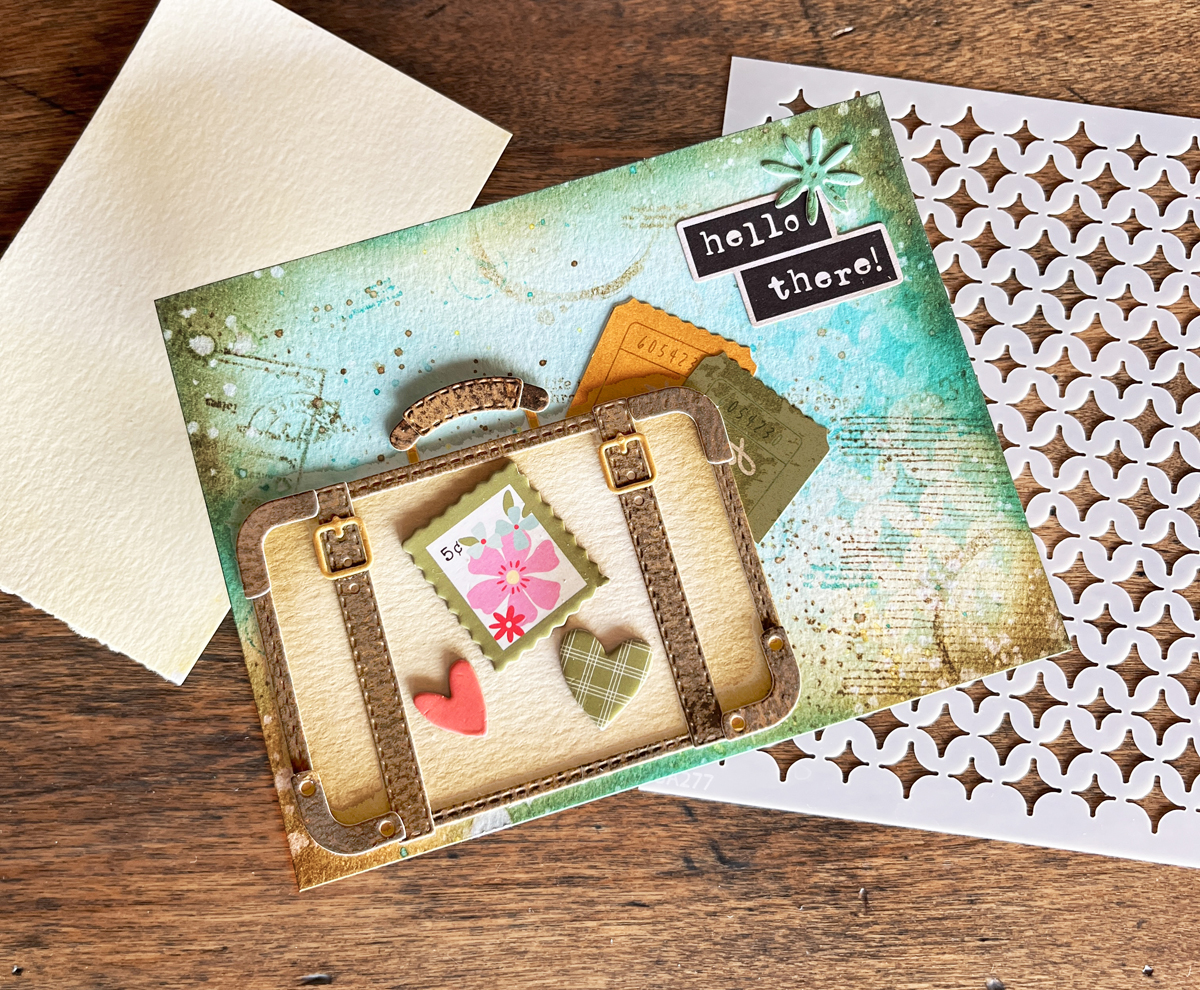
Mixed media card with layered watercolor background, texture paste, stamping, embossing and vintage suitcase focal point

If you love mixed media but feel like your projects need a little more depth, this post is for you.

In today’s tutorial, I’m sharing three easy mixed media layering techniques that go beyond the basics—simple additions that create texture, interest, and that “something extra” that makes a card feel finished.

These layers are beginner-friendly, easy to repeat, and surprisingly impactful.

This post is part of my ongoing mixed media series where I create a card or tag using my easy to follow recipe.

After years of experimenting (and plenty of trial and error), I developed a simple 3-step recipe that works on almost every project.

And today, I’m sharing it with you.


✂️ In This Post, You’ll Learn:

• My 3-Step Mixed Media Recipe
• How to create an easy watercolor background
• How to layer like a pro
• How to create an interesting focal point


Karen’s 3-Step Mixed Media Recipe

Step 1: Create an Interesting Background
Step 2: Add 4+ Layers
Step 3: Add a Strong Focal Point

Simple. Repeatable. And it works on almost every project.

📌 Save this for later so you can come back when you’re ready to try this technique.


8 mixed media cards and tags from my continuing series: Mixed Media Made Simple.

If you’re new to this series, start here:
👉 Mixed Media Made Simple: My 3-Step Recipe for Fun & Easy Tags

And if you missed my foundational layering post, you’ll definitely want to read this first:
👉 Mixed Media Layering Made Simple: The 4 Layers I Use on Almost Every Project

Because today…

We’re Building On That Foundation

This post is your next step.

We’re taking the “Fab 4” layers and adding three more techniques to create a richer, more dimensional, slightly more advanced mixed media look—without losing that relaxed, beginner-friendly feel.

And the best part?

We’re using a very similar design (same colors, same focal point, same vibe) so you can clearly see how your work can evolve.

If you try this technique, tag your project with:
👉 #karensmixedmediarecipe — I would truly love to see what you create!

If you are interested in adding a new supply or two to your toolbox, you can check out my Favorite Supplies page.

Vintage look mixed media card with watercolor background that features Spellbinders Retro Suitcase die SDS-221

Step 1: Create a Background

Let’s keep this part simple and approachable.

For this card, I created:

  • A two-color watercolor background using a loose, abstract “Y” shape in soft blue
  • Filled the remaining space with warm yellow
  • A second yellow wash panel for the suitcase focal point
  • A third panel using direct-to-paper brown ink + water for a leather-like texture

💡 Tip: Don’t overthink placement—this is about movement, not perfection.

creating watercolor panels is the best first step for creating mixed medai card backgrounds and components.
Here are the 3 watercolors panels we will be using on today’s mixed media card.

Step 2: Layering — The Fab 4 + 3 More

We’re starting with the Fab 4 (your go-to layers), then building upward.

Think of this as:
👉 easy, relaxed complexity


The Fab 4 (Your Foundation Layers)

1. Stenciling (Pattern)

Add soft script in 1–2 areas using brown ink.

✔ Adds structure
✔ Keeps things grounded
✔ Works on every project

brown ink + script stencil is the best first layer for mixed media projects.
Adding soft script stenciling creates subtle pattern and movement

2. Stamping (Personality + Vintage Charm)

Use second-generation stamping (stamp once on scrap, then your panel).

I used:

  • Blue + brown inks
  • Imperfect shapes, lines, and marks

✔ Keeps everything cohesive
✔ Adds that “collected over time” look

second generation stamping with brown ink gives vintage vibe to mixed media card projects.
Second-generation stamping softens the look and blends beautifully

Now Let’s Level Up…

Here are the 3 additional layers that take your project from beginner to beautifully complex:


3. Texture Paste (3D Dimension)

Using a cobblestone stencil, I applied:

  • Blue-tinted paste
  • Brown-tinted paste
Applying tinted texture paste to mixed media  backgrounds eleveates cards from beginner level to intermediate.
Texture paste adds loads of dimension to cardmaking projects.

The result? A soft, two-tone textured layer.

✔ Adds tactile interest
✔ Creates visual depth
✔ Feels artistic and elevated

I tinted texture paste and applied with a stencil on layer 3 and you can see other layering options on my Go-To Cardmaking Supplies page.


4. Heat Embossing (Controlled Drama)

I partially stamped a Bubble Celebration background stamp using pigment ink, then heat embossed.

✔ Adds texture and contrast
✔ Keeps things imperfect and organic
✔ Creates a subtle focal texture

Partial heat embossing bubble circles on a mixed media card background adds texture and interest.
Imperfect embossing adds texture without overpowering the design.

5. Distress Crayons (Soft Aging Effect)

Add scribbles… then activate with water.

✔ Blends into previous layers
✔ Adds softness and movement
✔ Creates that “aged over time” feel

Distress crayons can add interest to mixed media card backgrounds.
A few scribbles before brushing with a wet brush.

Finish the Fab 4

6. Distress the Edges

Frame your design with brown ink.

✔ Instantly adds depth
✔ Gives a vintage finish

Intermediate level mixed media cardbackground with 6 layers, including distressing the edges with brown ink.
Distressing the edges really adds to the vintage charm of mixed media projects.

7. Splatters (Movement + Cohesion)

  • Water splatters (blotted)
  • Blue + brown splatters

✔ Pull everything together
✔ Add energy and life

Adding splatters to mixed media intermediate level watercolor card background that has 7 different layering techniques.
Don’t skip adding splatters, they really unify your projects.

How Do You Know When to Stop?

  • Let it sit for an hour (or overnight)
  • Take a photo
  • Ask: Does this feel balanced—or busy?

Today’s card: 7 layers total


✨ Why These Layers Work

  • Easy to repeat
  • Build depth without clutter
  • Work with supplies you already have
  • Add a polished, finished look

Step 3: Add a Strong Focal Point

Mixed media needs a visual anchor.

Today, I used the Retro Suitcase Die—one of my favorites.

But here’s where we elevate it:

✨ I used a BetterPress map background on the suitcase panel
✨ Lightly distressed the edges
✨ Assembled using layered die cuts

Step-by-step mixed media layering process showing stencil, stamping, and texture paste techniques for cardmakers + die cut focal point.
Vintage look die cut focal points really add to the retro beauty of mixed media background panels.

Then added:

  • Ephemera tickets (tucked behind)
  • A sentiment strip: “Friends and laughter help lighten the load”

✔ Storytelling
✔ Depth
✔ Vintage travel charm


Let’s Talk Color (Why This Works)

We kept it simple:

  • Soft blue
  • Warm yellow
  • Neutral brown

✔ Blue = calm
✔ Yellow = energy
✔ Brown = grounding

And together?

👉 A cohesive, vintage-inspired palette that feels intentional—not chaotic.


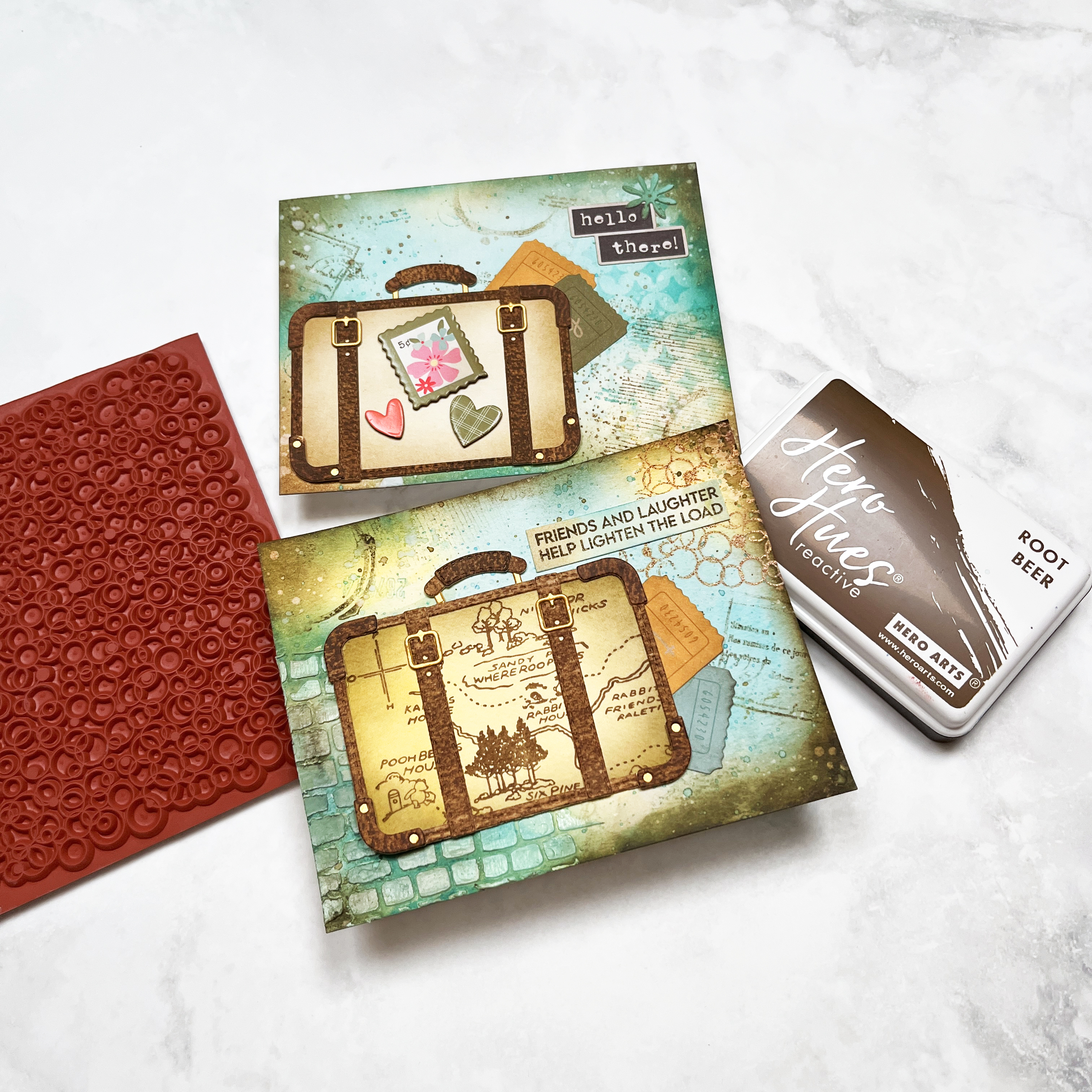
Beginner vs. Intermediate — Side-by-Side

Beginner to intermediate mixed media card comparison with blue, yellow and brown color palette and vintage travel theme.

This is where the magic happens.

Fab 4 Card (Top Card) from The 4-Layers I Use on Everything post

  • Brighter
  • Simpler
  • Clean layering

Fab 4 + 3 Card (Bottom Card):

  • More texture
  • Slightly moodier
  • Richer detail

👉 Same foundation… just built up.


Other Posts in This Series

Craft Toolbox

These are the core tools I use when building layered mixed media backgrounds

You might also be interested in my 14 Best Cardmaking Supplies for 2026 post.

Focal Point:
Retro Suitcase Die + BetterPress Map

Inks:

Tools & Layers:

Basics:

Final Thoughts

This is where mixed media really starts to feel magical.

Not because it’s complicated…
But because you’re learning how to layer with intention.

Start with the Fab 4.
Add one or two new techniques.
And let your style evolve naturally.

📌 Save this for later so you can come back when you’re ready to try this recipe.

💬 Which layer was your favorite? I’d love to hear in the comments!

🏆 Proud to be ranked among the Top Cardmaking Blogs by Feedspot


cardmaking · Mixed Media

Mixed Media Layering Made Simple: The 4 Layers I Use on Almost Every Project

A beginner-friendly guide to building beautiful, cohesive mixed media cards—without the overwhelm

Mixed media card featuring layered ink blended background with stenciling, stamping, splatters, and a vintage suitcase focal point in aqua, yellow, and brown tones.

Have you ever looked at a mixed media project and thought:

“That’s beautiful… but where do I even start?”

I’ve been there.

When I first started exploring mixed media, everything felt overwhelming. There were so many techniques, products, and styles—but very few beginner-friendly guides that actually simplified the process.

So after years of experimenting (and yes… making a glorious mess or two), I created something I wish I had from the beginning:

Karen’s Mixed Media Recipe

A simple, repeatable framework that works on almost every project.

And today I am sharing it with you.


✂️ In This Post, You’ll Learn:

• My simple 3-step mixed media framework
• How to create a quick, cohesive background
• The 4 “must-have” layers I use on almost every project
• Why limiting your color palette makes everything look better


🧁 Karen’s Mixed Media Recipe (Quick Recap)

This is the exact process I follow again and again:

Step 1: Create an interesting background
Step 2: Add 4+ layers
Step 3: Add a strong focal point

That’s it. No overwhelm. No guessing.

📌 Save this for later so you can come back when you’re ready to create.


And today? We’re diving into the part where the magic really happens…

👉 Layering

How to create vintage look mixed media cards that are simpe and beginner friendly.

If you missed earlier posts in this series:

Mixed Media Made Simple: My 3-Step Recipe for Fun & Easy Tags
Ink Smooshing 101 — My Favorite Mixed Media Background Starter

And if you try this recipe, I would LOVE to see it—tag your project with
👉 #karensmixedmediarecipe

Browse my Favorite and Most Used Cardmaking Supplies.


🎨 Step 1: Create a Background

For today’s project, I created a soft ink-blended background on watercolor paper.

I chose colors that sit near each other on the color wheel:

• Aqua
• Yellow

When these blend, they create a soft, beautiful green—no harsh transitions, no muddiness.

Beginner Tip:
Avoid opposite colors (like purple + yellow or red + green) unless you want brown.

I used reactive inks, which means they respond to water—this becomes important in our 4th layering step (hello, splatters!).

I also created a second panel in yellow for my focal point.

2 color ink blend background for mixed media card before adding layers.
Soft ink-blended panels before layering—this is our clean starting point before the “grunge magic” begins.

✨ Step 2: The Fab 4 Layers (My Go-To Every Time)

If mixed media had a “starter pack,” this would be it.

These are the four layers I use on almost every project—they are reliable, forgiving, and incredibly effective.

I call them…

💛 The Fab 4


1. Stenciling (Adds Pattern)

This is where your background starts to come alive.

I used a diamond stencil to add soft pattern using the same aqua tones.

✔ No perfect placement
✔ No covering the whole background
✔ Just touches of pattern

Think: “strategic randomness”

I’ve listed my favorite mixed media stencils in My Go-To Cardmaking Supplies page.

Stenciling, Sparkle Weave, added to a mixed media background.
The Sparkle Weave stencil works beautifully on mixed media cards.

2. Stamping (Adds Personality & Vintage Charm)

Now we add character.

I used imperfect, sketch-style stamps—dots, lines, circles—for that slightly vintage feel.

Beginner Trick:
Try second-generation stamping (stamp once on scrap, then on your panel) for softer impressions.

I introduced a third color here:

• A neutral brown

This grounds the entire design and keeps things from feeling too “floaty.”

Stamping layers on a mixed media card background.
After stamping layers—notice how the background is starting to feel more textured and dimensional.

3. Distress the Edges (Adds Depth)

Time to gently “grunge it up.”

I blended brown and a touch of blue around the edges.

This simple step:

• frames your design
• adds age and depth
• makes everything feel more finished

distressing the edges of a background with Root Beer brown ink and a blending brush.
Edges distressed for depth and contrast really start to pull the background together.

4. Splatters (Adds Movement & Magic)

This is where everything comes together.

First: water splatters (reactive inks = magic ✨)
Then: light splatters of all three colors

Turn your panel as you go—this keeps things natural and balanced.

Adding water splatters and ink splatters to a mixed media card background.
Finished background after The Fab 4—layers, texture, and movement working together.

🎯 When to Stop?

After the Fab 4, pause and look.

Ask yourself:

👉 Do I love it?
👉 Does it feel balanced?

If yes—STOP. 🎉
If not—add one more layer and reassess.

Remember: we’re going for “imperfect by design.”


🧳 Step 3: Add a Focal Point

I chose a vintage-style die cut suitcase (because… how cute is that?!).

To keep the look cohesive, I created custom panels instead of using cardstock:

• Yellow panel for the suitcase body
• Brown “leather” panel using direct-to-paper + water

This gives it that worn, travel-ready feel.

Die cutting a focal point for a layered mixed media background.
Finished layered background using four mixed media techniques

✨ Pro Tip: Instant Layering Shortcut

Even experienced mixed media artists use this:

👉 Pre-printed ephemera

I tucked in:

tickets
a sentiment (such an easy option)
small embellishments

These add detail without extra effort.

I placed the suitcase slightly off-center—like it’s ready to hop on a train and go on an adventure.

📌 Save this for later on Pinterest.


🎨 Let’s Talk Color (The Secret Sauce)

I kept everything to just three colors:

• Aqua (calm)
• Yellow (energy)
• Brown (grounding)

Using the same colors in:

✔ background
✔ layers
✔ focal point

…creates instant cohesion.

More colors ≠ better
Fewer colors = harmony


✨ Why These Layers Work

  • Easy to learn and effective everytime
  • Build depth without clutter
  • All 4 layers work well together
  • Add a polished, finished look

🧰 Supplies Used From My Toolbox

You might also be interested in my 14 Best Cardmaking Supplies for 2026 post.

Focal Point:
Retro Suitcase Die from the We Have Baggage Collection

Inks:
Reactive Inks (aqua, yellow, brown tones)

Tools & Layers:
Blending Brushes
Background Stamps: Background Builder and Vintage Maps and Ledgers
Stencils – Sparkle Weave
Ephemera – chipboard, tickets/sentiments

Basics:
Watercolor paper (140 lb.)
Die cutting machine
Adhesives


💭 Final Thoughts

If you’re new to mixed media, start here.

The Fab 4 layers will take you from:

👉 “flat and plain”
to
👉 “textured and full of life”

…without overwhelm.

Layering isn’t about doing more—it’s about doing the right things in the right order.

And now you have that order. 💛

📌 Save this for later so you can come back when you’re ready to try this technique


📌 If you try this, tag your project with #karensmixedmediarecipe
I would truly love to see what you create.


✨ Coming Next…

If you enjoyed these foundational layers, you’ll love the next step—Beyond the Basics: 3 Mixed Media Layers to Try, where I build on the Fab 4 to create richer, more dimensional designs.

cardmaking · Stamping

How to Make a Simple Birthday Card for Beginners (Adorable House Mouse Card)

Create a charming handmade birthday card with minimal supplies using the House Mouse Party Parade stamp set.
Easy handmade birthday card featuring House Mouse Party Parade stamp set colored with alcohol markers.

In this tutorial, I’ll show you how to create a simple stamped birthday card with this adorable House Mouse design. Whether you’re a beginner cardmaker or a seasoned stamper who wants something quick and charming, the House Mouse collection delivers every time.

These sweet little mice are full of personality, and the scenes practically create themselves — making them ideal for quick cards with minimal supplies.

If you’re just starting out, you may also find my 14 Best Cardmaking Products and Supplies for Beginners helpful.

Easy birthday card perfect for beginner cardmakers who want to stamp and color adorable images.
Coloring the adorable Party Parade mice with alcohol markers brings this sweet celebration scene to life.

📌 Save this for later—perfect for beginner cardmakers!


In This Post

• Why House Mouse Stamps Are Perfect for Beginners
• Party Parade Card Design
• Quick Coloring with Copic Markers
• Easy Card Layout
• More Beginner Card Ideas


Product Spotlight: House Mouse Party Parade Stamp Set

Today’s card features the House Mouse Party Parade stamp set, which includes the most adorable parade of four mice holding balloons, wearing party hats and celebrating in style.

This is one of those stamp sets that works year after year for birthdays and celebrations, which makes it a great staple for any cardmaker’s collection

This design absolutely screams birthday, but it could easily work for retirement, graduation or any celebration. If there’s a reason to celebrate, this stamp set works beautifully.

One of the things I love most about this stamp set is how easy it is to create a finished card quickly. With one detailed image and a sentiment, the design does most of the work for you.

This set includes 3 sentiments:

  • It’s Time to Celebrate
  • Happy Birthday Greetings
  • Happy Birthday From All of Us

That versatility makes it a stamping staple worth keeping in your craft room.


Verstatile birthday card perfect for virtually every every recipient:  masculine, men, kids, friends

Why House Mouse Cards Are Perfect for Beginners

  • Minimal supplies required
  • One main image stamp – no complicated layering
  • Detailed line art – easy to color with markers
  • Charming designs everyone loves

Just stamp and color… cardmaking at its most pure. I used Copic alcohol markers.

If you enjoy House Mouse cards, you might also like my Cute Coffee Theme Thank You Card.

Coloring House Mouse Party Parade stamp with alcohol markers for a beginner-friendly birthday card.
Simple coloring on a stamped birthday card creates a fun celebratory scene.

I die cut the finished panel with a frame from a previous Spellbinders Club Kit — one of my favorite ways to build a versatile die collection over time.

I also created a sweet Healing Thoughts Get Well card using another House Mouse design.

Fun House Mouse Party Parade Birthday card that is so easy to create.

Keep a Few Birthday Cards Ready

I love keeping a few simple birthday cards like this in my pre-made card file, so I always have something ready when a birthday pops up unexpectedly.


More Conversations on Cardmaking Supplies


More Easy Cardmaking Ideas

📌 Save this for later so you can come back when you’re ready to try this easy card.

Thanks so much for stopping by!


.

Mixed Media · Tutorial · Video

How to Create Easy Mixed Media Tags for Beginners (Step-by-Step Tutorial + Video)

Easy & Addictive Mixed Media Tag Graphic with photo of two mixed media tags.

If you’ve ever wanted to try mixed media but weren’t sure where to start, this is the perfect beginner-friendly project.

In this tutorial, I’ll show you how to create easy mixed media tags using simple supplies and a few layering techniques that are both fun and surprisingly addictive.

These tags are a great way to experiment with color, texture, and stamping—without feeling overwhelmed.


Video

👉 Or watch on YouTube HERE.

This post coordinates with my YouTube video where I walk through every step in real time. If you like seeing the process in action, be sure to watch the video alongside this tutorial.


✂️ In This Post, You’ll Learn:

• How to create easy mixed media tags step-by-step
• A simple ink smoosh background technique
• My “viewfinder” trick for better composition
• How to add subtle grunge and texture
• Easy focal point ideas that always work

📌 Save this for later so you can come back when you’re ready to create.


When creating mixed media projects, I use my 3 Step Mixed Media Recipe.

👉 You can find the tools I use most often on my Favorite Cardmaking Supplies page

Exact supplies used in this post are at the bottom of this post.


Why This Is a Great Beginner Mixed Media Project

  • No pressure to be perfect
  • Great way to practice layering
  • Uses simple, repeatable techniques
  • Each tag turns out unique

Mixed Media Tags for Absolute Beginners: 11 Easy Steps

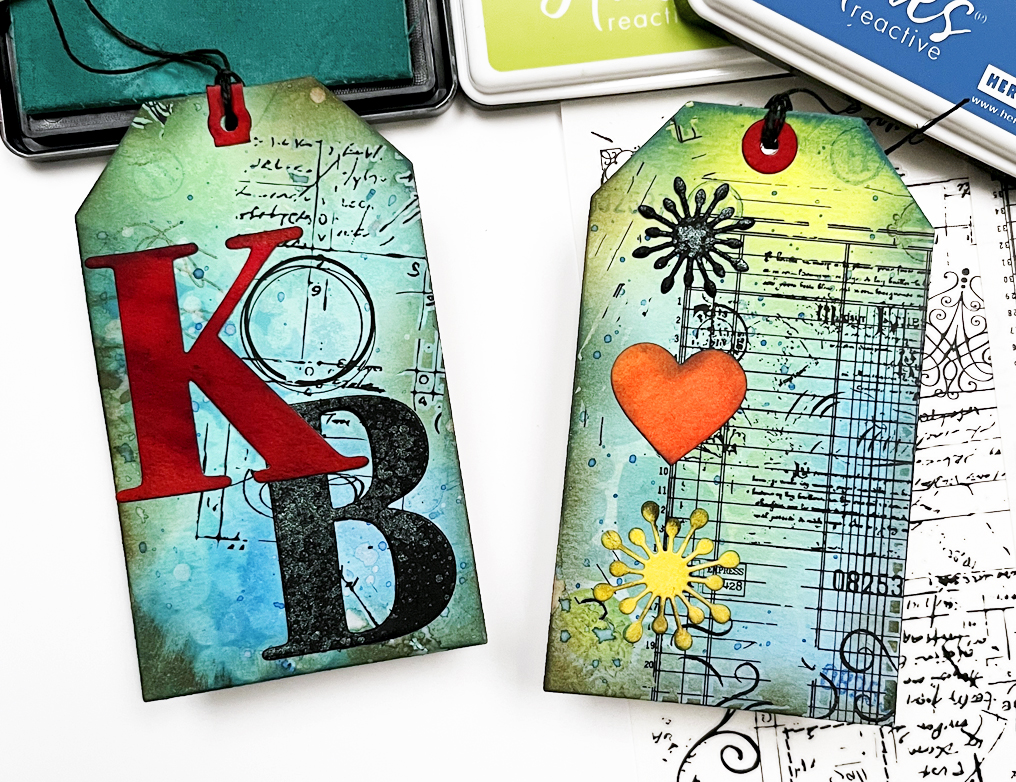
Closeup of two completed vintage look mixed media tags
Using die-cut initials or hearts creates strong focal interest on mixed media projects.

📌 Pin this for later


Step 1: Create a Simple Ink Smoosh Background

Add three shades of water-based reactive ink to your craft mat, spritz generously with water, and press the watercolor paper into the ink. Let sit in the puddle with an acrylic block on top for 1 – 5 minutes. The more water you use, the softer the panel. I used Key Lime Fizz, Pool Party and Blue Hawaii on my tags.

If you are interested in learning how to create an easywatercolor background, I have step-by-step directions in my tutorial how to make mixed media tags in 9 easy steps.


Step 2: Dry Your Panel

Let the panel air dry or speed things up with a heat tool. If it warps, flatten it under a book once dry.

Process photo of my two ink smoosh watercolor background panels.
Ink Smoosh background panels are the easiest way to start a beginner mixed media project.

Step 3: ViewFinder Trick

I like to use my tag die as a viewfinder to decide which part of my panel I want to feature.


Step 4: Die Cutting

Once I’m happy, I tape the tag die in place and run it through my Platinum 6 die cutting machine. It is one of the tools I rely on regularly—several of them are included in my list of the best cardmaking supplies for 2026.


Step 5: Stenciling

Now its time to start layering on top of our background. I add stenciling to about two thirds of each tag using the same reactive ink colors that I used in Step 1. You can use just about any stencil you have. I chose two very different designs and I love how they both turned out!

Close-up of my aqua blue mixed media tag with personalized die cut initials (KB) and Hero Arts rub-on Hero Transfers.
Stenciling is one of the cornerstone layers for mixed media projects.

Step 6: Second-Generation Stamping

This is one of my favorite mixed media techniques.

Ink your stamp, stamp once on scrap paper, then immediately stamp onto your background.

The lighter impression adds depth and texture while keeping things loose and organic.

Use the same colors you used on your background in Step 1. This keeps everything cohesive and soft and adds subtle interest without overpowering the background.

Mixed media art tag created by layering 6 additional techniques on top of my ink smoosh watercolor background.
Rub on transfers are one of the easiest layers to add to your mixed media tags.

Step 7: Add Rub-On Transfers for Easy Texture

Hero Transfers are one of the easiest ways to add detail and interest—no drying time required. Today, I used the Grids and Icons Transfers.

Cut a small section, place it on your tag, and rub it on using a bone folder or craft stick. I like angling my transfers slightly for a more vintage, organic look.

Step 8: Add Some Grunge and Ink Blend the Edges

Ink blending around the edges of the tags adds instant definition and helps ground all those layers.

This is where everything starts to come together. I like using a darker neutral ink like Root Beer to “grunge up” the edges just a bit.

Colorful ledger style mixed media tag with die cut floral sunbursts and a cheerful orange heart.
Ink blending around the edges of a mixed media tag add the perfect amount of vintage grunge to your projects.

Step 9: Add Splatters

Using a fan brush, splatter water (then blot with a cloth) and them the same inks used above. This step instantly adds movement and that “mixed media magic” feel.

Process photo showing water splatters and ink splatters on my in-process mixed media art tag.
Splatters are the perfect finishing touch for mixed media projects.

Step 10: Add Focal Points

Now it’s time to bring in focal elements.

I used small die-cut images, lightly distressed the edges, and glued them directly to the tags. Keep the focal points simple—they should complement the background, not compete with it.

A good rule of thumb: if your background is busy, keep your focal point clean and contained.

Best mixed media art tag illustrating how to create one in 11 easy steps.

Step 11: Finish with Twine or Ribbon

Thread twine or ribbon through the top of each tag to finish them off.

This final step adds texture, softness, and makes the tags feel complete. You can also tuck tags into cards, journals, or gift packaging.

You might also enjoy another recent Mixed Media Tag Tutorial I posted last month. Or if you’d like to try a mixed media card instead, here is how I create one step-by-step, with loads of illustrative photos.


Mixed Media Toolbox

These are the supplies that I personally use:

Stamps and Rub-on Transfers:

Dies:

Inks and Stencils:

Other Supplies:

Thanks for stopping by! Which tag is your favorite: Initials or Heart?

Mixed Media · papercrafting · Tutorial

How to Make Mixed Media Tags in 9 Easy Steps | Tutorial

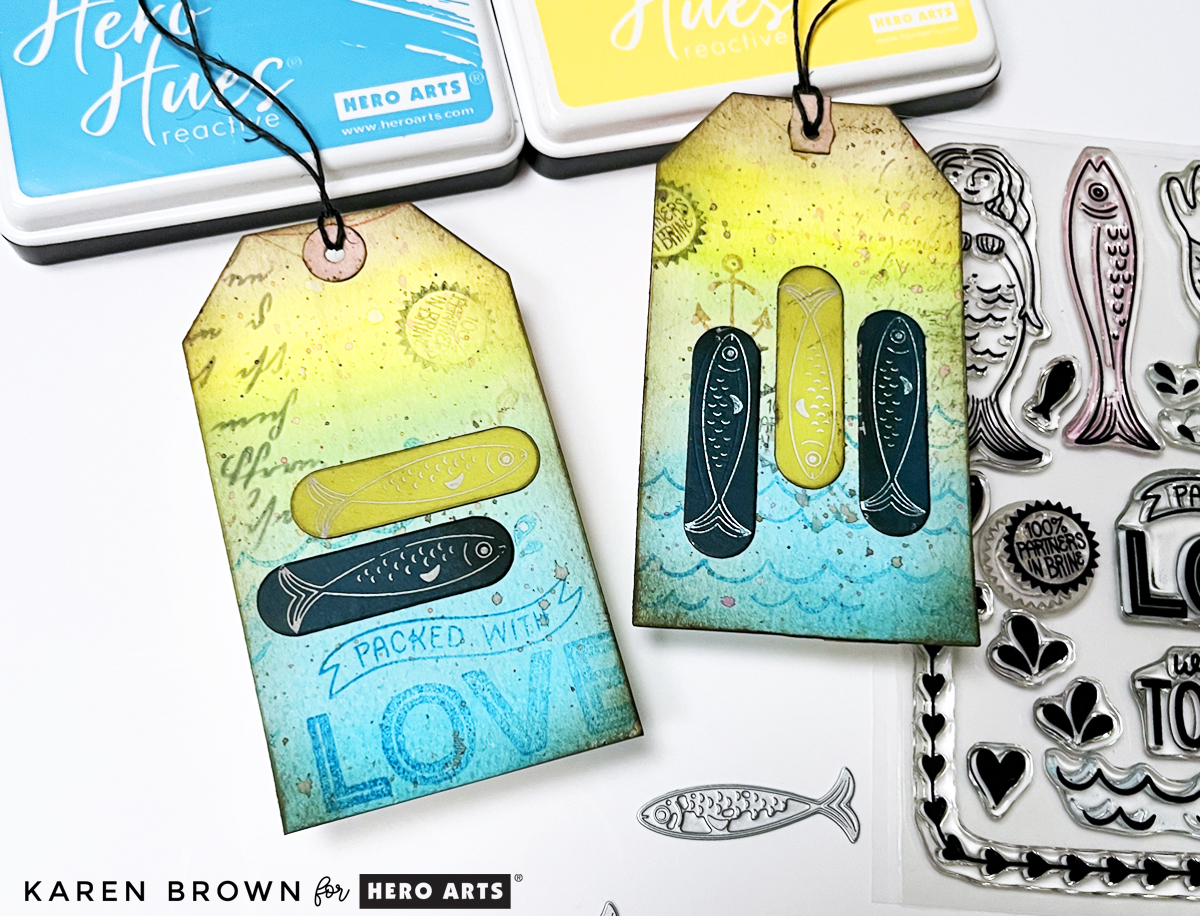
Two handmade mixed media tags featuring Hero Arts Partners in Brine stamps, watercolor gradients in blue, yellow, and pink, layered stamping, ink splatters, and foiled fish accents.

Creating stunning, multi-layered mixed media tags is easier than you think—here is an easy to follow 9-step tutorial.

When creating mixed media projects, I use my 3-Step Recipe.

The techniques I’m sharing today can be used with almost any stamp set or focal elements you already have.

If mixed media feels a little intimidating—don’t worry. This project is about building layers slowly, having fun with color, and letting the process guide you. Let’s walk through it step by step!

👉 I’ll link to the exact supplies at the bottom of this post.

Aquatic theme mixed media tag using Hero Arts Partners in Brine Stamp set and Glad We Are Tight BetterPress letterpress fish plates.

Step 1: Create a Watercolor Gradient Background

When I saw the Hero Arts Partners in Brine Stamp Set, I immediately pictured a colorful, summery mixed media background filled with texture, stamping, and playful details.

I began by taping a 6″ x 6″ panel of watercolor paper to a hardboard using washi tape. On my craft mat, I dabbed Hero Arts Reactive Ink, spritzed it with water, and used a brush to watercolor a smooth gradient.

I blended the colors so they flowed from blue into green, yellow, orange, and finally pink. Since this stamp set has an aquatic theme (which always feels like summer to me), I wanted bright, happy, sun-washed color.

Dry your panel naturally or speed things up with a heat gun. If your paper warps, simply flatten it later with a book.

Close-up of mixed media tag featuring layered stamping, script texture, inked edges, and a foiled fish accent on a colorful watercolor background.

Step 2: Stamp in Coordinating Colors

Once dry, I stamped images from the CM834 Partners in Brine stamp set using the same inks:

I especially loved the Packed with Love, waves, anchor, fish, and “packed in brine” images. Stamping in matching colors keeps the look layered but cohesive.

Step 3: Add Second-Generation Stamping

To deepen the texture, I used Black and Root Beer Reactive Ink and stamped a few images using second-generation stamping (inking the stamp, stamping once on scrap paper, then stamping again on the background).

Second Generation Stamping adds subtle depth without overpowering the colors.

Step 4: Add Ink Splatters

Next came one of my favorite steps—ink splatters! Using a fan brush, I flicked Splash, Lemon Drop, and Taffy onto the panel.

Ink Splatters add movement, texture, and that perfectly imperfect mixed media charm.

Watercolor background Mixed Media tag with script stenciling, second generation stamping and die cut fish.

Step 5: Die Cut the Tags

Before cutting, I used my Hero Arts Tag Infinity Die as a viewfinder to decide which parts of the background I wanted to showcase. Once I had the section I wanted to use, I taped my tag die to the watercolor panel and ran it through my Platinum 6 die cutting matchine.

I die cut two tags (4½” x 2⅜”), making sure one included the “Packed with Love” area as a focal point.

Step 6: Ink the Edges

To give the tags a vintage, worn look, I ink blended Root Beer Reactive Ink around all the edges. This step instantly adds depth and contrast,

👉 Root Beer Reactive Ink is my go-to shade for “grunging up” a project.

My preference is to use color-coded blending brushes for ink blending. I find my brushes last longer since I only use one ink colorfamily on each brush.

Mixed Media Tag tutorial showing how to create a tag in 9 easy steps.

Step 7: Add Script for Extra Texture

After studying my tags, I felt they needed a bit of visual “writing,” so I added:

  • CG830 Script Bold Print stamped in Granite Ink on the top right of one tag
  • SA225 Script Stencil (sadly sold out) stenciled in Granite on the top left of the Packed with Love tag
  • But, you can use any stamp or stencil with words that you have. Look through your supplies and see what calls to you.

Subtle script details enhance the mixed media feel without distracting from the main design.

Using distressed Glimmer Hot Foil elements on mixed media tags and cards.

Step 8: Add Foiled Die Cut Focal Points

For something completely new (and honestly, adorable), I added Glimmer hot foiled accents—something I’d never tried on a mixed media project before!

I foiled the two sweet fish from HP131 Glad We Are Tight using white and metallic blue foil with my Spellbinders Glimmer System. I then:

The mix of soft watercolor, stamping, and shiny foil adds beautiful contrast.

Step 9: Finish with Twine or Ribbon

To complete the tags, I simply added twine through the top. This final touch makes them perfect for gift wrapping, journaling, mini albums—or even framing as tiny art pieces.


two mixed media tags with a summery fish/aquatic theme.

You might also be interested in my other blog post where I create with the Packed With Love Collection: Tips and Tricks for Making Two Playful Die Cut Card Designs.

Products Used:

Final Thoughts

Mixed media doesn’t have to be complicated. By working in layers, repeating colors, and letting each step build naturally, you can create beautiful, dimensional projects that feel artistic without being overwhelming.

If you enjoyed this tutorial, I’ll link a couple of my other mixed media posts below for more inspiration. And remember—these techniques work with any stamps, any colors, and any theme. The process is what makes it magic.

Happy crafting!

cardmaking · Stamping

Cute Coffee Theme Thank You Card Featuring House Mouse

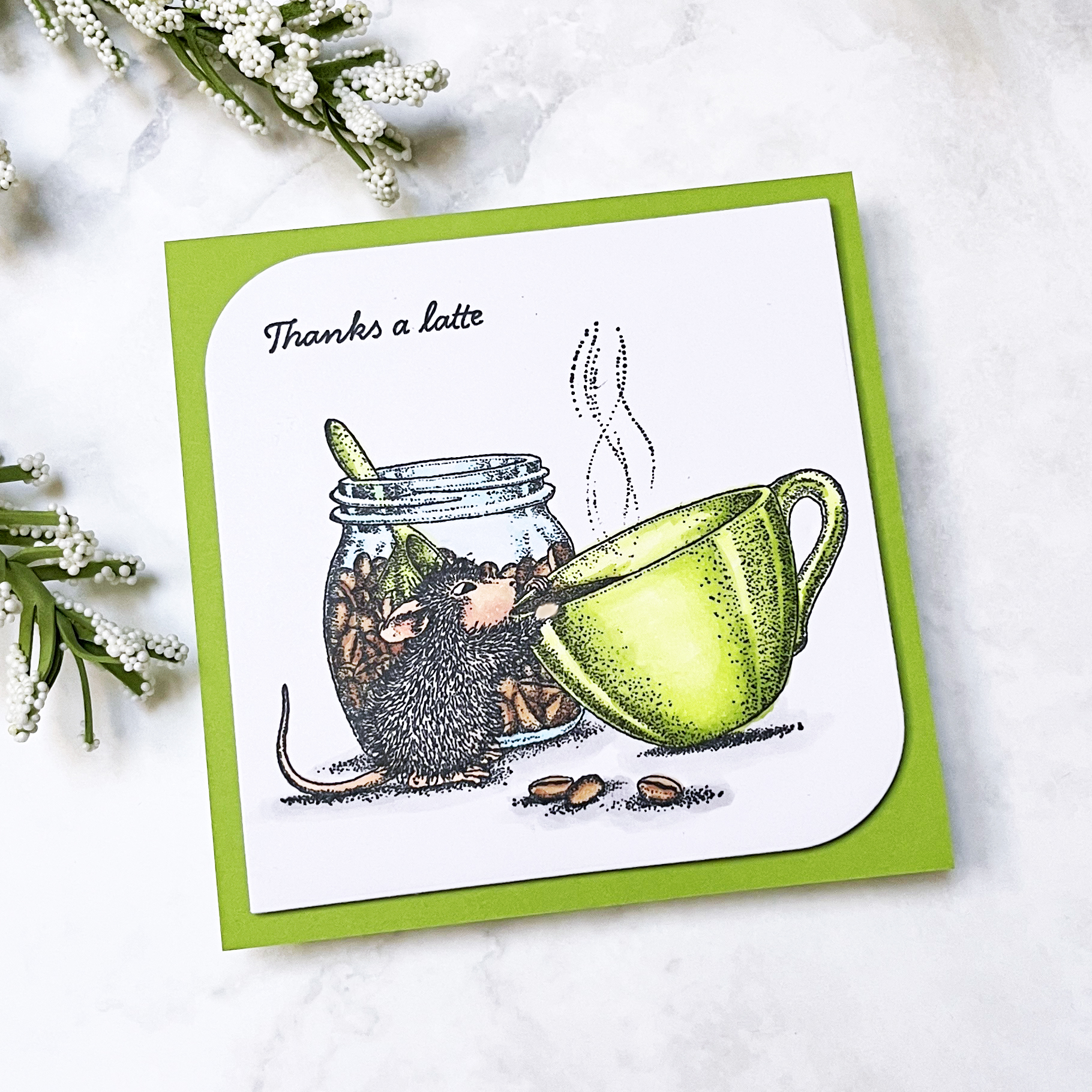
Today I’m sharing a cute square coffee-themed thank you card featuring the House Mouse Brew-tiful Day rubber stamp from Spellbinders. I can never resist a coffee pun, so I went with “Thanks a latte” for my sentiment—one of my all-time favorites!

Key Products Used:

Cute square "thanks a latte" thank you card featuring the House Mouse Brew-tiful stamp.

I stamped the adorable image and colored it with Copic markers:

Copic Colors Used:

  • Cup & Spoon: YG01, YG03, YG05
  • Coffee: E55, E25
  • Glass: BG00, B00
  • Mouse: E40, E21, R20
  • Shadows: N0, N1

Before stamping, I simply trimmed the included sentiment using my Spellbinders Shears so only “Thanks a latte” remained—super easy! The little scene includes our sweet mouse taking a sip from a giant (to him!) latte cup, with a coffee bean canister behind him. Such a cute little tableau!

I die-cut the panel with the Hero Arts Rounded Jewel Infinity Dies—I think this soft shape fits the cozy vibe perfectly. Then I added craft foam behind the panel and mounted it onto a ColorWheel Rainforest green A2 card base.

Stamped House Mouse scene card featuring a mouse sipping coffee from a giant latte cup.

This card comes together very quickly and is so fun to color. House Mouse is always popular with card recipients—every little mouse scene just makes you smile!

I’ll link to several other House Mouse posts I’ve created, because I just can’t resist these sweet little critters. You can see House Mouse is a definite favorite!

Thanks a latte for stopping by today! ☕🐭

Copic colored House Mouse sipping a big coffee in a cute thank you card with “Thanks a Latte” sentiment on a green card base.
cardmaking · Die cutting · Stamping

Best Quick & Easy Get Well Card

Clean and modern handmade get well card featuring a stamped soup cup, blue chopsticks, black enamel dots, and a yellow die-cut circle window.

The December 2025 Hero Arts Stamp & Die Kit of the Month is called Cup of Love, and it’s perfect for creating quick, modern, and heartfelt get well cards. I always need get well cards on hand, so I love having clean and simple designs that I can mass produce—and this one definitely delivers.

This month’s kit features a charming soup cup, chopsticks, labels, and warm “feel better” sentiments that make it easy to whip up comforting cards for friends and family who need a little cheer.

Clean + Modern Design With Easy Stamping

A simple and easy handmade get well card with a die cut yellow recessed circle that showcases and cup of noodle soup, crossed chopsticks and 5 black enamel dots.

For today’s card, I leaned into a fresh white and yellow color palette with pops of crisp black stamping and a hint of blue. The combination feels clean, modern, and cheerful—just the mood you want in a get well card.

Key Products Used:

How I Made the Card

  • I stamped the “cup of noodle soup” image in black ink for sharp contrast.
  • Next, I stamped the round yellow label with Lemon Drop Ink. I waited a minute for the ink to dry, stamped the sentiment “feel better soon” and die cut the image.
  • I stamped and colored the blue chopsticks, die cut them, and crossed them for a playful finishing touch.
  • For the background, I die cut a circle from the center of a white A2 cardstock panel using my Hero Arts Nesting Circle Dies.
  • I layered this white panel over a yellow A2 card base, popping it up with craft foam for dimension.
  • In the recessed yellow circle, I glued the soup cup and chopsticks.
  • Finally, I added five black enamel dots. These tiny accents brought so much contrast and visual interest to the finished design.

The result? A clean and cheerful get well card with modern charm and just enough shading and dimension to feel special—without slowing you down.

Interested in two other recent Get Well Cards I created? Click HERE.


Tip for Mass Production

If you want to make a full batch of these cards (and I definitely recommend it!), simply die cut a yellow circle and adhere it directly to a white card base. Or alternatively, you could ink blend a yellow circle. You can skip the popped-up window panel and still get the same bold pop of color.

Thanks for stopping by!

cardmaking · Video

Craft Lounge Live #4 Video Recap | Great Sentiment Stamps

Pink baby card with die-cut tags, bows, and flowers made using Hero Arts Just Because Stamp & Cut set.

Hello crafty friends! Karen Brown here with a fun recap from Craft Lounge LIVE #4! If you missed our live session, no worries — you can still catch the replay right here 👉 Watch the rerun on Facebook.

The Hero Arts Collective Facebook group is the place to stay connected, share inspiration, and see what’s new in the Hero Arts world.

Channin, Natasha, Michelle, and I had such a great time chatting and crafting together! We all worked with products from the Best Ever Collection, and even though we started with the same collection, our projects turned out completely different:

  • 🎁 Channin created a beautiful stack of gift boxes.
  • 🎨 Natasha made a stunning mixed media background.
  • 🧝‍♀️ Michelle designed an adorable “peeking elf” card.
  • 👶 And I crafted a sweet pink baby card!

My design features two stamped and die-cut tags and bows, embellished with three dainty die-cut flowers. The sentiment — “Just a little something for baby” — comes from one of my favorite sets this season, DC329 Just Because Stamp & Cut. I die cut the tags and a soft pink frame from Tutu ColorWheel Cardstock, then stamped in crisp black ink for a clean, cheerful look.

Screen shot of 4 Hero Arts Creative Team members participating in Craft Lounge LIVE #4,
Screenshot

I’ll be taking this card to a baby shower later this month, and I know I’ll be reaching for these sentiments again and again. The “birthday,” “thank you,” and “just because” options in this set are so versatile — perfect for every occasion!

Screenshot collage of Channin, Natasha, Michelle, and Karen (Kenny's Cards) from Craft Lounge LIVE #4.
Screenshot

Thanks to everyone who joined us live — and if you couldn’t make it, grab your favorite drink, tune in to the replay, and enjoy an hour of crafty conversation and inspiration. 💕

Link to: Craft Lounge LIVE #4

Photo of handmade Baby card with stamped tags with black sentiment reading “Just a little something for baby."
Cardmaking Kit · Give Away · papercrafting

One More Chapter! Hero Arts November 2025 Release + Blog Hop


Book theme cards created with the November 2025 Hero Arts Hero Studio Card Kits.

Hello, Karen Brown here — and I am curling up with a good card kit! The November Hero Studio Release is a dream come true for book lovers. This month’s theme, “One More Chapter,” celebrates cozy reading nooks, favorite stories, and the joy of escaping into a good book.

Even better, there’s a Hero Arts Blog Hop to celebrate — and prizes! So grab a cup of tea (or coffee), and come along for some page-turning inspiration.

Die-cut handmade scene card featuring a girl reading a book framed with a postage stamp border and scripty hello sentiment

📖 Card 1: My Happy Place

For my first project, I used the “Happy Place” die set from the November Card Kit of the Month to create a cozy die-cut scene.

Picture this: a girl tucked in with her favorite book, surrounded by soft periwinkle blue and warm orange tones. The card has a charming, feminine feel — like a Saturday morning spent lost in a good story.

I framed the scene with the Nesting Postage Stamp Dies to give it that “happy mail” vibe and added a sweet scripty Hello from the Fancy Die Book Bag set.

This one’s heading to a book club friend who, like me, can never resist reading just one more chapter!

Handmade book theme scene card created with Hero Arts November 2025 Card Kit.  Colors are periwinkle blue, orange and brown.

What’s Included in the Kit?


                       • To Be Read Pile 4×6 Clear Stamp Set and Coordinating Dies
                       • Happy Place Die Set
                       • Professional Bookworm 3×4 Stamp & Cut
                       • Gold Hero Wax, 1 oz.
                       • 10 Sheets of Cardstock- 1 of each color, 5.5″ x 8.5″

>>> Receive a FREE Do Not Disturb Stamp and Cut  when you purchase The Whole Studio!

Hero Arts has many different Monthly Kits that you can subscribe to including:

Card 2: Escaping Reality One Page at a Time

Bold die cut  and stamped typographic card spelling “JOY” with the O as a stamped oval reading “Escaping Reality One Page at a Time,” layered over a blue checkerboard background.

Next, I pulled out the Stamp & Cut of the Month: One Page at a Time. I love this set — it’s perfect for pairing bold typography with clever bookish sentiments.

I stamped the oval sentiment “Escaping Reality One Page at a Time” and used it as the O in my big JOY design. Then I die cut a bold J and Y from the Letter Fancy Die sets (J–N and W–Z) in bright orange, adding white shadows behind them to tie in the stamped oval.

The letters are large, 2 1/2″, creating a bold and dynamic visual card.

Stamped and die cut reading theme card created with Hero Arts November 2025 Stamp and Cut Kit called "One Page at a Time".

For the background, I created a tone-on-tone checkerboard using the November Cling of the Month — stamped Cornflower ink on Periwinkle cardstock for a crisp, graphic finish.

The result? A bold, cheerful, and clever card that feels fresh and literary — perfect for your favorite reader.

JOY  sentiment card created using Hero Arts large alphabet Letter Fancy Dies with blue and orange color palette.

GIVEAWAY 

Hero Arts will give away a $50 gift card, drawn from the comments left across the hop. Enter by Wednesday, November 5th at 11:59pm PT, and the winner will be announced on the Hero Arts blog the following week. Leave a comment on all stops for more chances to win!
  

BLOG HOP ORDER


Hero Arts
Anna Mahtani
Channin Pelletier
Charlene Madrid
Jeannie Lieu
Jennifer Kotas
Karen Brown <<<< You Are Here!
Lisa Tilson
Michelle Lupton
Michelle Short
Mindy Eggen
Natasha Polite
Rachel Kleinman
Rosie Lopez
Seeka
Nichol Spohr

💡 Final Thoughts

I adore how all the November Hero Studio kits coordinate beautifully — from cozy die-cut scenes to playful sentiments and graphic backgrounds. Whether you love to stamp, die cut, or mix both, this release has something for every creative reader at heart.

And if you’re tempted by all the coordinating goodness, consider the Whole Studio Bundle — it’s a $240 value for just $130. That’s a deal worth bookmarking!

You might also want to take a peek at Past Club Kits that are still available.

cardmaking · Give Away

CASE Me A Christmas Card 2025

Adorable Christmas card using Hero Arts Elf Culture Stamp and Die Set, Nesting Postage Stamp dies and White Holiday Collage Hero Transfer background on red paper.

I’m so excited to be part of CASE Me A Christmas Card 2025! My talented crafty friend @michelle_lupton invited me to join this year’s creative lineup, and I was thrilled to say yes. This fun annual event features ten creative hops throughout October—two on YouTube and eight on Instagram—where cardmakers CASE (Copy And Selectively Edit) cards from one another.

Key Instagram hashtag: #casemeachristmascard

Link to Join Our Instagram Hop

To join the fun, create your own Christmas card inspired by one from the hop and upload it via Inlinkz on Michelle’s blog. You can also win prizes from amazing sponsors just by participating or leaving comments on the hop posts!

I’m part of Hop #9 and am CASEing the wonderful @expressivepaper – Kathy Pisupati. Kathy created an absolutely adorable Halloween card that I just had to reimagine as a Christmas design!

Kathy’s Halloween Card:

@expresspaper card for CASE my Christmas Card 2025

My Card Details

I was inspired by Kathy’s use of postage stamp dies (always a favorite of mine) and her clever background. Instead of stenciling, I used one of my other go-to products—Hero Transfers—to create my own twist.

I stamped an adorable raccoon reaching for a hug, paired with the perfect sentiment: “Does Somebody Need a Hug?” My color palette is limited to Christmas red, white, and small dabs of aqua and tan, which gives the card a striking and dramatic look while keeping it silly, fun, and a little bit heartwarming. I also think it’s a great option for masculine cards this holiday season!

Key Products Used On My Card:

Adorable Christmas card with a raccoon reaching for a hug and the sentiment "Does Anybody Need a Hug?".  Bright red and white Hero Transfer rub-on background with three stamped and postage stamp die cut focal elements.

Enjoy the hop!