cardmaking · Mixed Media · Tutorial

3 Mixed Media Layers to Try (Beyond the Basics Techniques That Actually Work)

Simple layering techniques to add depth, texture, and interest to your mixed media cards—without the overwhelm.

Mixed media card with layered watercolor background, texture paste, stamping, embossing and vintage suitcase focal point

If you love mixed media but feel like your projects need a little more depth, this post is for you.

In today’s tutorial, I’m sharing three easy mixed media layering techniques that go beyond the basics—simple additions that create texture, interest, and that “something extra” that makes a card feel finished.

These layers are beginner-friendly, easy to repeat, and surprisingly impactful.

This post is part of my ongoing mixed media series where I create a card or tag using my easy to follow recipe.

After years of experimenting (and plenty of trial and error), I developed a simple 3-step recipe that works on almost every project.

And today, I’m sharing it with you.


✂️ In This Post, You’ll Learn:

• My 3-Step Mixed Media Recipe
• How to create an easy watercolor background
• How to layer like a pro
• How to create an interesting focal point


Karen’s 3-Step Mixed Media Recipe

Step 1: Create an Interesting Background
Step 2: Add 4+ Layers
Step 3: Add a Strong Focal Point

Simple. Repeatable. And it works on almost every project.

📌 Save this for later so you can come back when you’re ready to try this technique.


8 mixed media cards and tags from my continuing series: Mixed Media Made Simple.

If you’re new to this series, start here:
👉 Mixed Media Made Simple: My 3-Step Recipe for Fun & Easy Tags

And if you missed my foundational layering post, you’ll definitely want to read this first:
👉 Mixed Media Layering Made Simple: The 4 Layers I Use on Almost Every Project

Because today…

We’re Building On That Foundation

This post is your next step.

We’re taking the “Fab 4” layers and adding three more techniques to create a richer, more dimensional, slightly more advanced mixed media look—without losing that relaxed, beginner-friendly feel.

And the best part?

We’re using a very similar design (same colors, same focal point, same vibe) so you can clearly see how your work can evolve.

If you try this technique, tag your project with:
👉 #karensmixedmediarecipe — I would truly love to see what you create!

If you are interested in adding a new supply or two to your toolbox, you can check out my Favorite Supplies page.

Vintage look mixed media card with watercolor background that features Spellbinders Retro Suitcase die SDS-221

Step 1: Create a Background

Let’s keep this part simple and approachable.

For this card, I created:

  • A two-color watercolor background using a loose, abstract “Y” shape in soft blue
  • Filled the remaining space with warm yellow
  • A second yellow wash panel for the suitcase focal point
  • A third panel using direct-to-paper brown ink + water for a leather-like texture

💡 Tip: Don’t overthink placement—this is about movement, not perfection.

creating watercolor panels is the best first step for creating mixed medai card backgrounds and components.
Here are the 3 watercolors panels we will be using on today’s mixed media card.

Step 2: Layering — The Fab 4 + 3 More

We’re starting with the Fab 4 (your go-to layers), then building upward.

Think of this as:
👉 easy, relaxed complexity


The Fab 4 (Your Foundation Layers)

1. Stenciling (Pattern)

Add soft script in 1–2 areas using brown ink.

✔ Adds structure
✔ Keeps things grounded
✔ Works on every project

brown ink + script stencil is the best first layer for mixed media projects.
Adding soft script stenciling creates subtle pattern and movement

2. Stamping (Personality + Vintage Charm)

Use second-generation stamping (stamp once on scrap, then your panel).

I used:

  • Blue + brown inks
  • Imperfect shapes, lines, and marks

✔ Keeps everything cohesive
✔ Adds that “collected over time” look

second generation stamping with brown ink gives vintage vibe to mixed media card projects.
Second-generation stamping softens the look and blends beautifully

Now Let’s Level Up…

Here are the 3 additional layers that take your project from beginner to beautifully complex:


3. Texture Paste (3D Dimension)

Using a cobblestone stencil, I applied:

  • Blue-tinted paste
  • Brown-tinted paste
Applying tinted texture paste to mixed media  backgrounds eleveates cards from beginner level to intermediate.
Texture paste adds loads of dimension to cardmaking projects.

The result? A soft, two-tone textured layer.

✔ Adds tactile interest
✔ Creates visual depth
✔ Feels artistic and elevated

I tinted texture paste and applied with a stencil on layer 3 and you can see other layering options on my Go-To Cardmaking Supplies page.


4. Heat Embossing (Controlled Drama)

I partially stamped a Bubble Celebration background stamp using pigment ink, then heat embossed.

✔ Adds texture and contrast
✔ Keeps things imperfect and organic
✔ Creates a subtle focal texture

Partial heat embossing bubble circles on a mixed media card background adds texture and interest.
Imperfect embossing adds texture without overpowering the design.

5. Distress Crayons (Soft Aging Effect)

Add scribbles… then activate with water.

✔ Blends into previous layers
✔ Adds softness and movement
✔ Creates that “aged over time” feel

Distress crayons can add interest to mixed media card backgrounds.
A few scribbles before brushing with a wet brush.

Finish the Fab 4

6. Distress the Edges

Frame your design with brown ink.

✔ Instantly adds depth
✔ Gives a vintage finish

Intermediate level mixed media cardbackground with 6 layers, including distressing the edges with brown ink.
Distressing the edges really adds to the vintage charm of mixed media projects.

7. Splatters (Movement + Cohesion)

  • Water splatters (blotted)
  • Blue + brown splatters

✔ Pull everything together
✔ Add energy and life

Adding splatters to mixed media intermediate level watercolor card background that has 7 different layering techniques.
Don’t skip adding splatters, they really unify your projects.

How Do You Know When to Stop?

  • Let it sit for an hour (or overnight)
  • Take a photo
  • Ask: Does this feel balanced—or busy?

Today’s card: 7 layers total


✨ Why These Layers Work

  • Easy to repeat
  • Build depth without clutter
  • Work with supplies you already have
  • Add a polished, finished look

Step 3: Add a Strong Focal Point

Mixed media needs a visual anchor.

Today, I used the Retro Suitcase Die—one of my favorites.

But here’s where we elevate it:

✨ I used a BetterPress map background on the suitcase panel
✨ Lightly distressed the edges
✨ Assembled using layered die cuts

Step-by-step mixed media layering process showing stencil, stamping, and texture paste techniques for cardmakers + die cut focal point.
Vintage look die cut focal points really add to the retro beauty of mixed media background panels.

Then added:

  • Ephemera tickets (tucked behind)
  • A sentiment strip: “Friends and laughter help lighten the load”

✔ Storytelling
✔ Depth
✔ Vintage travel charm


Let’s Talk Color (Why This Works)

We kept it simple:

  • Soft blue
  • Warm yellow
  • Neutral brown

✔ Blue = calm
✔ Yellow = energy
✔ Brown = grounding

And together?

👉 A cohesive, vintage-inspired palette that feels intentional—not chaotic.


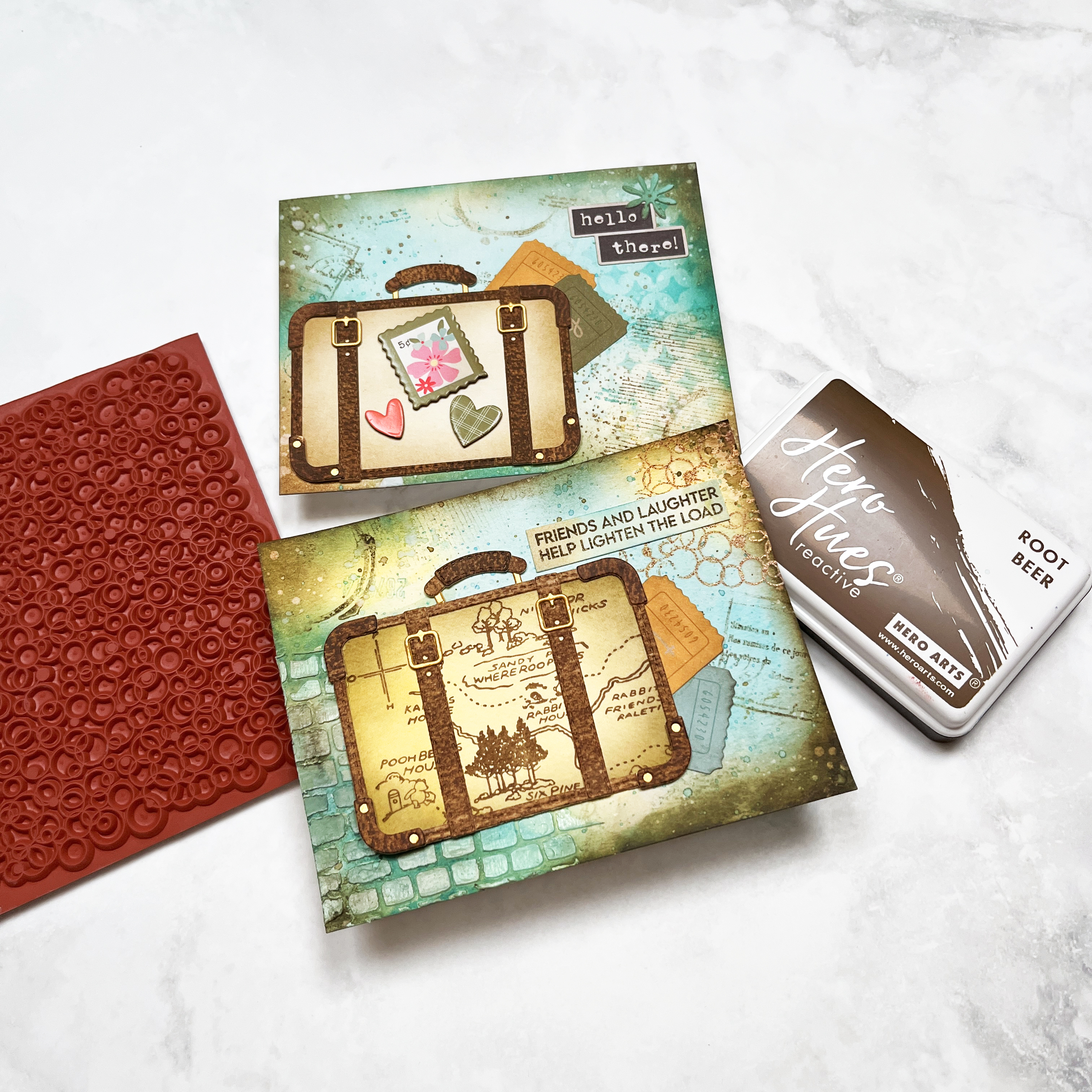
Beginner vs. Intermediate — Side-by-Side

Beginner to intermediate mixed media card comparison with blue, yellow and brown color palette and vintage travel theme.

This is where the magic happens.

Fab 4 Card (Top Card) from The 4-Layers I Use on Everything post

  • Brighter
  • Simpler
  • Clean layering

Fab 4 + 3 Card (Bottom Card):

  • More texture
  • Slightly moodier
  • Richer detail

👉 Same foundation… just built up.


Other Posts in This Series

Craft Toolbox

These are the core tools I use when building layered mixed media backgrounds

You might also be interested in my 14 Best Cardmaking Supplies for 2026 post.

Focal Point:
Retro Suitcase Die + BetterPress Map

Inks:

Tools & Layers:

Basics:

Final Thoughts

This is where mixed media really starts to feel magical.

Not because it’s complicated…
But because you’re learning how to layer with intention.

Start with the Fab 4.
Add one or two new techniques.
And let your style evolve naturally.

📌 Save this for later so you can come back when you’re ready to try this recipe.

💬 Which layer was your favorite? I’d love to hear in the comments!

🏆 Proud to be ranked among the Top Cardmaking Blogs by Feedspot


cardmaking · Mixed Media

Mixed Media Layering Made Simple: The 4 Layers I Use on Almost Every Project

A beginner-friendly guide to building beautiful, cohesive mixed media cards—without the overwhelm

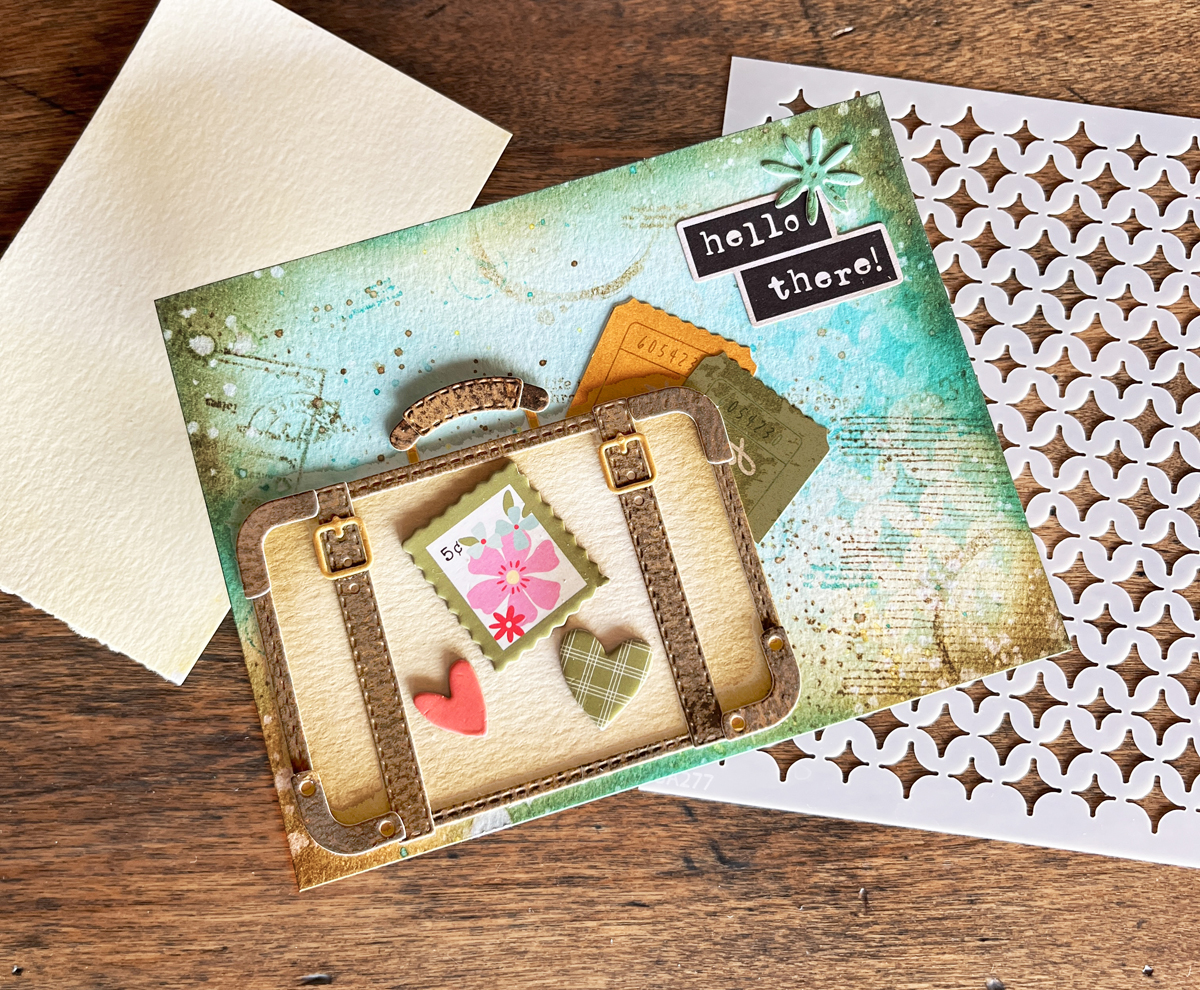
Mixed media card featuring layered ink blended background with stenciling, stamping, splatters, and a vintage suitcase focal point in aqua, yellow, and brown tones.

Have you ever looked at a mixed media project and thought:

“That’s beautiful… but where do I even start?”

I’ve been there.

When I first started exploring mixed media, everything felt overwhelming. There were so many techniques, products, and styles—but very few beginner-friendly guides that actually simplified the process.

So after years of experimenting (and yes… making a glorious mess or two), I created something I wish I had from the beginning:

Karen’s Mixed Media Recipe

A simple, repeatable framework that works on almost every project.

And today I am sharing it with you.


✂️ In This Post, You’ll Learn:

• My simple 3-step mixed media framework
• How to create a quick, cohesive background
• The 4 “must-have” layers I use on almost every project
• Why limiting your color palette makes everything look better


🧁 Karen’s Mixed Media Recipe (Quick Recap)

This is the exact process I follow again and again:

Step 1: Create an interesting background
Step 2: Add 4+ layers
Step 3: Add a strong focal point

That’s it. No overwhelm. No guessing.

📌 Save this for later so you can come back when you’re ready to create.


And today? We’re diving into the part where the magic really happens…

👉 Layering

How to create vintage look mixed media cards that are simpe and beginner friendly.

If you missed earlier posts in this series:

Mixed Media Made Simple: My 3-Step Recipe for Fun & Easy Tags
Ink Smooshing 101 — My Favorite Mixed Media Background Starter

And if you try this recipe, I would LOVE to see it—tag your project with
👉 #karensmixedmediarecipe

Browse my Favorite and Most Used Cardmaking Supplies.


🎨 Step 1: Create a Background

For today’s project, I created a soft ink-blended background on watercolor paper.

I chose colors that sit near each other on the color wheel:

• Aqua
• Yellow

When these blend, they create a soft, beautiful green—no harsh transitions, no muddiness.

Beginner Tip:
Avoid opposite colors (like purple + yellow or red + green) unless you want brown.

I used reactive inks, which means they respond to water—this becomes important in our 4th layering step (hello, splatters!).

I also created a second panel in yellow for my focal point.

2 color ink blend background for mixed media card before adding layers.
Soft ink-blended panels before layering—this is our clean starting point before the “grunge magic” begins.

✨ Step 2: The Fab 4 Layers (My Go-To Every Time)

If mixed media had a “starter pack,” this would be it.

These are the four layers I use on almost every project—they are reliable, forgiving, and incredibly effective.

I call them…

💛 The Fab 4


1. Stenciling (Adds Pattern)

This is where your background starts to come alive.

I used a diamond stencil to add soft pattern using the same aqua tones.

✔ No perfect placement
✔ No covering the whole background
✔ Just touches of pattern

Think: “strategic randomness”

I’ve listed my favorite mixed media stencils in My Go-To Cardmaking Supplies page.

Stenciling, Sparkle Weave, added to a mixed media background.
The Sparkle Weave stencil works beautifully on mixed media cards.

2. Stamping (Adds Personality & Vintage Charm)

Now we add character.

I used imperfect, sketch-style stamps—dots, lines, circles—for that slightly vintage feel.

Beginner Trick:
Try second-generation stamping (stamp once on scrap, then on your panel) for softer impressions.

I introduced a third color here:

• A neutral brown

This grounds the entire design and keeps things from feeling too “floaty.”

Stamping layers on a mixed media card background.
After stamping layers—notice how the background is starting to feel more textured and dimensional.

3. Distress the Edges (Adds Depth)

Time to gently “grunge it up.”

I blended brown and a touch of blue around the edges.

This simple step:

• frames your design
• adds age and depth
• makes everything feel more finished

distressing the edges of a background with Root Beer brown ink and a blending brush.
Edges distressed for depth and contrast really start to pull the background together.

4. Splatters (Adds Movement & Magic)

This is where everything comes together.

First: water splatters (reactive inks = magic ✨)
Then: light splatters of all three colors

Turn your panel as you go—this keeps things natural and balanced.

Adding water splatters and ink splatters to a mixed media card background.
Finished background after The Fab 4—layers, texture, and movement working together.

🎯 When to Stop?

After the Fab 4, pause and look.

Ask yourself:

👉 Do I love it?
👉 Does it feel balanced?

If yes—STOP. 🎉
If not—add one more layer and reassess.

Remember: we’re going for “imperfect by design.”


🧳 Step 3: Add a Focal Point

I chose a vintage-style die cut suitcase (because… how cute is that?!).

To keep the look cohesive, I created custom panels instead of using cardstock:

• Yellow panel for the suitcase body
• Brown “leather” panel using direct-to-paper + water

This gives it that worn, travel-ready feel.

Die cutting a focal point for a layered mixed media background.
Finished layered background using four mixed media techniques

✨ Pro Tip: Instant Layering Shortcut

Even experienced mixed media artists use this:

👉 Pre-printed ephemera

I tucked in:

tickets
a sentiment (such an easy option)
small embellishments

These add detail without extra effort.

I placed the suitcase slightly off-center—like it’s ready to hop on a train and go on an adventure.

📌 Save this for later on Pinterest.


🎨 Let’s Talk Color (The Secret Sauce)

I kept everything to just three colors:

• Aqua (calm)
• Yellow (energy)
• Brown (grounding)

Using the same colors in:

✔ background
✔ layers
✔ focal point

…creates instant cohesion.

More colors ≠ better
Fewer colors = harmony


✨ Why These Layers Work

  • Easy to learn and effective everytime
  • Build depth without clutter
  • All 4 layers work well together
  • Add a polished, finished look

🧰 Supplies Used From My Toolbox

You might also be interested in my 14 Best Cardmaking Supplies for 2026 post.

Focal Point:
Retro Suitcase Die from the We Have Baggage Collection

Inks:
Reactive Inks (aqua, yellow, brown tones)

Tools & Layers:
Blending Brushes
Background Stamps: Background Builder and Vintage Maps and Ledgers
Stencils – Sparkle Weave
Ephemera – chipboard, tickets/sentiments

Basics:
Watercolor paper (140 lb.)
Die cutting machine
Adhesives


💭 Final Thoughts

If you’re new to mixed media, start here.

The Fab 4 layers will take you from:

👉 “flat and plain”
to
👉 “textured and full of life”

…without overwhelm.

Layering isn’t about doing more—it’s about doing the right things in the right order.

And now you have that order. 💛

📌 Save this for later so you can come back when you’re ready to try this technique


📌 If you try this, tag your project with #karensmixedmediarecipe
I would truly love to see what you create.


✨ Coming Next…

If you enjoyed these foundational layers, you’ll love the next step—Beyond the Basics: 3 Mixed Media Layers to Try, where I build on the Fab 4 to create richer, more dimensional designs.

Die cutting · Mixed Media

3 Easy Mixed Media Cards for Beginners | Line of Being Die

Part of My Continuing Series: My 3-Step Mixed Media Recipe

3 modern abstract faces on a handmade card with a watercolor background.

Sometimes a die set arrives and your brain immediately starts firing off ideas.

That was me with Spellbinders Line of Being die set from Jaycee’s All My Senses Collection.

It’s minimalist. Abstract. Unexpected. Just a few delicate lines forming eyes, a nose, lips… and that tiny heart on the cheek.

It felt modern and artistic — and I knew it deserved something special.

So instead of making one card, I made three.

Three different artistic mixed media takes on the same striking focal point.

And interestingly? Each one feels completely different.


✂️ In This Post, You’ll Learn:

• How to add a simple but dramatic focal point
• Learn to create easy custom watercolor backgrounds
• How to add a few light layers that add interest
• Using gel press prints for your background


3 Mixed Media cards created with die cut "Line of Being" die cut from Spellbinders.

A Little Mixed Media Context

If you’ve been following along in my new series:

Today’s cards are a little different.

They’re what I’d call Mixed Media Lite.

Understated.
Modern.
Intentional.
Artsy without being busy.

Use #karensmixedmediarecipe so we can follow along with each other’s projects.


Card One: The “Green Picasso” Card

Green Picasso handmade mixed media "Line of Being" card with watercolor background and 5 additional layers.

This card started with a hand-painted watercolor background.

I taped my watercolor paper to a hardboard using painter’s tape and lightly dampened the area where I wanted color.

Using various shades of green, I let the paint move organically — blobs, peninsulas, soft edges. No strict shape.

I used the die plate as a guide to estimate the size of my watercolor “face” (approximately 3 ¼” x 4 ½”).

Once dry, it felt very Picasso-meets-Buddha to me.

There’s quite a bit of white space around the painted area, which keeps the composition modern and breathable.

While brainstorming, I created 3 watercolor backgrounds. I went with the right two and filed the left panel in my premade backgrounds bin.

3 watercolor backgrounds + a bold black die cut creates 3 artsy modern handmade cards
Watercolor backgrounds work so well with mixed media cardmaking.

Subtle Layers (5 Total)

Even though this card feels simple, I added five quiet layers — because as you know, my recipe suggests 4+ layers.

  1. Light Script Stenciling
    Using Fog Reactive Ink, I stenciled two small areas of script. The pattern flows from watercolor into white space, about 1” sections.
  2. Tiny Rub-On Transfers
    Small Asian characters placed strategically. Just enough to intrigue.
  3. Second Generation Stamping
    Miss Detective small eyes, lips, fingerprints, and a heart stamped lightly in black reactive ink. Soft texture — not bold imagery.
  4. Partial Background Stamping
    I inked only portions of a bubble background stamp with Fog ink, bending the stamp to touch the paper selectively. Some impressions land on watercolor, some on white space.
  5. Splatters
    Blue-green and gold splatters to finish.

The Line of Being focal point — die cut from black cardstock — creates dramatic contrast against the organic green.

The sentiment? A small artistic rub-on that says “smile.”

Mounted onto a black A2 base using rounded rectangle infinity dies.

Bold. Modern. Graphic.

Mixed media card with green watercolor face background and black abstract face die cut with a second version in the background with my watercolor paint palette.
Bold but simple black die cuts make such interesting focal points for your mixed media cards.

Card Two: Pink & Green Modern Minimal

This card takes a lighter approach.

I painted:

  • A kidney-shaped pink wash on the right
  • A smaller irregular green circle blending slightly into the pink on the left

Lots of white space.
Lots of breathing room.

Watercolor backgrounds + splatters + black die cuts creates a bold modern mixed media look that works so well for  cardmaking projects.
Colorful splatters elevate almost every mixed media project.

Then I added:

No heavy layering.
No traditional mixed media build-up.

Just artistic restraint.

And I love how eye-catching it feels despite its simplicity.

This card is proof that there’s no strict rule for how many layers a mixed media project must have.

Sometimes less truly is more.

Pink and green modern watercolor card with minimalist black face die cut

Card Three: Gel Press Version

I thought I was finished at two cards.

But overnight I had that creative whisper:

“What about a gel press background?”

So I shopped my stash of gel press prints (this is why I keep them!) and chose one with beautiful movement and color variation.

I:

The premade sentiment sticker finished it effortlessly.

Same focal point.
Completely different mood.

Gel press background card with metallic splatters and abstract line face

Why I Love Making Variations

Creating the same card multiple ways is incredibly instructive.

You learn:

  • How background weight changes a design
  • How much layering is “enough”
  • How focal points behave against organic vs graphic surfaces
  • What feels like you

It’s creative experimentation without pressure.

If you’re new to mixed media, I highly recommend starting with something approachable like my Easy & Addictive | Beginner Mixed Media Tag Tutorial and VIDEO.

For those building their stash, I also shared my 14 Best Cardmaking Products and Supplies for 2026, which might be helpful.

Build Your Cardmaking Toolkit:

If you are looking to equip your crafting space for new projects, these are the products I used today:

Diecutting:

Stamps:

Inks:

Which One Is Your Favorite?

The layered Green Picasso?
The modern Pink & Green?
Or the bold Gel Press version?

I’d truly love to know.


Mixed Media · Tutorial

Ink Smooshing 101 — My Favorite Mixed Media Background Starter

Learn to Create Easy But Beautiful Mixed Media Cards: Part 2 in my Karen’s 3-Step Recipe Series

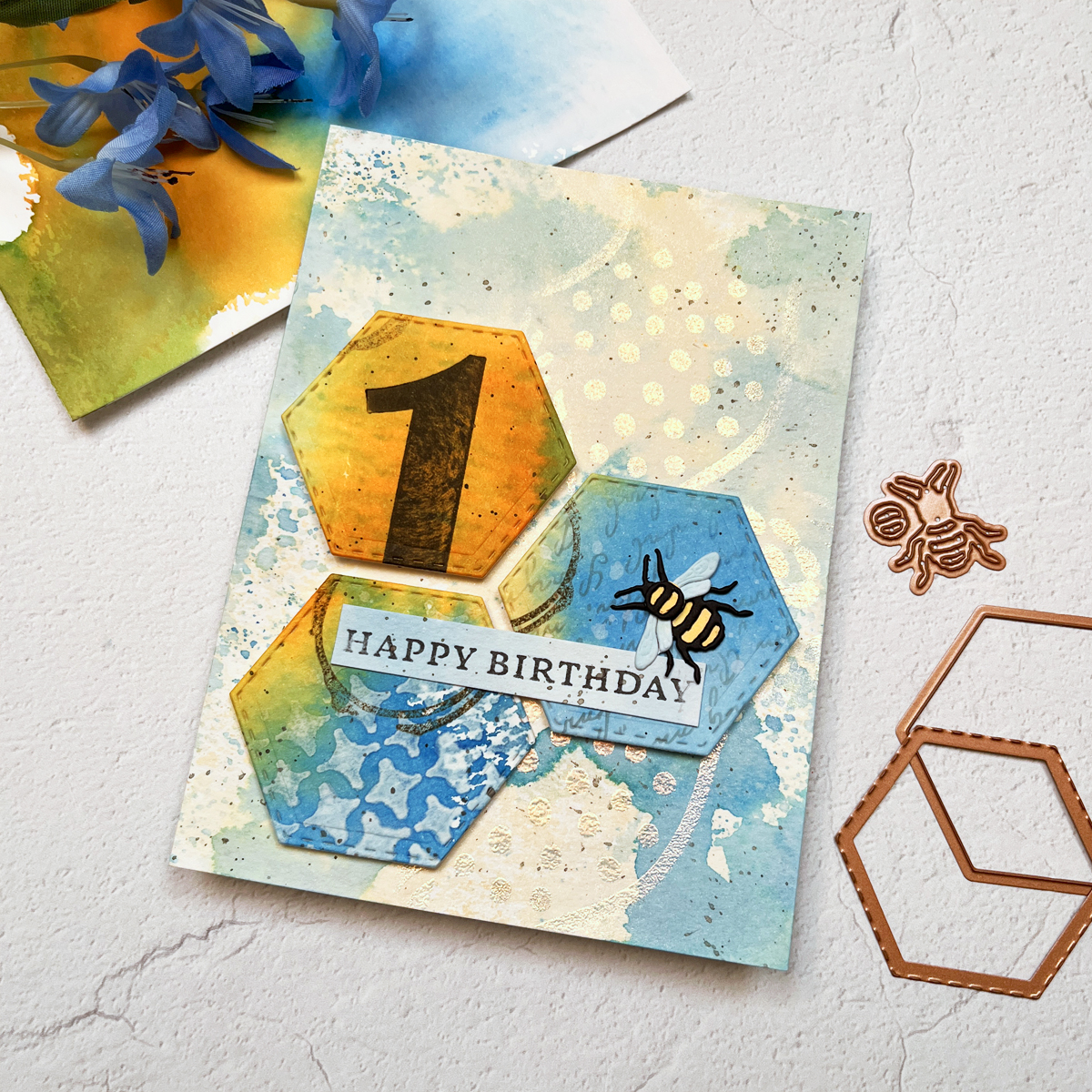
Mixed media birthday card featuring blue and honey gold ink smoosh backgrounds, layered stamping and stenciling, stitched hexagon die cuts, and a small bee embellishment.

Have you ever looked at a mixed media project and thought, “That’s beautiful… but I have no idea where to start”?

I’ve been there.

After years of playing with inks, stamps, stencils, and paper, I finally realized something important:

Mixed media doesn’t have to be complicated.

That’s when I developed my own simple framework that I now call:

Karen’s Mixed Media Recipe

Step 1: Create an Interesting Background
Step 2: Add 4+ Layers
Step 3: Add a Strong Focal Point

That’s it.

This is part of my continuing series on Mixed Media.

If you missed the introduction to this series, you can read it here:
Mixed Media Made Simple: My 3-Step Recipe for Fun & Easy Tags.

Next in the series is: The 4 Layers I Use on Every Project


In This Post, You’ll Learn:

• What ink smooshing is and why it’s perfect for beginners
• 5 easy ink smooshing techniques to try
• How to choose colors that blend beautifully
• How to turn your backgrounds into a finished card

📌 Save this for later so you can come back when you’re ready to try it.


Now today we are diving deep into Step 1 — Backgrounds, and I’m starting with my absolute favorite beginner technique:

Ink Smooshing.

Mixed Media Birthday Card with 6 additional layers added to ink smoosh background. Color palette is blue, gold and cream.

Why Ink Smooshing Is Perfect for Beginners

If you are new to mixed media, this is the technique I always recommend first.

Why?

• No precision required
• Fast and easy to create
• Extremely forgiving
• Every panel turns out unique and interesting

There are no mistakes here. Just layers of beautiful, organic color.

And the more water you use?
The softer and dreamier your background becomes.

You might also enjoy watching my YouTube video: Mixed Media Tags for Absolute Beginners, where I walk you through the ink smoosh process on camera.


Let’s Talk Color (Without Adding a Step 4 😉)

You might be wondering if I should add a Step 4 to my recipe:
Use 1–3 colors.

Color restraint is absolutely important in mixed media.
Most cohesive projects use 1–3 colors. More than that and things can start to feel muddy or chaotic.

But visually, I love the simplicity of a 3-Step Recipe.

So instead of adding a formal Step 4, I treat color choice as a design principle that supports every step.

For today’s project, I chose:

• A neutral tan
• Honey golden yellow (Wild Honey Distress Ink)
Blue Hawaii Reactive Ink

The blue feels calming.
The yellow has energy.
Together they create a beautiful balance.

When choosing multiple colors, try using colors that are next to each other on the color wheel (analogous colors). They blend naturally and beautifully.

Avoid mixing complementary colors (opposites like blue + orange, red + green, yellow + purple) unless you intentionally want a neutral brown — because they will neutralize each other quickly.

Mixed Media birthday card with heat embossing, stamping, letterpress, watercolor bleaching, splatters, stenciling.

Basic Ink Smoosh (Step-by-Step)

Ink smooshing is wonderfully simple.

  1. Dab a water-based ink (Distress Ink or Reactive Ink) onto your craft mat, acrylic block, or acetate.
  2. Spritz with water.
  3. Press watercolor cardstock into the puddle.
  4. Let it sit for 1–5 minutes.
  5. Lift and dry.

That’s it.

The result is a soft, watercolor-style panel full of movement and variation.


Practice Makes Better — We’re Making TWO Backgrounds

Since this post is all about backgrounds, I decided to create a project using two ink smoosh panels.

One panel will become the card background.
The second panel will be die cut into hexagons for our focal point.

This gives us double the practice — and far more visual interest than die cutting from solid cardstock.

Because we created both panels together, the colors coordinate beautifully.

And yes… this is where my hashtag comes in:

If you try this technique, I would love to see it.
Use #karensmixedmediarecipe so we can follow along with each other’s projects.

I think it will be such a fun way to build this series together.


5 Ink Smoosh Variations

I created five variations for this post. Not because you need to do all five every time — but to show how versatile one technique can be.

Pin this graphic for future reference

Five easy ink smooshing ideas for card backgrounds including salt texture, stamping, acetate prints, and multi-color mixed media techniques.
Ink smooshing technique with watercolor cardstock creating soft abstract card background ideas.

1. Single Color Basic Smoosh

I used a neutral cream ink.

Dab ink on mat → spritz → lay panel into puddle → weight with acrylic block → wait 1–5 minutes.

This is a total workhorse background.
Consider making extras for your premade background bin.

Process photo showing basic inksmoosh set-up
Easy neutral background that works with almost any card or tag project.

2. Ink Smoosh + Salt Texture

Create a basic panel.

While still wet, sprinkle salt.
Let dry completely.
Brush off the salt.

The salt absorbs pigment and creates beautiful mottling.

The darker the ink, the more dramatic the effect.

Instant vintage texture.

Process photo showing the Ink Smoosh + Salt Technique with tan ink on watercolor paper
Adding salt to your ink smooshing adds surprising interest and texture.

3. Multi-Color Smoosh

Start like the basic version, but add 2–3 colors in bands or random placement.

This panel is vivid and dynamic — and it’s the one I used to die cut my hexagons.

Remember:
Stick to 1–3 colors that blend nicely.

Process photo showing two color ink smoosh technique (blue and gold)
Using two colors of ink on your ink-smoosh backgrounds adds bold dynamic energy to your projects.

4. Two-Color Ink Smoosh Stamping

Dab ink onto an acrylic block.
Spritz.
“Stamp” onto watercolor cardstock.

Repeat with same or new color until satisfied.

I used tan and blue here — and this panel became the main card background.

Process photo showing Ink Smoosh Acrylic block stamping variation with blue ink on watercolor paper.
Ink smoosh stamping is a great way to have more control on your ink placement.

5. Ink Smoosh with Acetate

Dab ink on acetate.
Spritz.
Bend so only part “kisses” the paper.

This is fantastic for controlled color placement.

I also gently shook the acetate for larger splatters.

Process photo showing Ink Smoosh Acetate variation with yellow ink on watercolor paper.
By bending your ink smoosh acetate, you can add dabs of color where you want.

Shop Your Stash

I keep a bin full of premade backgrounds so I can “shop” when I start a new project.

On Background Days, I make extras.

Today I added three panels to my premade background bin.

Future Karen will thank me.


Let’s Add Layers

Layers are the magic in mixed media.

Here’s what I added to the blue and gold panel (the one I die cut from):

  1. BetterPress Number (Bold Color Mix Numbers BP-243) using Licorice Reactive Ink
  2. Script stencil on about 20% of the card
  3. Removed color through Sparkle Weave stencil using a baby wipe
  4. Stamped coffee stains with Root Beer ink
  5. Water splatters (blotted)
  6. Black splatters
Mixed Media Background panel with addtional layers: BetterPress Number (Bold Color Mix Numbers BP-243) using Licorice Reactive Ink,
Script stencil on about 20% of the card,Removed color through Sparkle Weave stencil using a baby wipe,Stamped coffee stains with Root Beer ink, 
Water splatters (blotted),
Black splatters
Adding additional layers to your ink smoosh background creates interesting depth to your finished card.

To the card background panel, I added:

Dots and squiggles stenciled with iridescent bronze embossing powder
• Fine black splatters

Layers create depth.
Depth creates interest.

And the shine on the background is SO beautiful in person.

Process photo showing mixed media card components ready to assemble with a beautiful metallic heat embossing glow on the watercolor background panel.
Gathering your mixed media elements is always fun.

Focal Point — Hexagons

I love using shapes as focal points.

Hexagons are wonderful because they interlock — almost like puzzle pieces.

I die cut three stitched hexagons from my layered panel.

Two are stacked.
The third nestles into the “V” space.

Then I added the sweetest little bee, die cut from leftover scraps.

Because we created our panels first, the hexagons feel cohesive and integrated — not pasted on.

The blue and honey gold palette moves beautifully across the design.

Mixed Media Birthday Card with Spellbinders Vintage Lavender Fields Stitched Hexagon Die Cut Focal Point with a charming Bee.

Build Your Mixed Media Toolkit

If you’re just getting started with mixed media, here are a few of the essentials I personally use.

Die Cutting:

My Favorite Mixed Media Inks:

Essential Supplies:

Layering Staples:

If you’re building your craft room supplies, you might also enjoy my guide to the 14 Best Cardmaking Products and Supplies, where I share the tools I reach for again and again.


I have a 25 second fast paced reel of this card.


Final Thoughts

If you are new to mixed media, start here.

Ink smooshing builds confidence.
Confidence builds creativity.

And creativity builds layers.

If you try this technique, tag your project with #karensmixedmediarecipe — I would truly love to see what you create.

Next up in this series, we’ll dive deeper into layering magic: The 4 Layers I Use on Every Project.