Mixed Media · Tutorial

Mixed Media Made Simple: My 3-Step Recipe for Fun & Easy Tags

Mixed media doesn’t have to mean messy chaos and 47 random products scattered across your desk.

I finally realized that what I needed wasn’t more supplies… I needed a formula.

I absolutely LOVE the look of mixed media—and honestly, it’s some of the most fun you can have in a craft room. There are no rules. No mistakes. Just happy little outcomes (and sometimes a few gloriously imperfect ones).

But when I first started, I had no idea where to begin. I admired so many artists’ projects… but how did they know what to add next?

After years of experimenting (and making a delightful mess of watercolor paper), I developed a simple 3-step recipe that works on almost every project.

And today, I’m sharing it with you.


✂️ In This Post, You’ll Learn:

• My 3-Step Mixed Media Recipe
• How to create easy but interesting backgrounds
• Which layers are my go-to workhorses
• How to choose a strong focal point


🧁 Karen’s 3-Step Mixed Media Recipe

Step 1: Create an Interesting Background
Step 2: Add 4+ Layers
Step 3: Add a Strong Focal Point

That’s it.

📌 Save this for later so you can come back when you’re ready to create.


This is Blog Post #1 in a new mixed media series where I’ll walk through each part in detail — visually and step-by-step. If this kind of creative play excites you, be sure to subscribe so you don’t miss the tutorials ahead.

If you try this recipe, I would love to see it.
Use #karensmixedmediarecipe so we can follow along with each other’s projects.

Now let’s walk through today’s tag together.
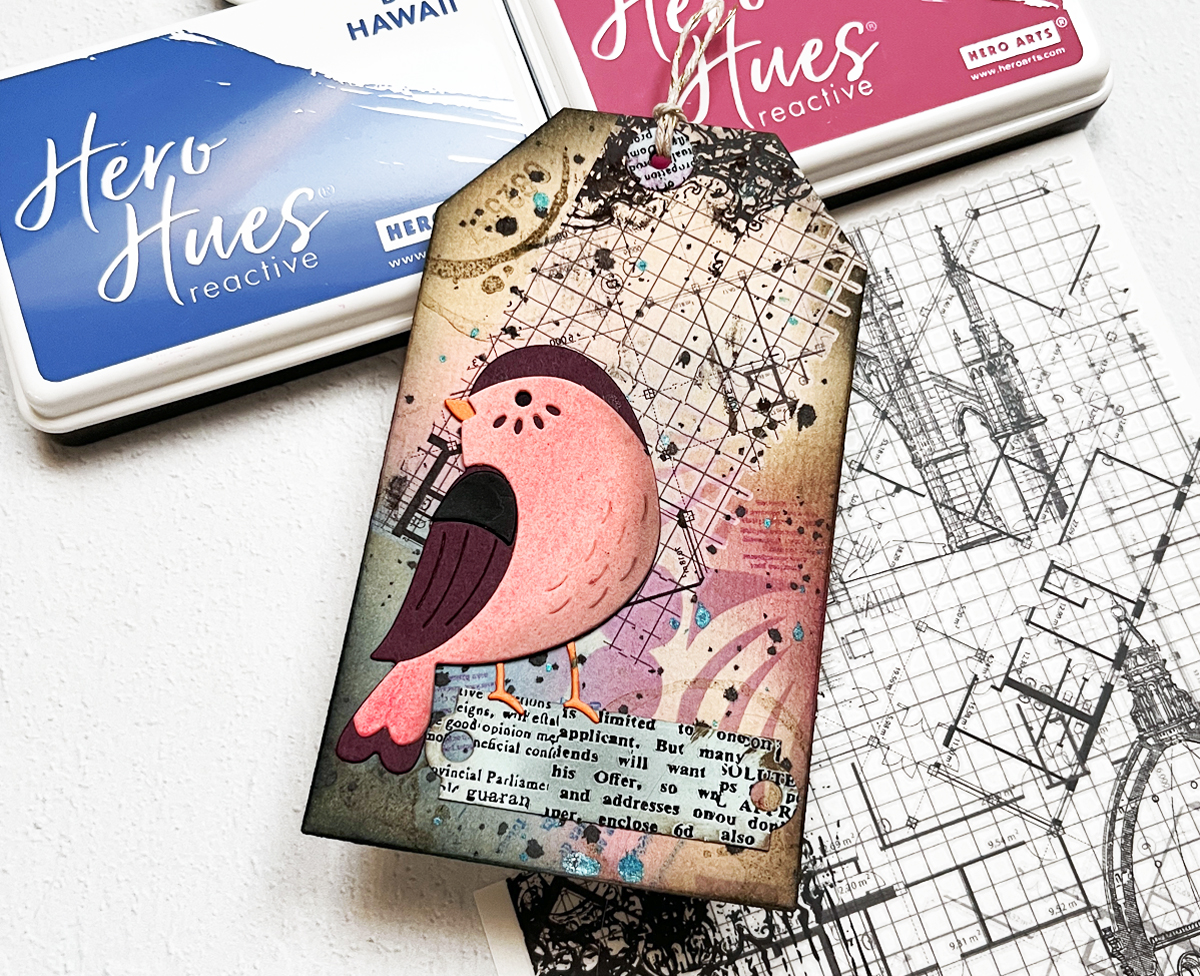
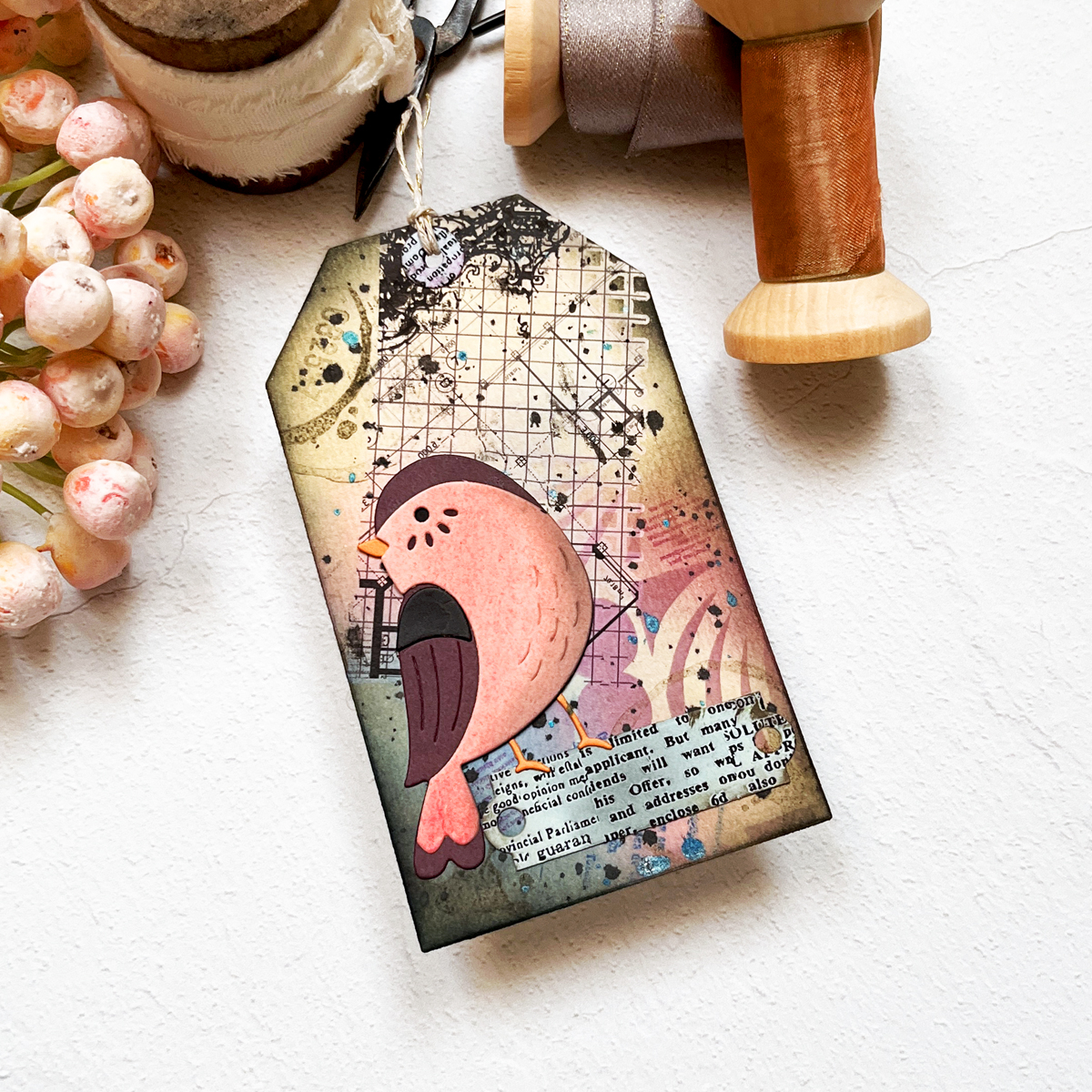
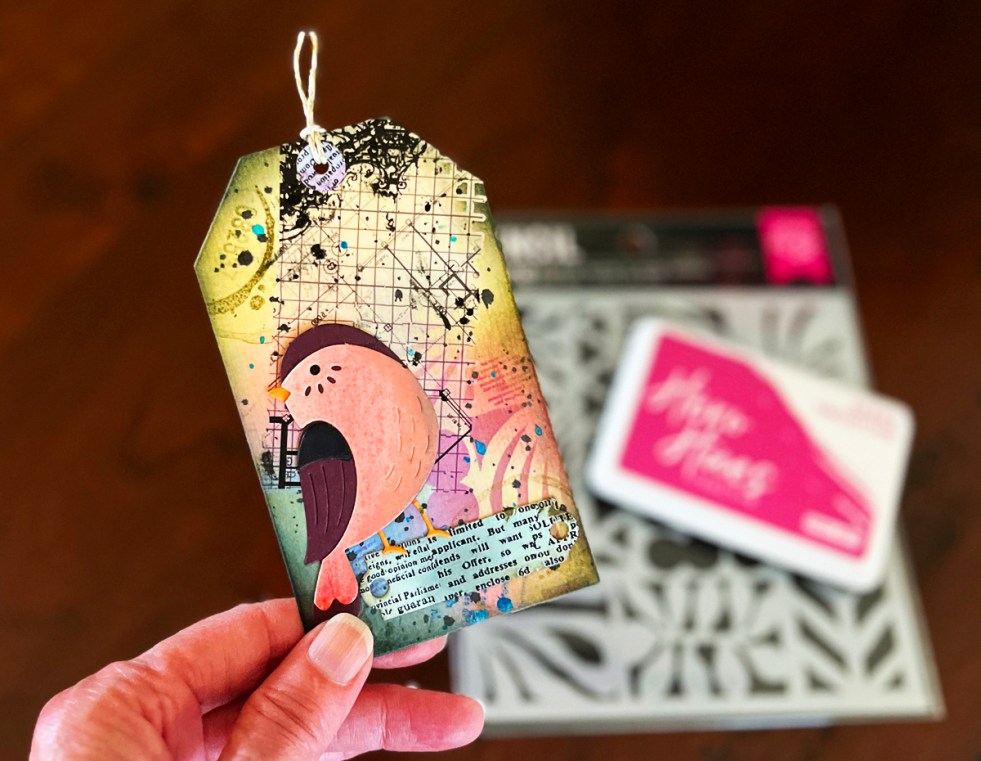
Stenciled, ink blended tag with rub on transfers with 7 layers.

Step 1: Create an Interesting Background

For today’s tag, I started with a watercolor wash.

I scribbled a brown watercolor marker onto my craft mat, spritzed it with water, and brushed the color onto heavy watercolor paper. If you want deeper color, simply let it dry and repeat the process.

Once dry, I die cut the panel using a 3” x 5” tag die. I love this size because it gives me plenty of creative real estate.

Tan is one of my favorite neutral starting points — it plays beautifully with layered color and keeps everything cohesive.
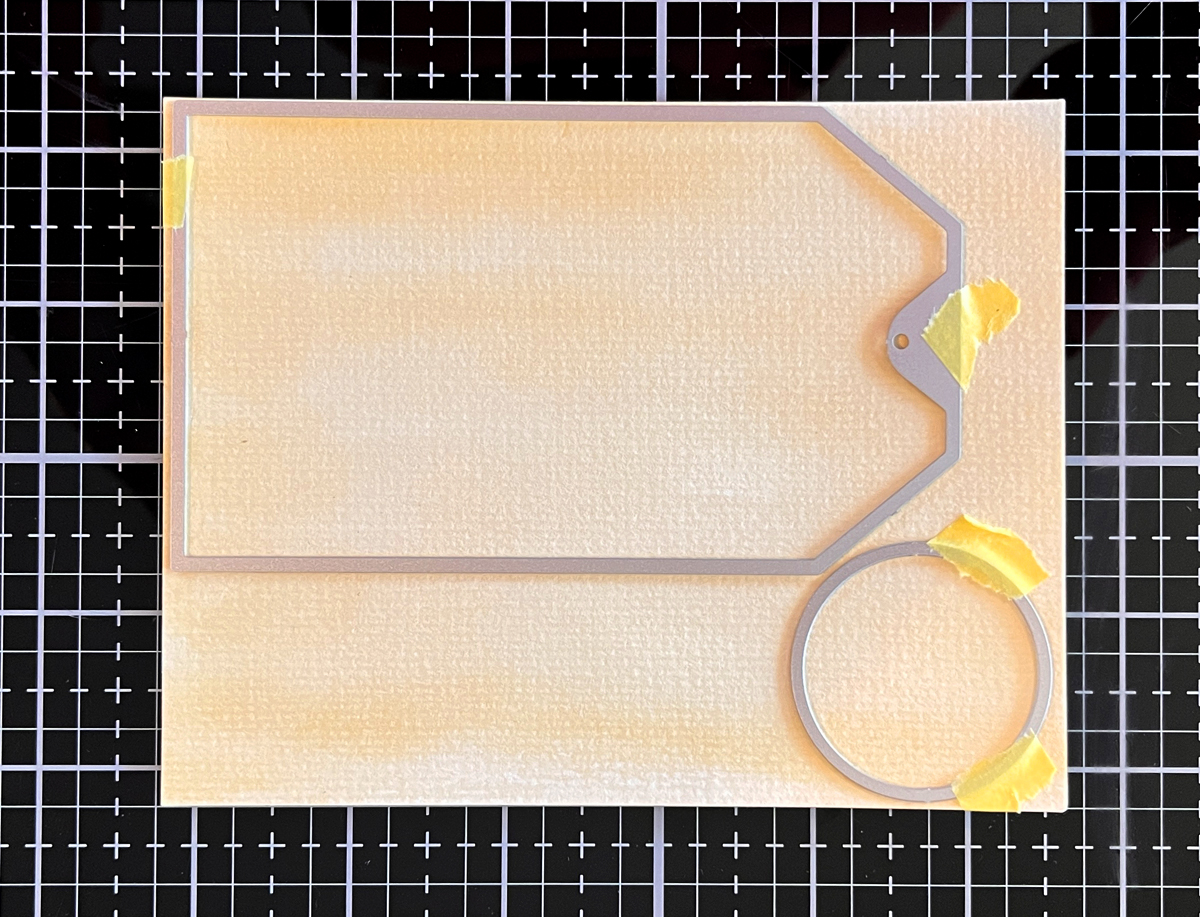
Process photo of mixed media tan watercolor wash tag background.

Step 2: Add 4+ Layers (Today I Added 7!)

Layers are where the magic happens.

On most of my mixed media projects, I use at least four layers — but often more. The key is variety, contrast, and a little bravery.

Here’s what I added today:

1. Ink Blending

Using water reactive inks (Berry Smoothie and Blue Hawaii) and a blending brush, I blended color onto the lower left portion of the tag — about two-thirds of the surface.

Don’t overthink this step. I started mid-left with Berry Smoothie and worked inward, then added Blue Hawaii to the bottom corner.

There is no “right” placement. Pick a spot. Add color. Assess. Adjust. Keep going.

2. Stenciling

I used the Floral Trove stencil — it’s wonderful for tags because of its 9 different rectangular designs.

Using the same two ink colors as in step 1 keeps everything soft and cohesive. Now my neutral tan base has subtle pattern and depth layered over it.

3. Hero Transfers

I trimmed a 3” x 2” grid element from the Grids and Icons Mixed Media Hero Transfers set and applied it at an angle using a bone folder.

Those black grid lines instantly add structure and contrast.

4. Stamping

This is where personality comes in.

I stamped:

  • A circle coffee stain
  • An ink blot
  • Numbers
  • A postmark
  • Script text

Using Root Beer Brown, Blue Hawaii, and Berry Smoothie keeps everything coordinated.

The goal isn’t to make one stamp stand out — it’s to build subtle interest. Look for shapes, textures, numbers, partial images… don’t stress about perfection.
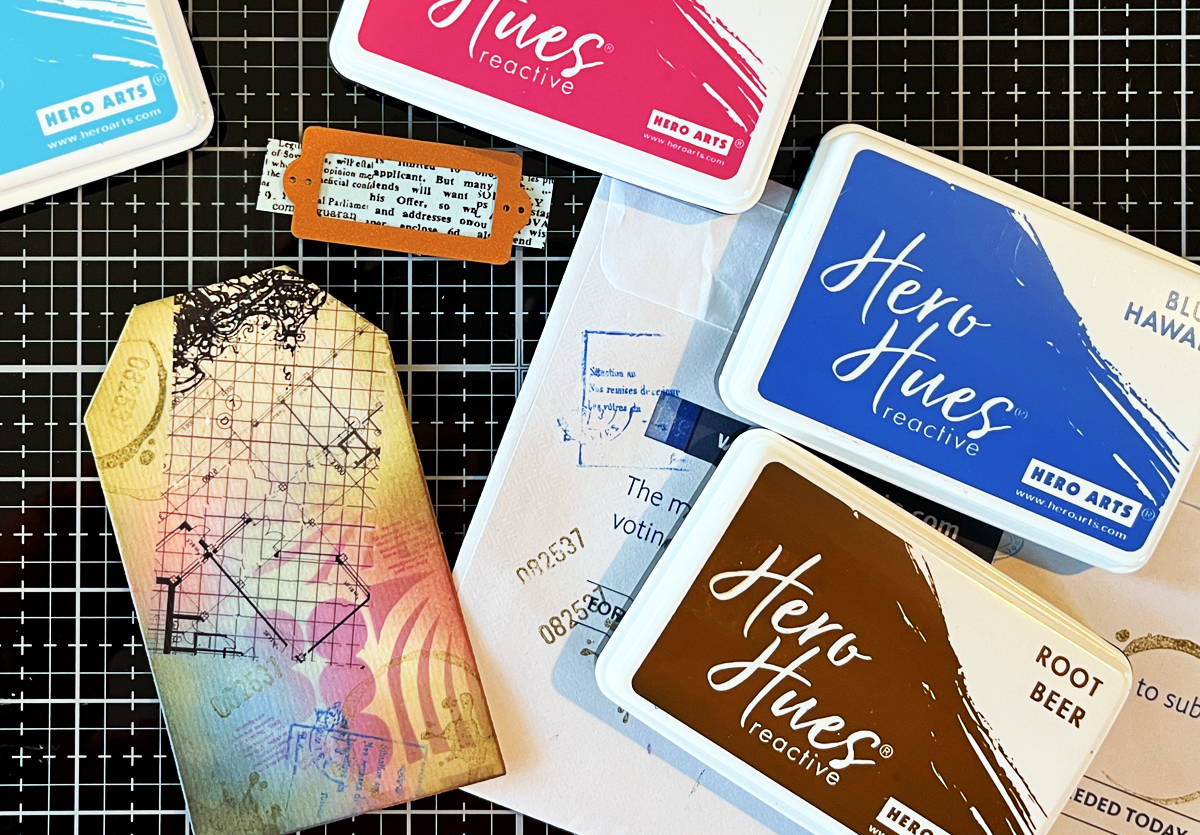
Process photo of ink blending on tan mixed media watercolor tag with detail of Hero Arts grid rub-on transfer and stamping.

5. Add Words

I die cut a small scrap with printed words (leftover from a previous project — yes, I save almost everything!).

You could also use dictionary scraps, stamped text, or stencil writing. I softened the edges with brown ink.

6. Ink the Edges

Root Beer reactive ink around the edges, finished with a touch of Licorice black, frames the tag and grounds the design.

7. Splatters

I almost always finish with splatters. Today I used blue and black. I removed the top nozzle from a bottle of ink spray and gently flicked the droplets onto the tag.

They unify the layers and add that final touch of “imperfect by design.”


Step 3: Add a Strong Focal Point

For today’s focal point, I used the Love Note Birds die cut.

It’s simple, not overly detailed, and perfectly sized for a tag.

The pink panel was die cut from a leftover watercolor gradient (because scraps are creative gold). I lightly shaded it with leftover black ink on my blending brush to soften it and prevent it from feeling too bright.

I positioned the bird slightly off-center toward the lower left and adhered it directly to the tag.

Off-center placement keeps things interesting.
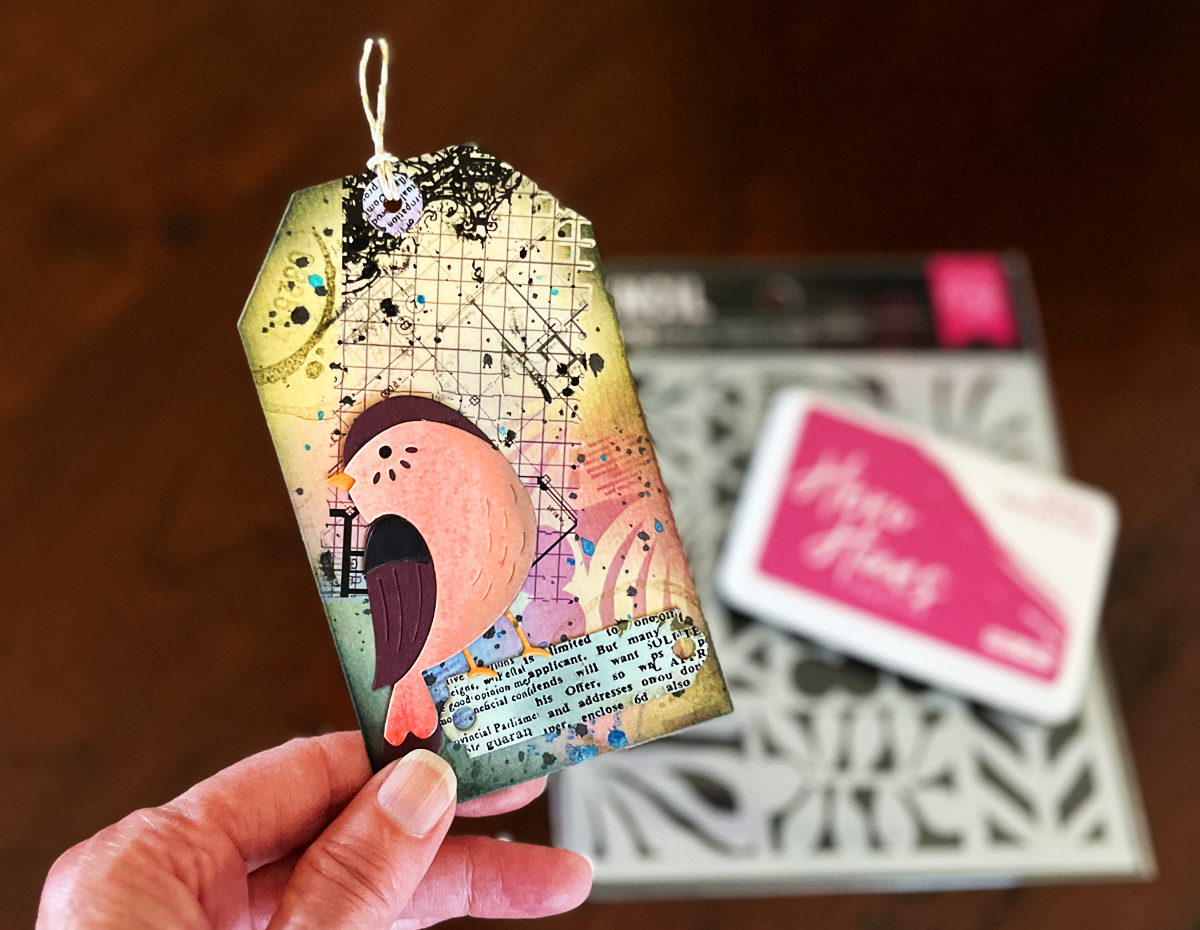
Finished mixed media tag with 7 layers + a die cut bird focal point.

If you’d like more beginner-friendly inspiration…

My Mixed Media “Cheat Sheets”

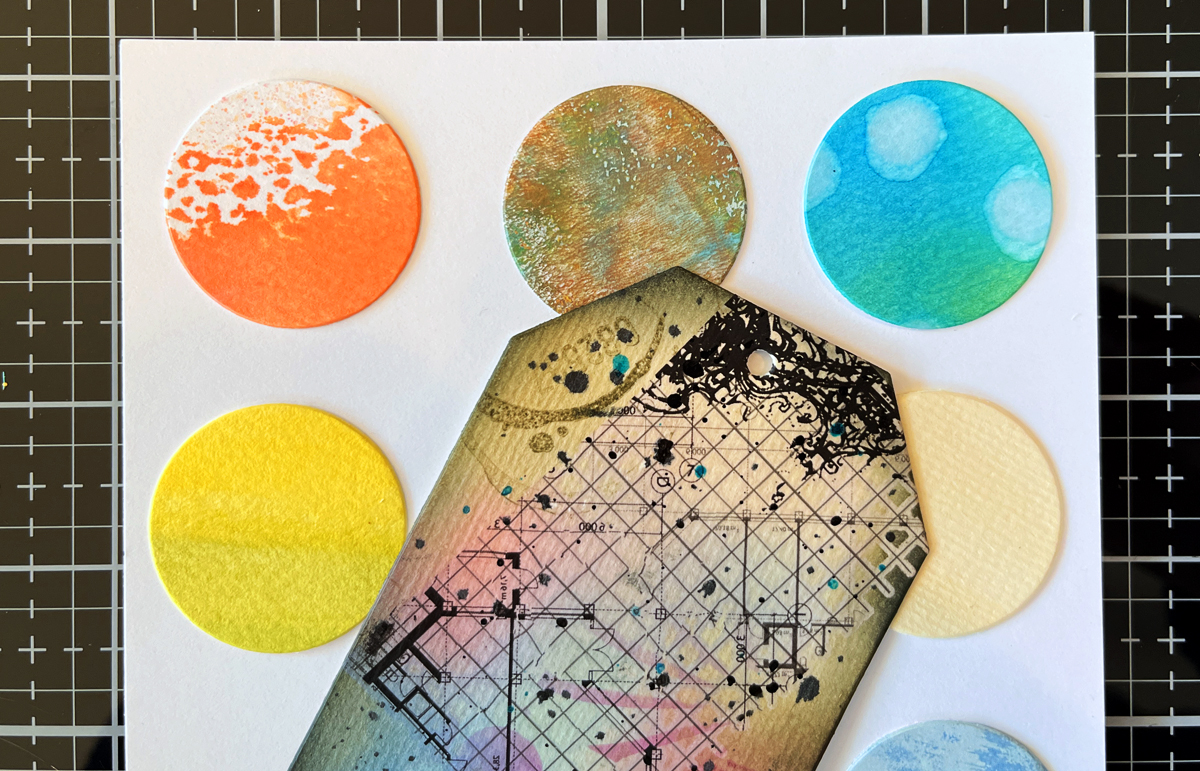
Over time, I realized I had dozens of techniques swirling in my head. So I created three sample boards:

  • Background Ideas
  • Layering Ideas
  • Focal Point Ideas
In process photo of mixed media tag background + my backgrounds sample board.

I’m a very visual person, and these boards act like my creative reference system when I sit down to craft. The middle circle on the right was the panel I used for today’s tag.

In upcoming posts, I’ll reveal them in detail — but here’s a small peek. (Just enough to inspire… not overwhelm 😉)


Mixed Media Is Imperfect by Design

Mixed media can feel intimidating.

But here’s what I’ve learned:

It’s imperfect by design.

Little missteps? They add charm. Unexpected marks? They add character.

Watching a simple piece of watercolor paper transform layer by layer is one of the most satisfying creative journeys.

And the best part? There are no mistakes — just more layers.
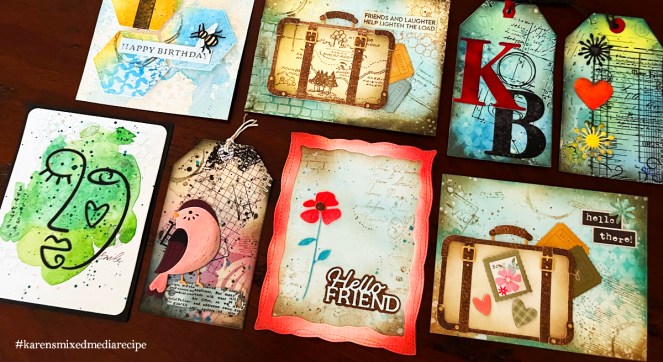

Coming Next in This Series

Over the next few posts, I’ll be diving deeper into:

  • How to build beautiful mixed media backgrounds
  • My favorite layering combinations
  • How to create strong focal interest
  • The best supplies for beginners

In my next post, Ink Smooshing 101, we take a deeper dive into Step 1 of my Mixed Media Recipe and explore five ways to create beautiful watercolor-style backgrounds using simple water-based inks.

You might also want to check out my Sneaker Bouquet scene card.

Stay tuned — this is going to be fun.

cardmaking · Die cutting

The One Cardmaking Step That Saves Me the Most Time

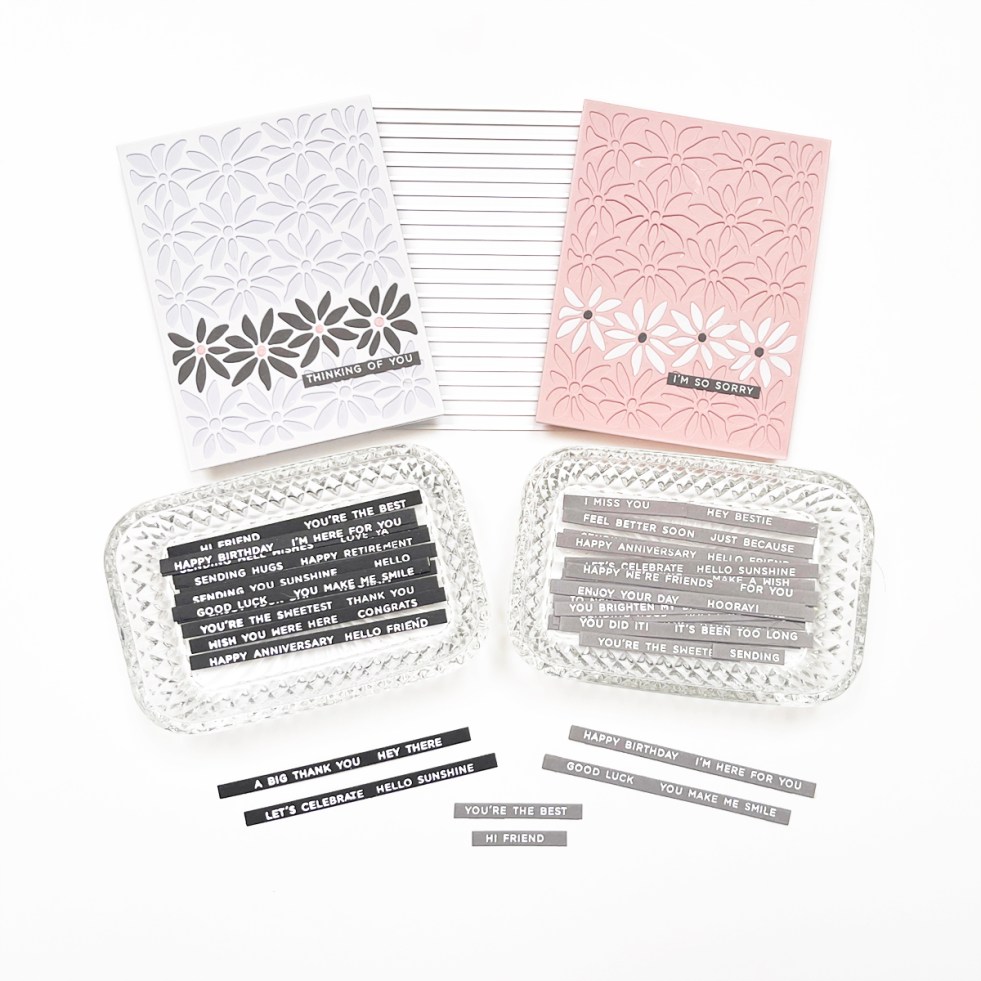
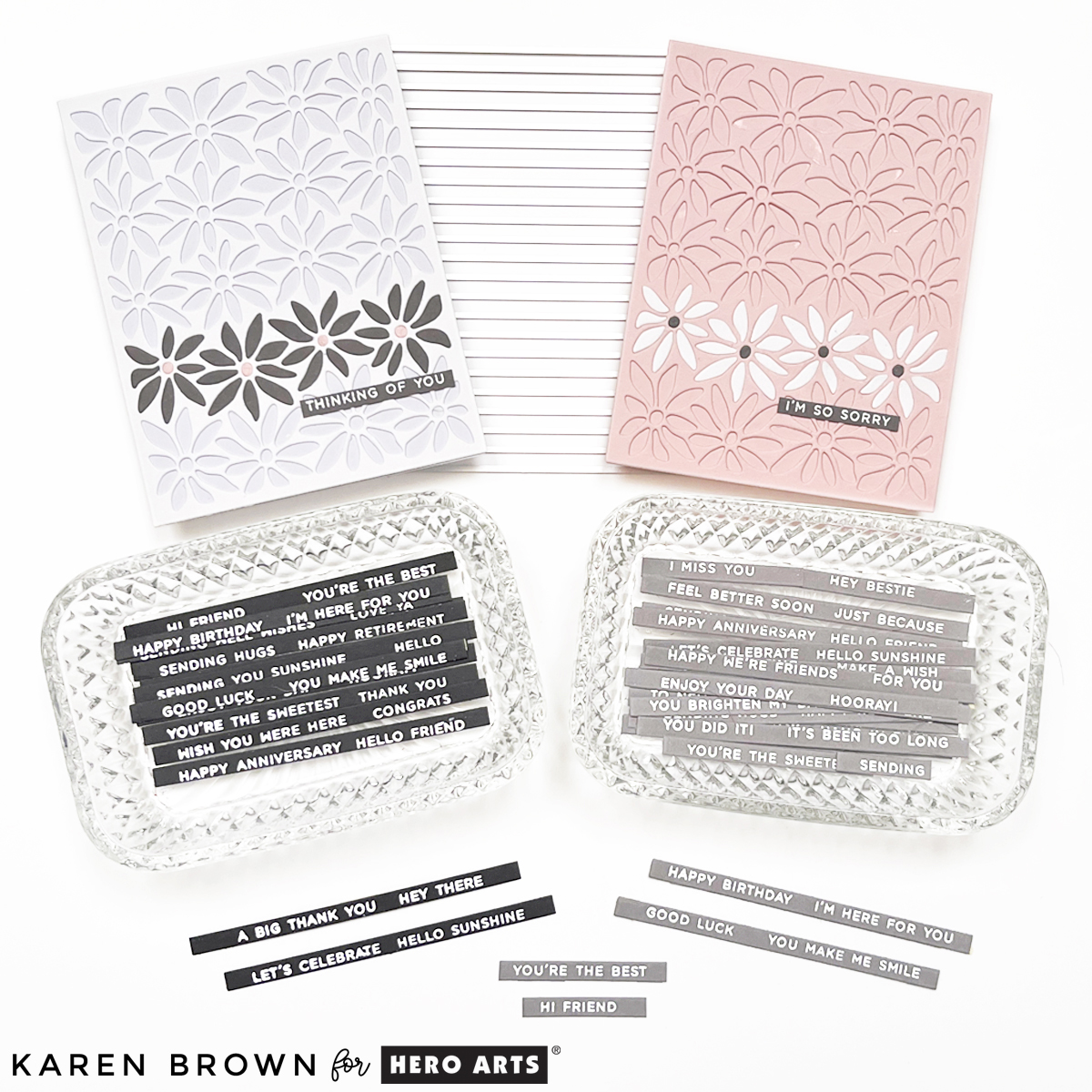
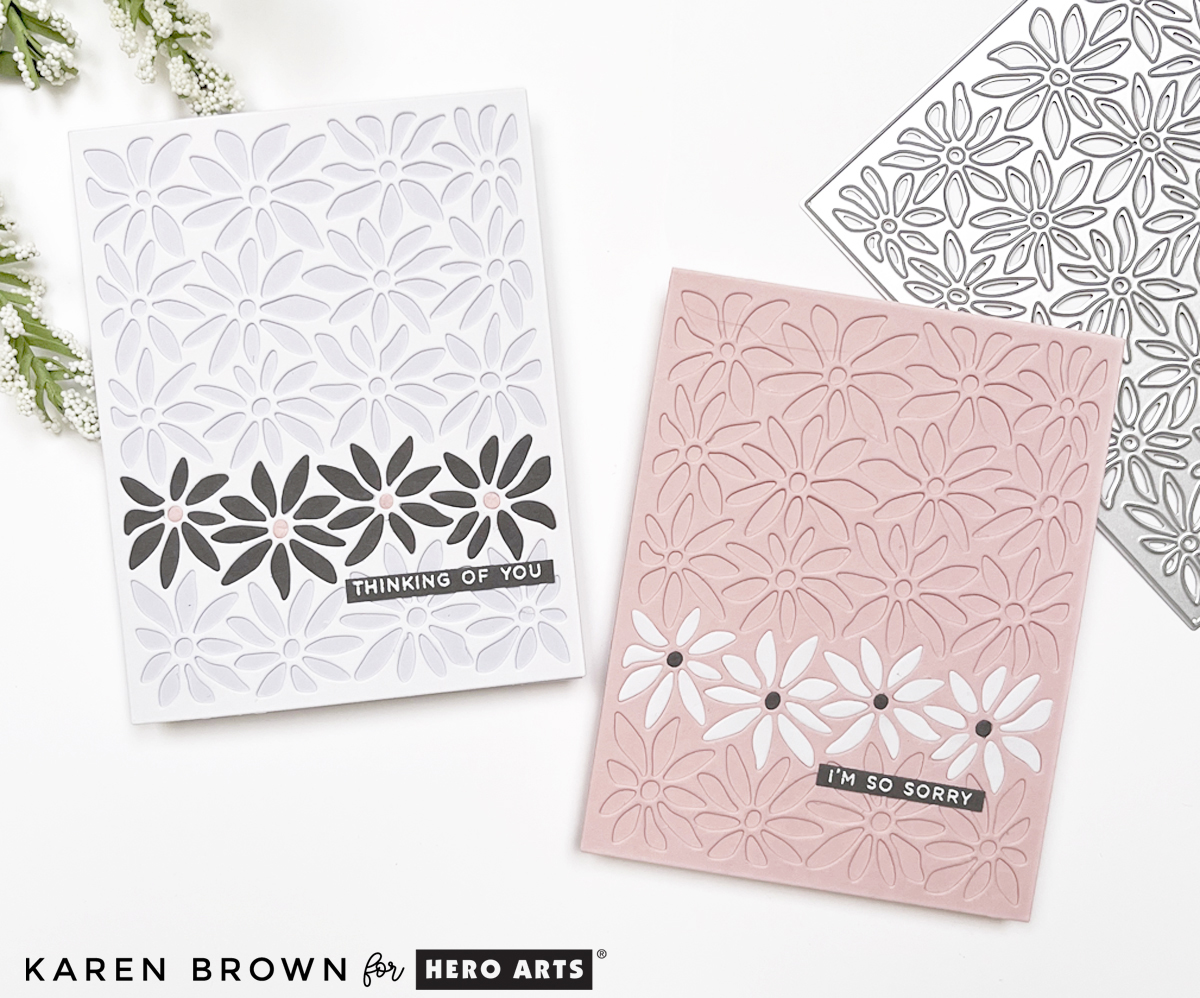
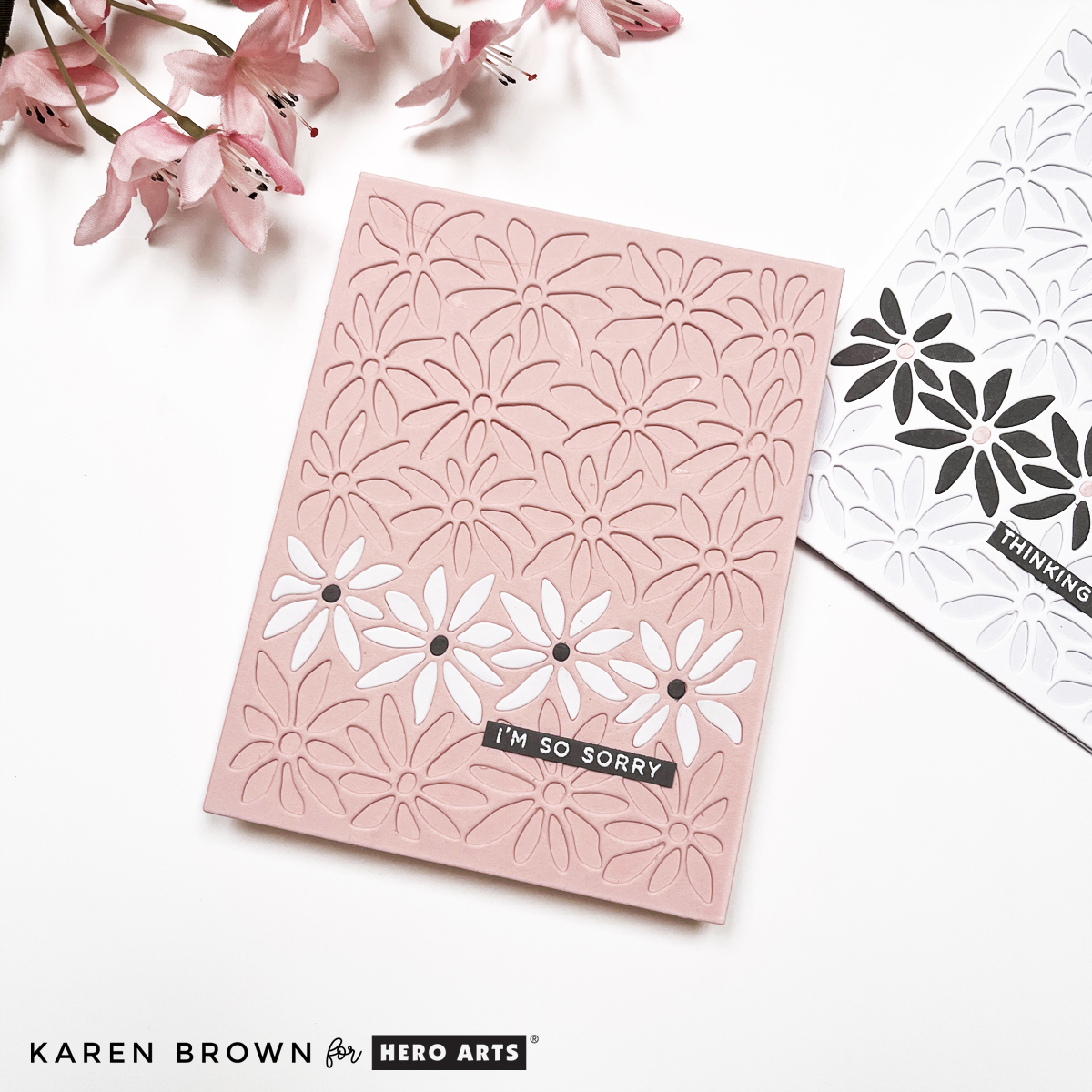
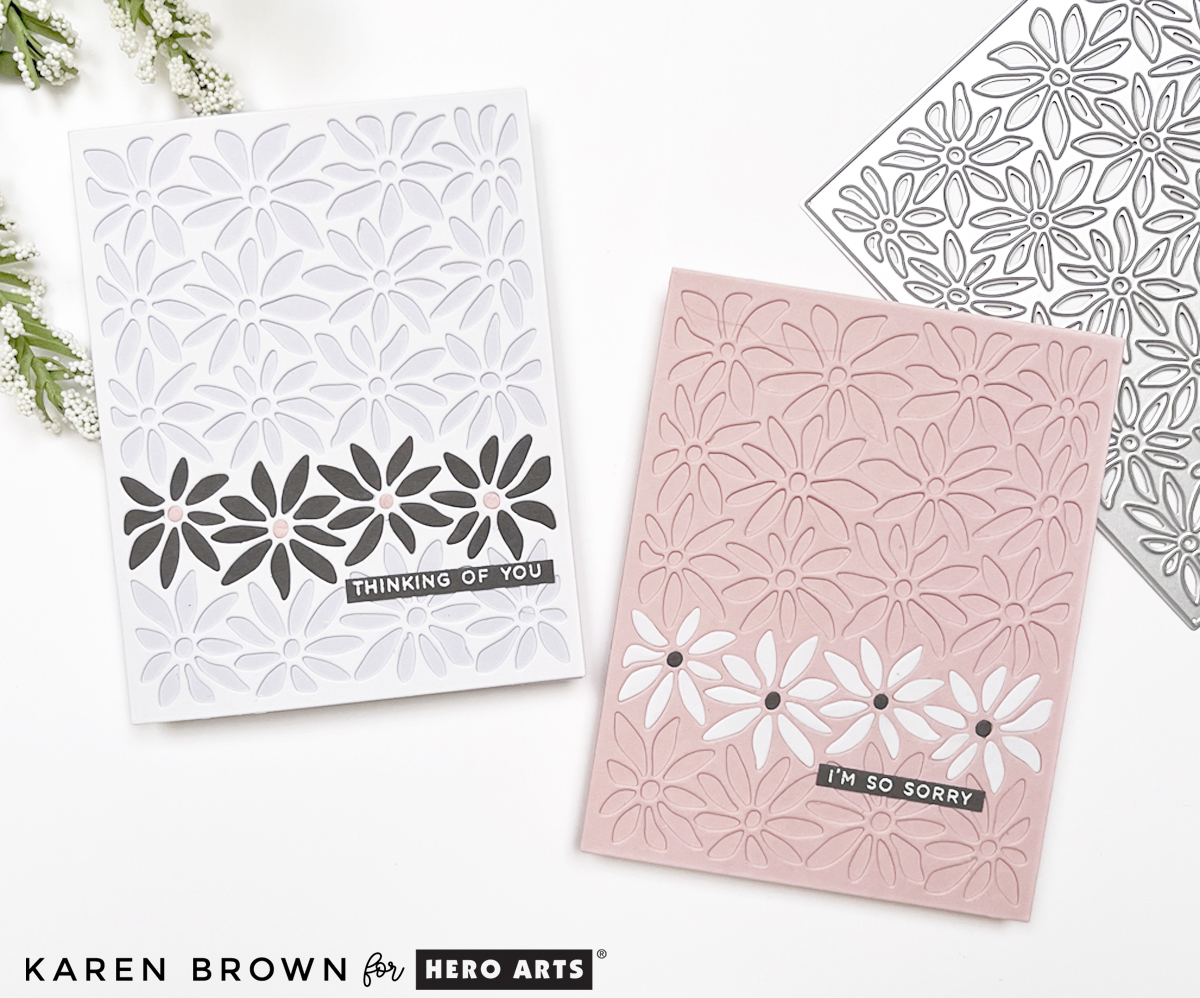
Two beautiful handmade floral cards with partial in lay die-cutting, perfect for Sympathy or Mother's Day.

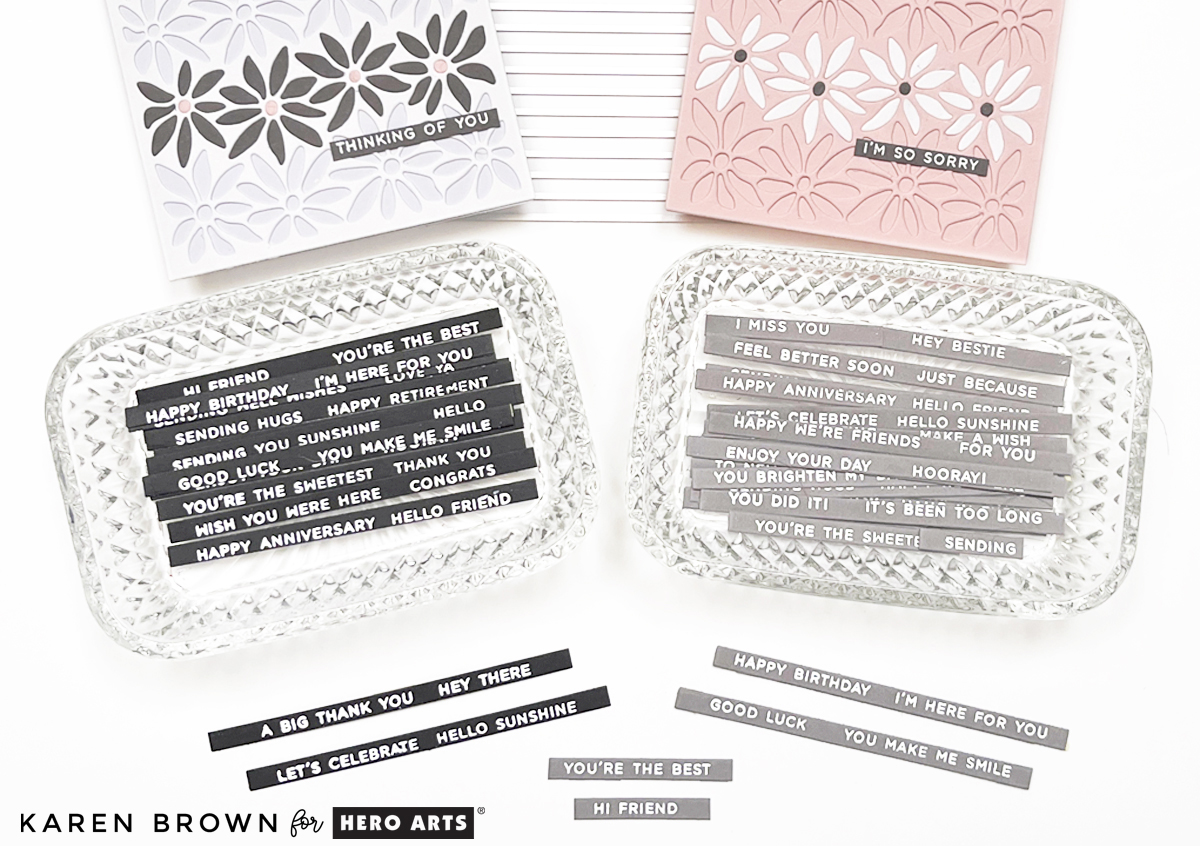
One of the biggest time-savers in my craft room is keeping premade sentiment strips ready to go. I love being able to audition sentiments while I’m designing a card—sliding options around, trying different tones, and choosing the one that feels just right.

Today I’m sharing my favorite sentiment stamps for cardmakers, how I batch-make sentiment strips, and how I used them to create thoughtful sympathy cards using a partial inlay die-cutting technique.


In This Post, You’ll Learn:

• The one step that saves me the most time when crafting
• How to streamline your cardmaking process
• Why batching can improve your creativity
• Simple ways to work smarter (not harder)


Best Sentiment Stamps for Cardmakers (and Why I Premake Them)

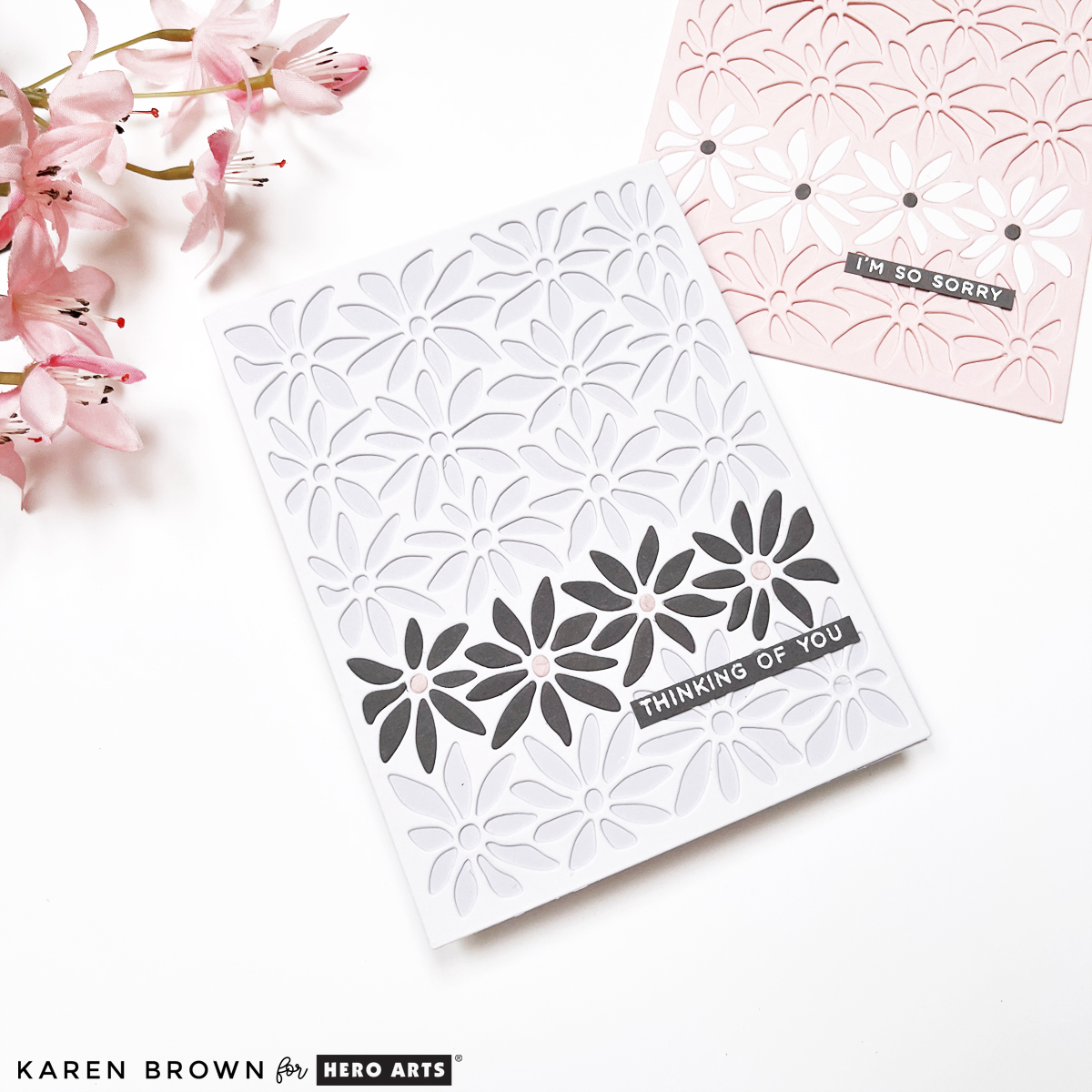
Two serene floral die cuts cards using Hero Arts Daisy Cover Die and the inlay die cutting technique.

Having sentiment strips prepared in advance:

  • Speeds up cardmaking
  • Reduces decision fatigue
  • Helps you visualize the finished card sooner
  • Makes it easier to create sympathy and encouragement cards thoughtfully

For this batch, I created two classic, versatile options:

  • White heat embossing on gray cardstock
  • White heat embossing on black cardstock

These neutral combinations work beautifully across many card styles and occasions. These sentiment strips would also be beautiful stamped on white cardstock.


My Go-To Sentiment Stamp Sets

Finished white heat embossed sentiment strips on black and gray cardstock, die cut and ready to use for handmade cards and tags.

I used the Hero Arts Everyday Sentiment Strips 2 along with the Sentiment Strips Cutting Die.

What I love about these sets:

  • One large stamp with 44 sentiments
  • One large coordinating die—no guessing, no trimming
  • Available in Everyday 1, Everyday 2, and Christmas
  • Covers birthdays, sympathy, hello, get well, encouragement, and more

Because I stamped two panels, I now have 88 sentiment strips ready to go—such a huge time saver!

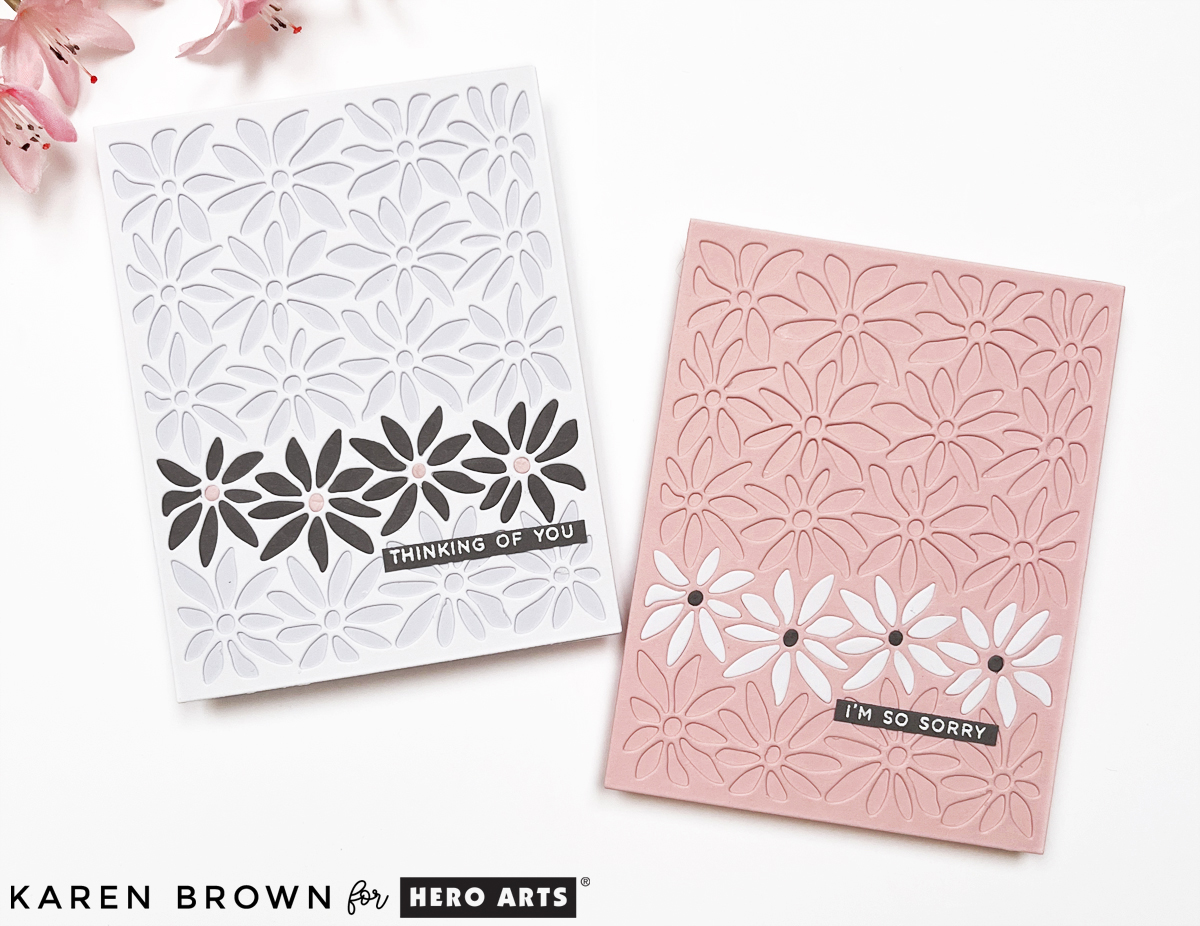
Two modern and elegant floral die cut cards with loads of lovely texture.

Sentiment Strip Prep Tips & How to Make Them

A few small steps made a big difference:

  • I gently conditioned the large stamp with a stamp conditioning eraser
    → This helped achieve crisp impressions with the smaller text
  • Prepped my cardstock with an anti-static powder
  • Stamped with Unicorn White Pigment Ink
  • Heat embossed with White Embossing Powder

The results were clean, bright, and incredibly readable.

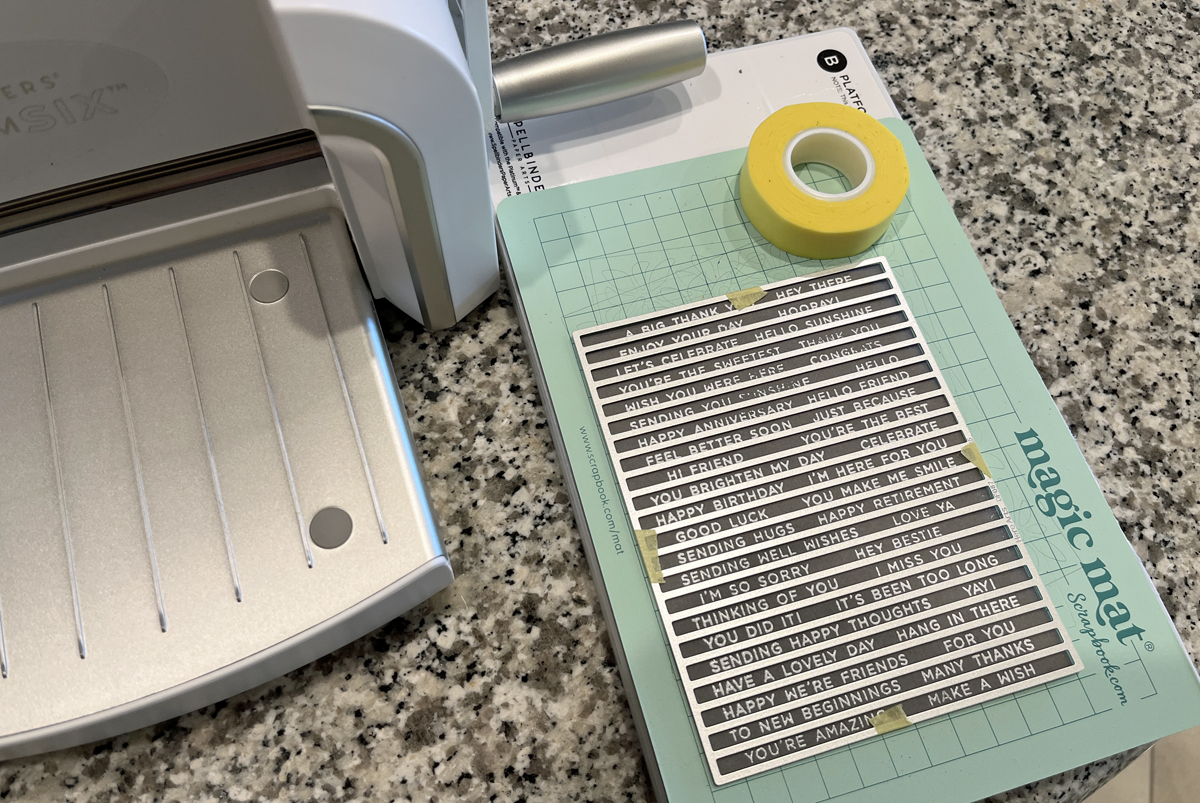
Process photo of heat embossed sentiment strip panel in white embossing powder on gray cardstock with coordinating sentiment strip die taped in place, ready for die cutting.

I also have a process photo showing the heat-embossed panel with the coordinating die taped in place, ready to run through my Platinum 6 die-cutting machine—my favorite way to batch die cut sentiments quickly and accurately.


Using Sentiment Strips on Sympathy Cards

Clean and modern sympathy card featuring a partial inlay daisy cover die design in soft pink, white, and gray with a white heat embossed sentiment strip.

To put these sentiments to use, I created two sympathy cards using the Daisy Cover Die and a partial inlay die-cutting technique.

This technique is a bit like puzzling for cardmakers—methodical, satisfying, and surprisingly relaxing.

Because the cover die is large and detailed, I chose to emphasize just one row of daisies, allowing the rest of the panel’s texture to shine while keeping the design calm and respectful.

Partial Inlay Die Cutting: Step-by-Step

Handmade sympathy card using partial inlay die cutting with a single row of gray daisies and a pre-made sentiment strip for a thoughtful, understated finish.
  1. Die cut a white cardstock panel with the daisy cover die
  2. Punch out the white flowers and glue the panel to a white card base
  3. Die cut one strip of daisies from gray cardstock
  4. Flip the gray panel over and leave the die cuts in place so you know where each piece belongs
  5. Working one flower at a time:
    • Add glue to a few negative spaces
    • Punch, place, and smooth with a bone folder
    • Tip: A jewel picker is especially helpful for small centers
  6. Die cut the coordinating flower centers and repeat the process
  7. Weight with an acrylic block until fully dry
  8. Finish with one of your premade heat-embossed sentiment strips

That final sentiment strip adds a thoughtful, understated finishing touch—perfect for sympathy cards.


Two gorgeous cards using floral cover plate die + partial inlay diecutting technique.

Why This Design Works for Sympathy Cards

  • Clean and modern design
  • Subtle dimension without bulk
  • Soft color palette that conveys comfort and care

Color Choices:

  • Soft pink – tenderness, warmth, compassion
  • White – peace, sincerity, purity
  • Gray – quiet, sympathetic tone

Why I’ll Always Keep Sentiment Strips on Hand

Having premade sentiments allows me to focus on design and emotion, not last-minute stamping. Whether I’m making a sympathy card, a quick hello, or a batch of thank you cards, they’re always ready when I need them.

👉 You might also be interested in my popular blog post: 14 Best Cardmaking Supplies and Products for 2026.

Mixed Media · Tutorial · Video

How to Create Easy Mixed Media Tags for Beginners (Step-by-Step Tutorial + Video)

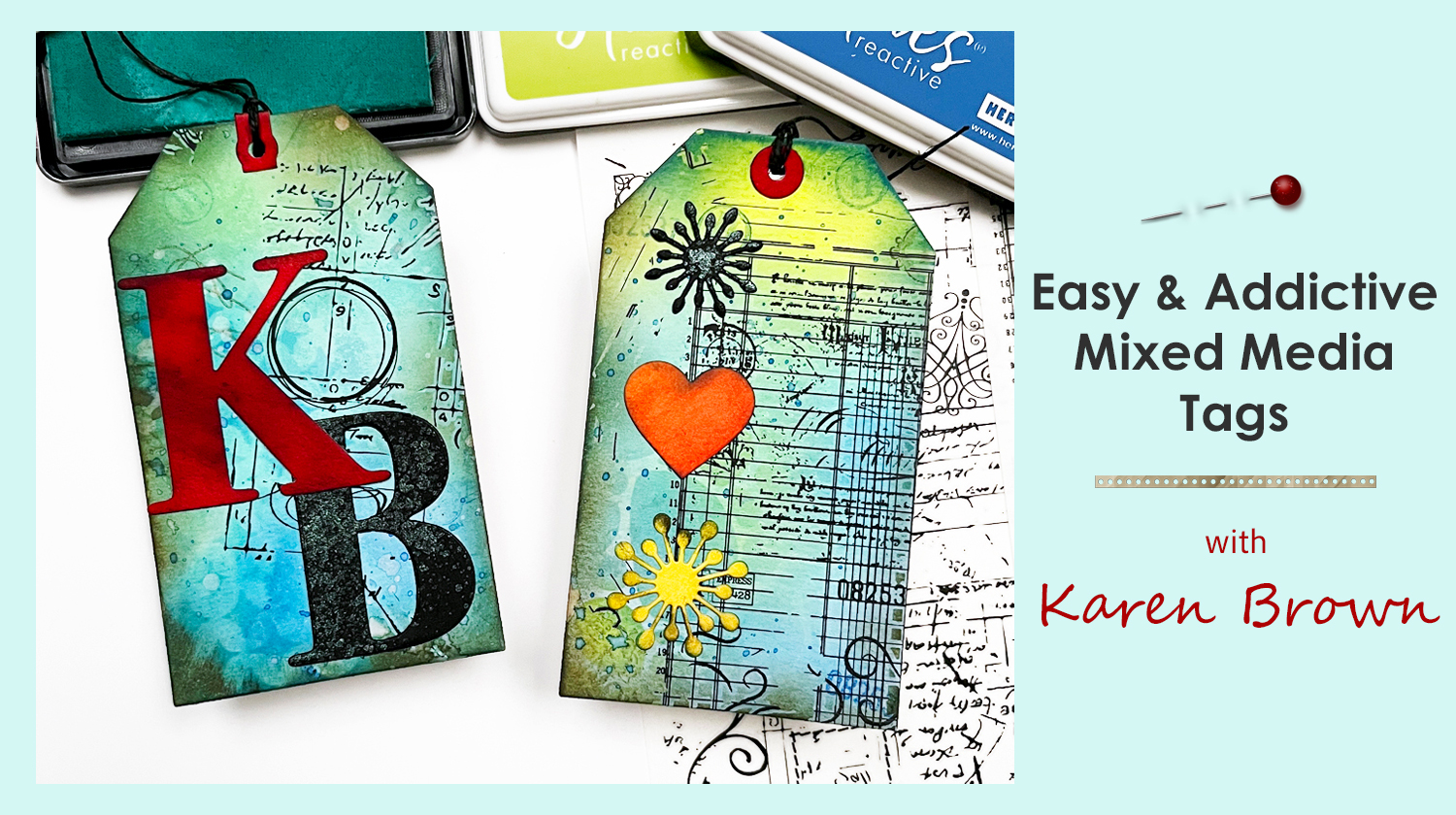
Easy & Addictive Mixed Media Tag Graphic with photo of two mixed media tags.

If you’ve ever wanted to try mixed media but weren’t sure where to start, this is the perfect beginner-friendly project.

In this tutorial, I’ll show you how to create easy mixed media tags using simple supplies and a few layering techniques that are both fun and surprisingly addictive.

These tags are a great way to experiment with color, texture, and stamping—without feeling overwhelmed.

Video

👉 Or watch on YouTube HERE.

This post coordinates with my YouTube video where I walk through every step in real time. If you like seeing the process in action, be sure to watch the video alongside this tutorial.

When creating mixed media projects, I use my 3 Step Mixed Media Recipe.

👉 You can find the tools I use most often on my Favorite Cardmaking Supplies page

Exact supplies used in this post are at the bottom of this post.

Why This Is a Great Beginner Mixed Media Project

  • No pressure to be perfect
  • Great way to practice layering
  • Uses simple, repeatable techniques
  • Each tag turns out unique

Mixed Media Tags for Absolute Beginners: 11 Easy Steps

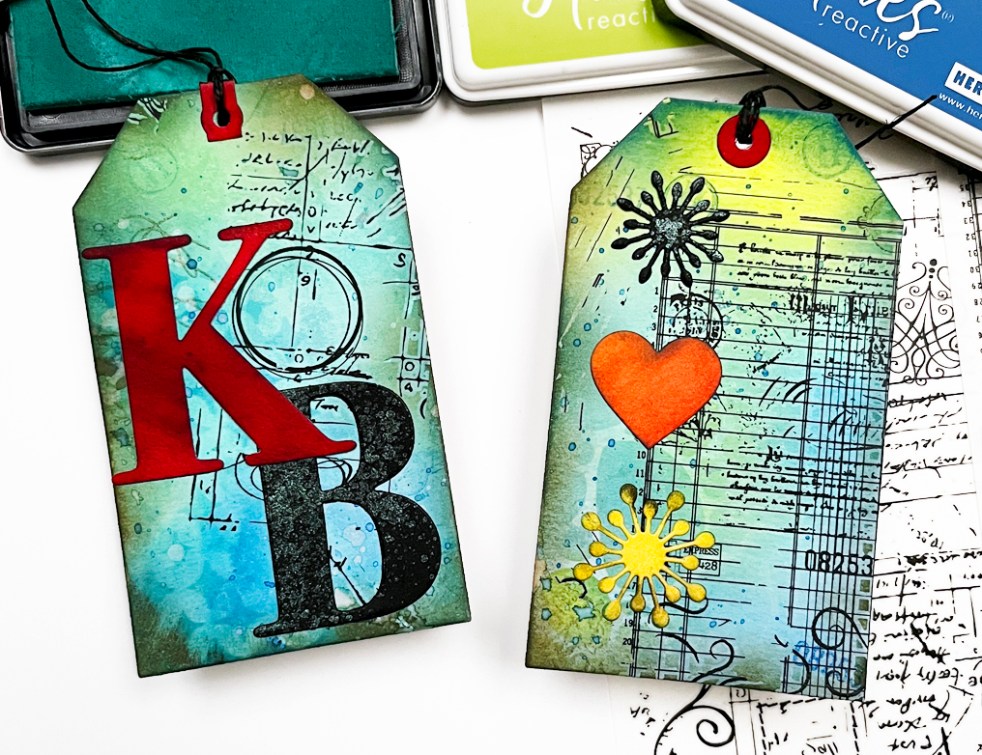
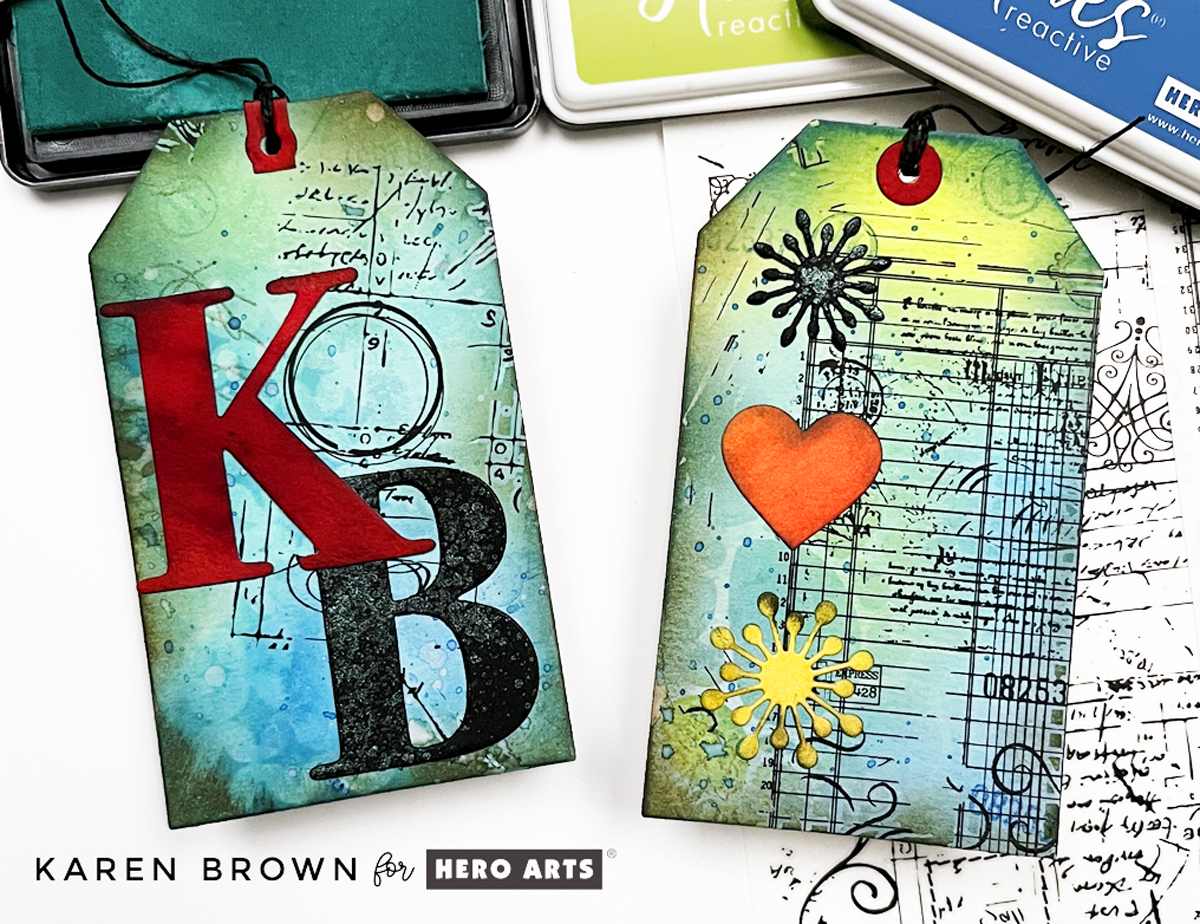
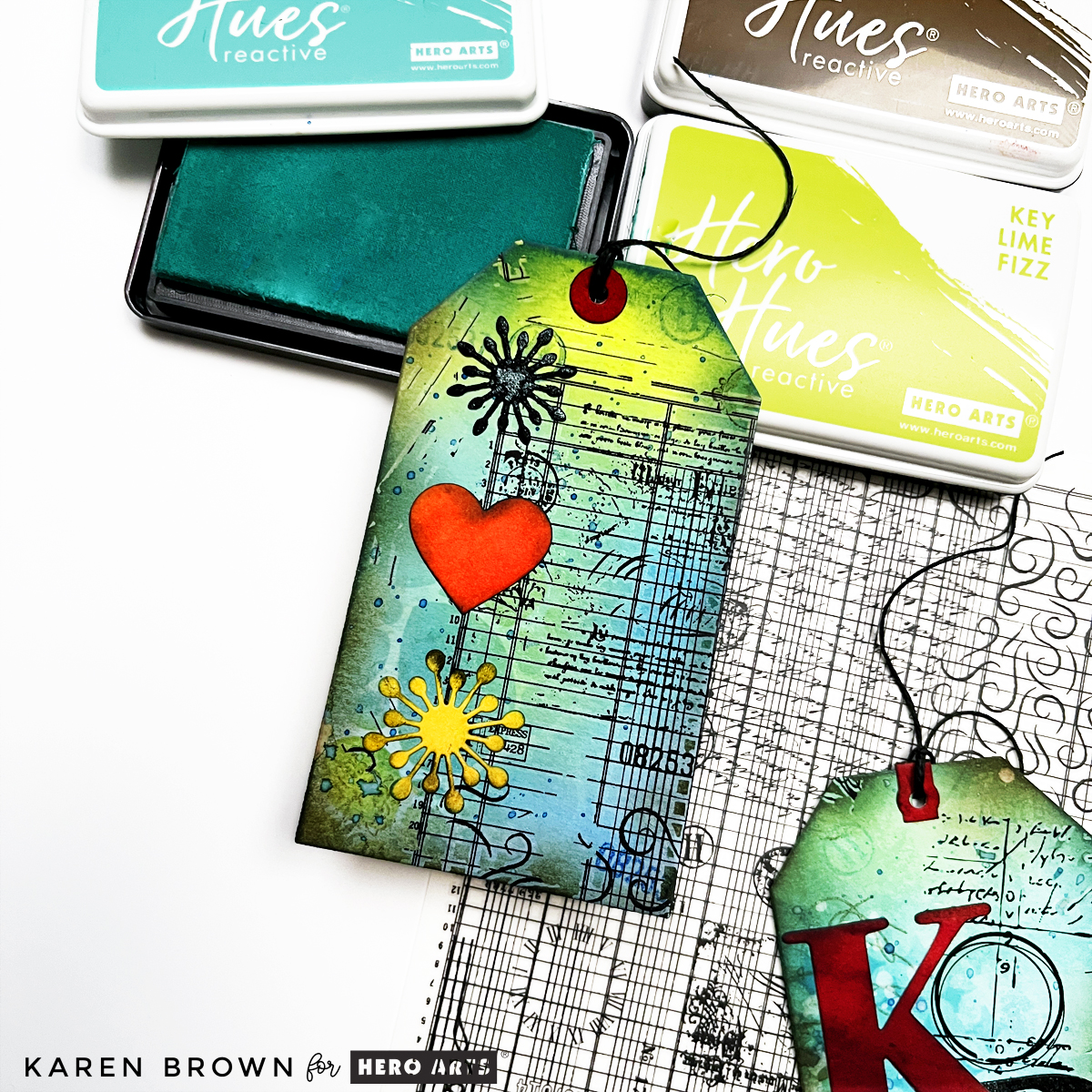
Closeup of two completed vintage look mixed media tags
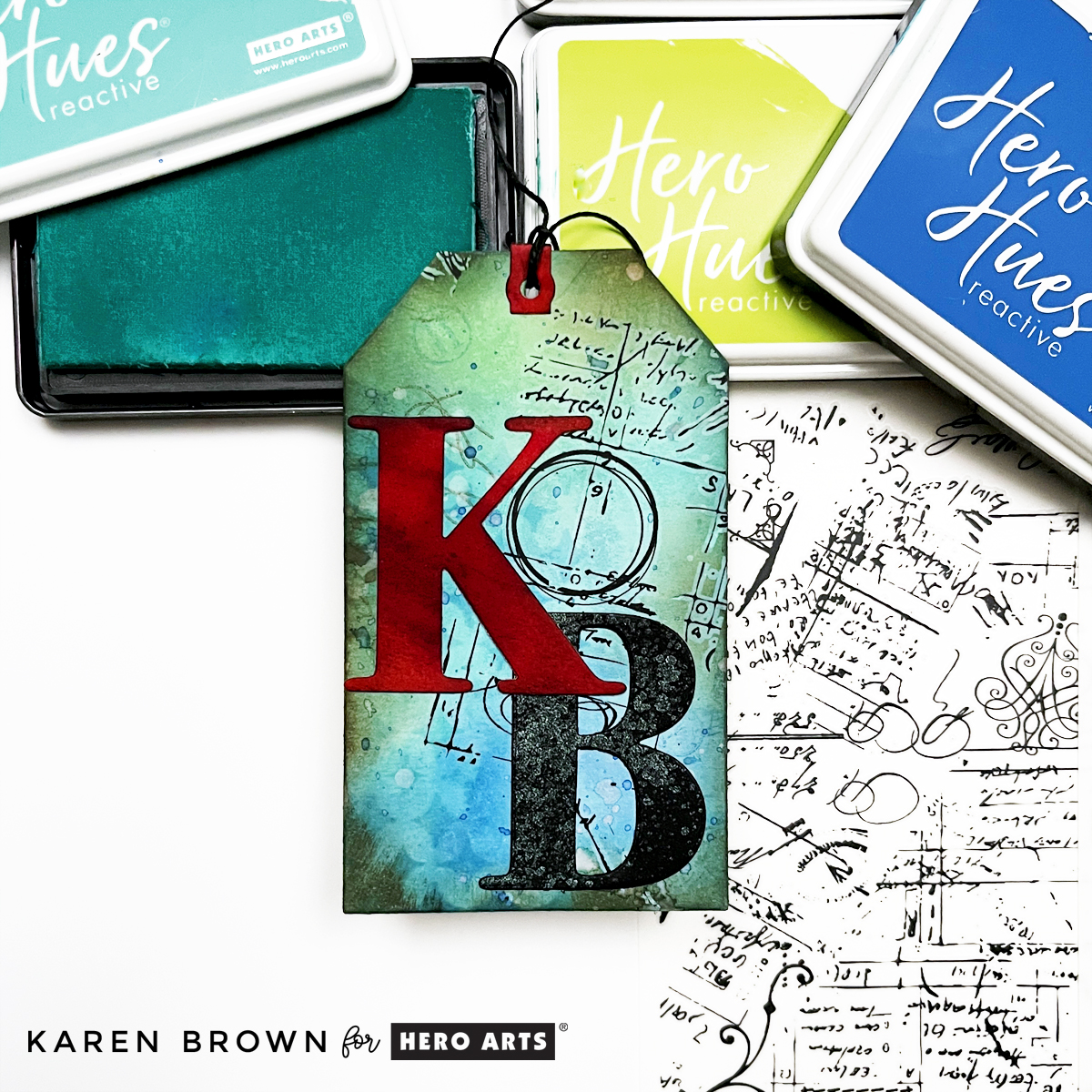
Using die-cut initials or hearts creates strong focal interest on mixed media projects.

📌 Pin this for later

Step 1: Create a Simple Ink Smoosh Background

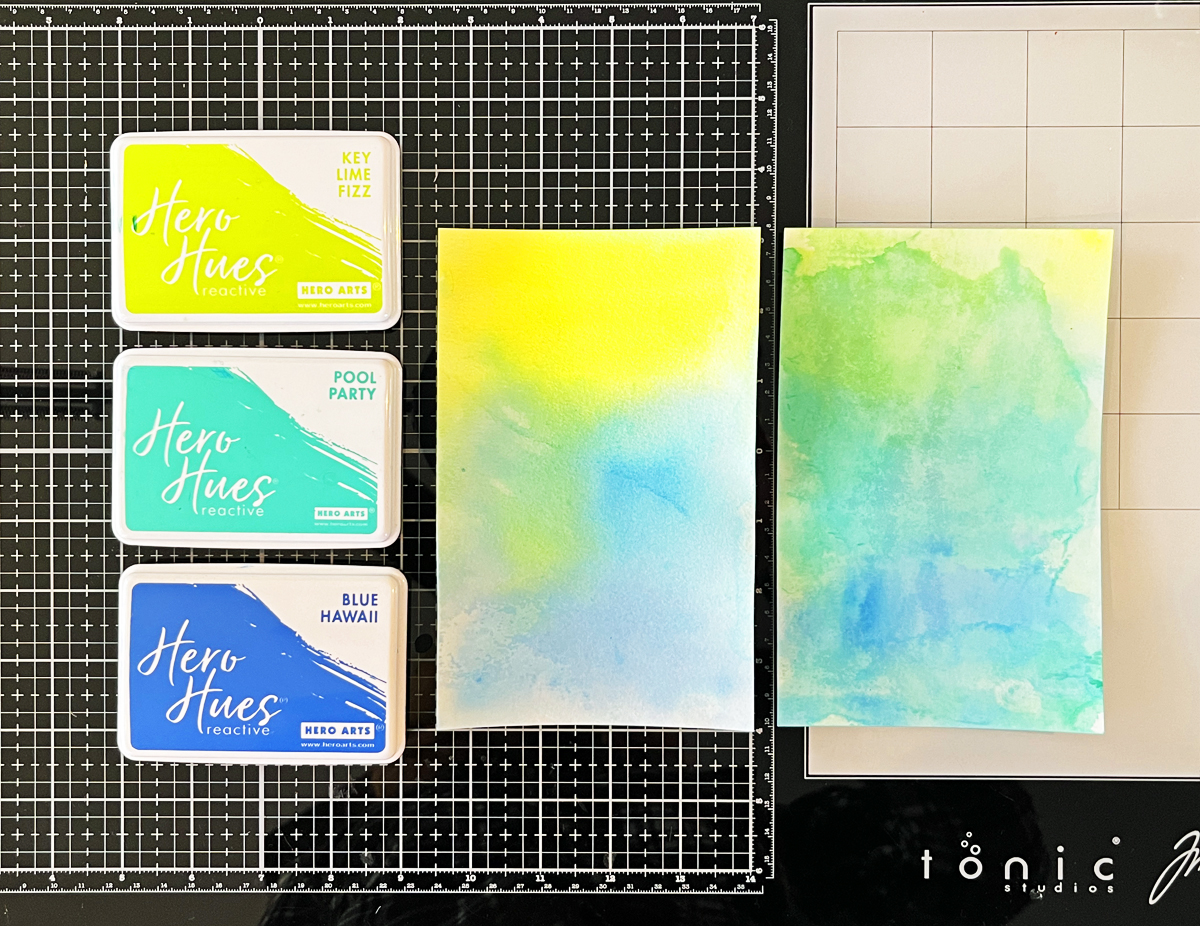
Add three shades of water-based reactive ink to your craft mat, spritz generously with water, and press the watercolor paper into the ink. Let sit in the puddle with an acrylic block on top for 1 – 5 minutes. The more water you use, the softer the panel. I used Key Lime Fizz, Pool Party and Blue Hawaii on my tags.

If you are interested in learning how to create an easywatercolor background, I have step-by-step directions in my tutorial how to make mixed media tags in 9 easy steps.

Step 2: Dry Your Panel

Let the panel air dry or speed things up with a heat tool. If it warps, flatten it under a book once dry.

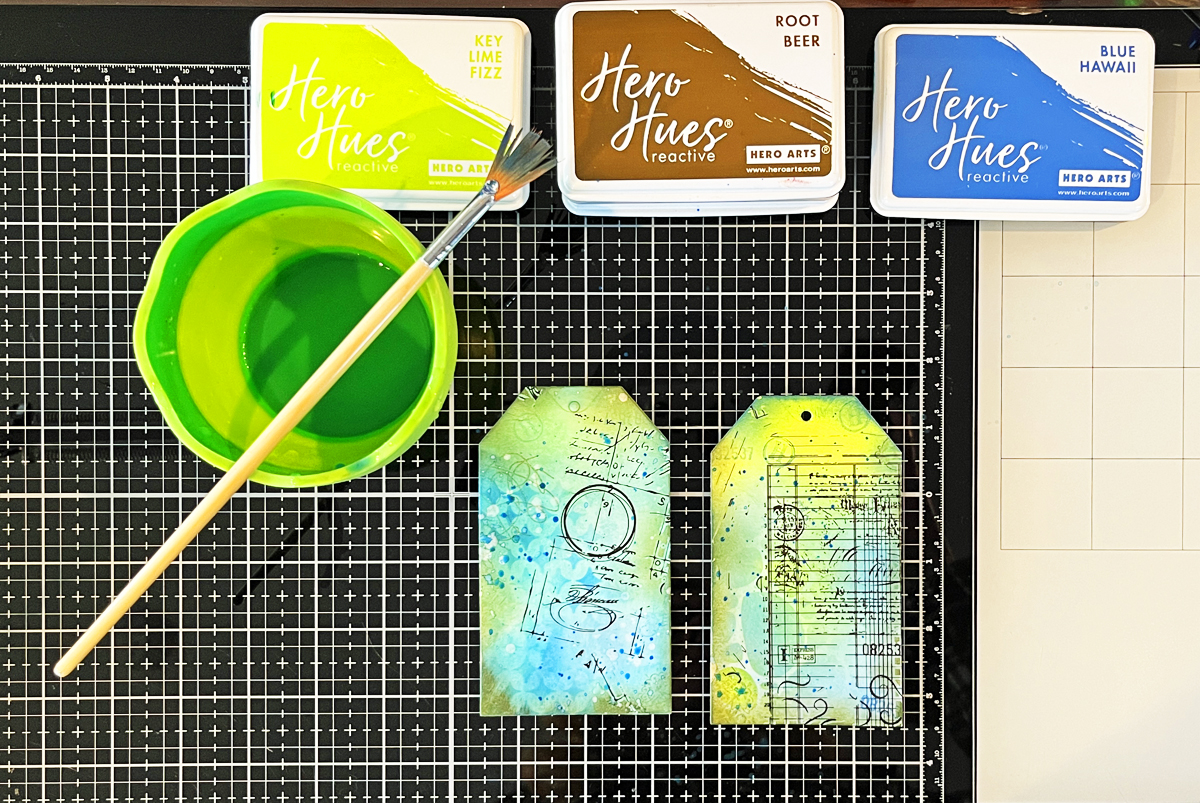
Process photo of my two ink smoosh watercolor background panels.
Ink Smoosh background panels are the easiest way to start a beginner mixed media project.

Step 3: ViewFinder Trick

I like to use my tag die as a viewfinder to decide which part of my panel I want to feature.

Step 4: Die Cutting

Once I’m happy, I tape the tag die in place and run it through my Platinum 6 die cutting machine. It is one of the tools I rely on regularly—several of them are included in my list of the best cardmaking supplies for 2026.

Step 5: Stenciling

Now its time to start layering on top of our background. I add stenciling to about two thirds of each tag using the same reactive ink colors that I used in Step 1. You can use just about any stencil you have. I chose two very different designs and I love how they both turned out!

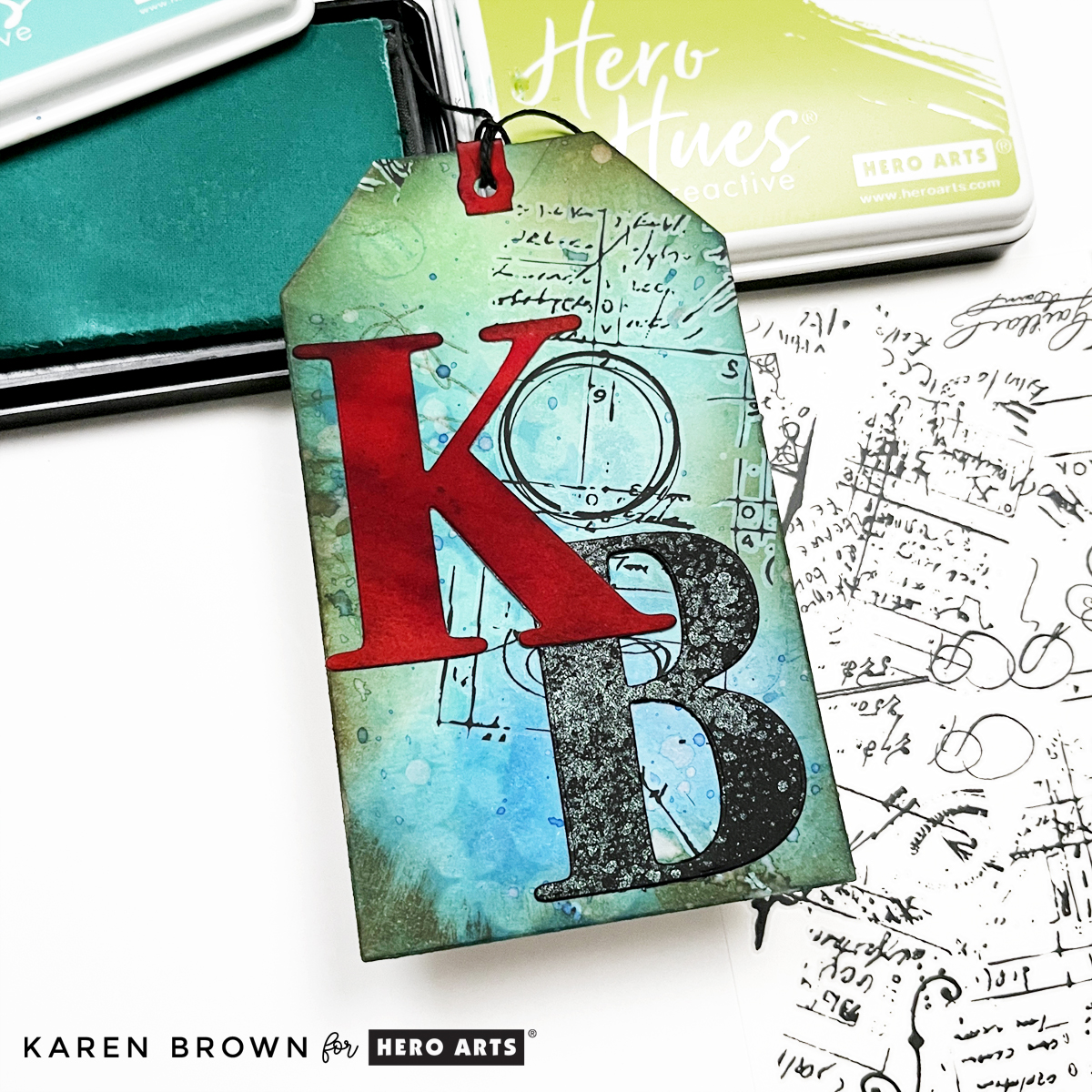
Close-up of my aqua blue mixed media tag with personalized die cut initials (KB) and Hero Arts rub-on Hero Transfers.
Stenciling is one of the cornerstone layers for mixed media projects.

Step 6: Second-Generation Stamping

This is one of my favorite mixed media techniques.

Ink your stamp, stamp once on scrap paper, then immediately stamp onto your background.

The lighter impression adds depth and texture while keeping things loose and organic.

Use the same colors you used on your background in Step 1. This keeps everything cohesive and soft and adds subtle interest without overpowering the background.

Mixed media art tag created by layering 6 additional techniques on top of my ink smoosh watercolor background.
Rub on transfers are one of the easiest layers to add to your mixed media tags.

Step 7: Add Rub-On Transfers for Easy Texture

Hero Transfers are one of the easiest ways to add detail and interest—no drying time required. Today, I used the Grids and Icons Transfers.

Cut a small section, place it on your tag, and rub it on using a bone folder or craft stick. I like angling my transfers slightly for a more vintage, organic look.

Step 8: Add Some Grunge and Ink Blend the Edges

Ink blending around the edges of the tags adds instant definition and helps ground all those layers.

This is where everything starts to come together. I like using a darker neutral ink like Root Beer to “grunge up” the edges just a bit.

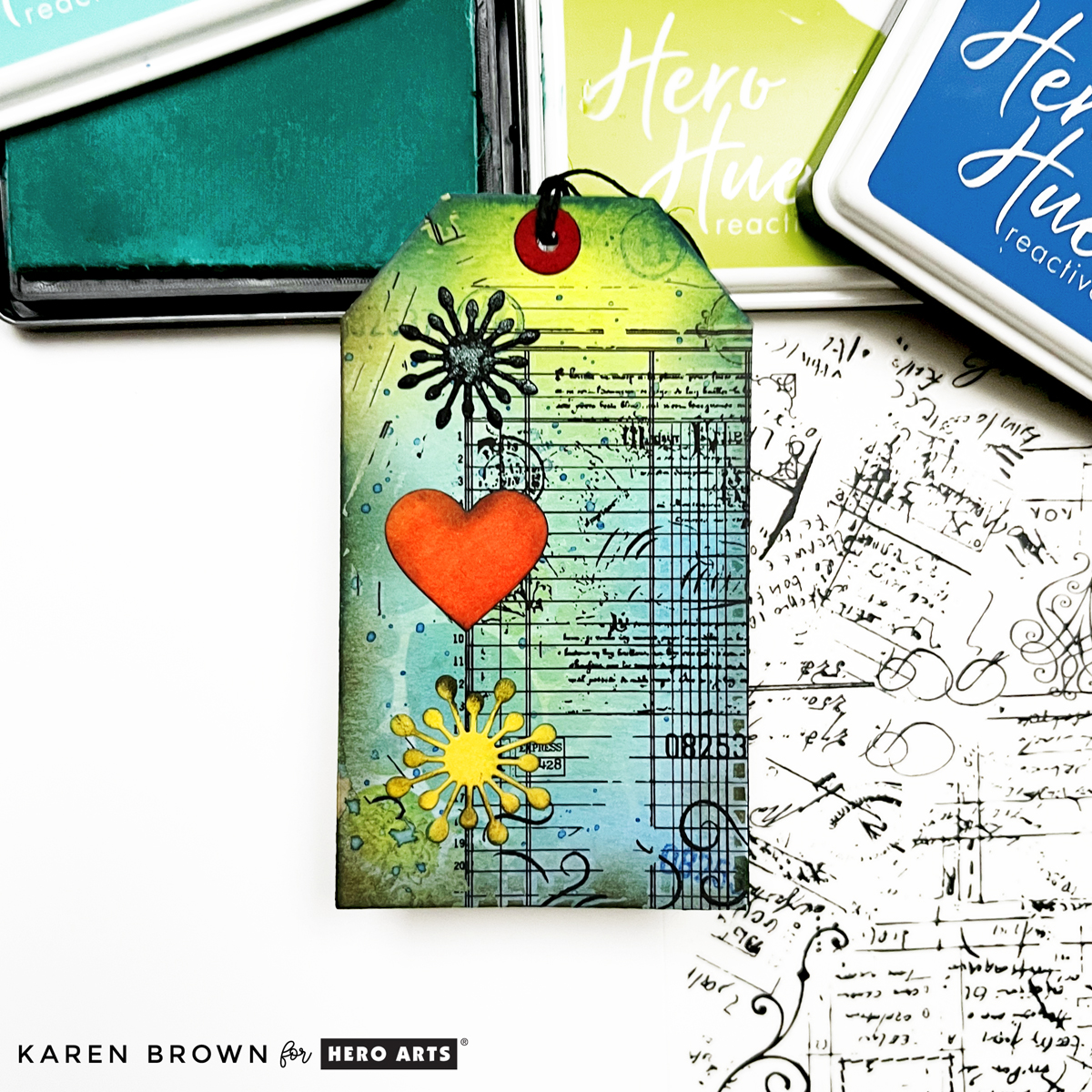
Colorful ledger style mixed media tag with die cut floral sunbursts and a cheerful orange heart.
Ink blending around the edges of a mixed media tag add the perfect amount of vintage grunge to your projects.

Step 9: Add Splatters

Using a fan brush, splatter water (then blot with a cloth) and them the same inks used above. This step instantly adds movement and that “mixed media magic” feel.

Process photo showing water splatters and ink splatters on my in-process mixed media art tag.
Splatters are the perfect finishing touch for mixed media projects.

Step 10: Add Focal Points

Now it’s time to bring in focal elements.

I used small die-cut images, lightly distressed the edges, and glued them directly to the tags. Keep the focal points simple—they should complement the background, not compete with it.

A good rule of thumb: if your background is busy, keep your focal point clean and contained.

Best mixed media art tag illustrating how to create one in 11 easy steps.

Step 11: Finish with Twine or Ribbon

Thread twine or ribbon through the top of each tag to finish them off.

This final step adds texture, softness, and makes the tags feel complete. You can also tuck tags into cards, journals, or gift packaging.

You might also enjoy another recent Mixed Media Tag Tutorial I posted last month. Or if you’d like to try a mixed media card instead, here is how I create one step-by-step, with loads of illustrative photos.

Mixed Media Toolbox

These are the supplies that I personally use:

Hot Foiling · Video

VIDEO: Zodiac Birthday Cards Made Easy with Hot Foiling (Pisces & Aquarius)

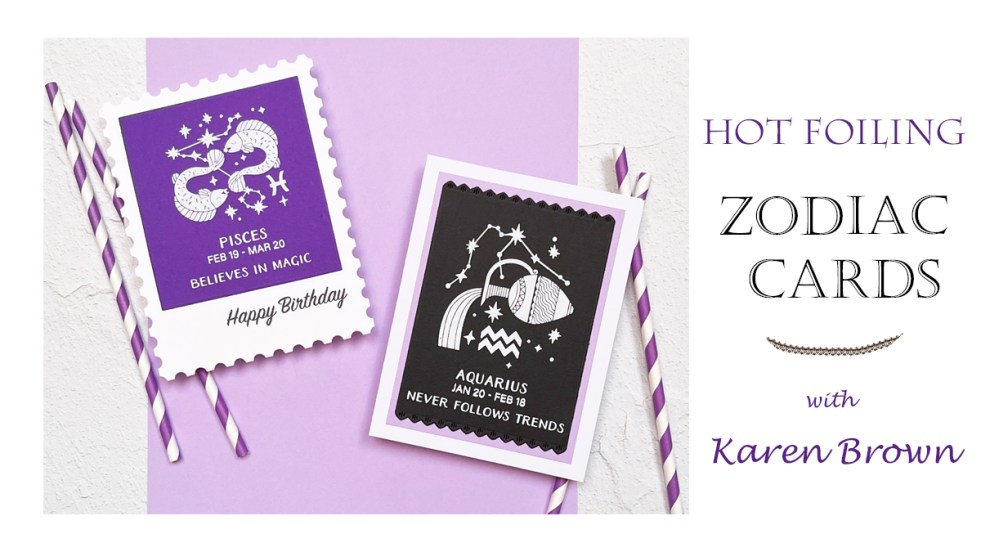
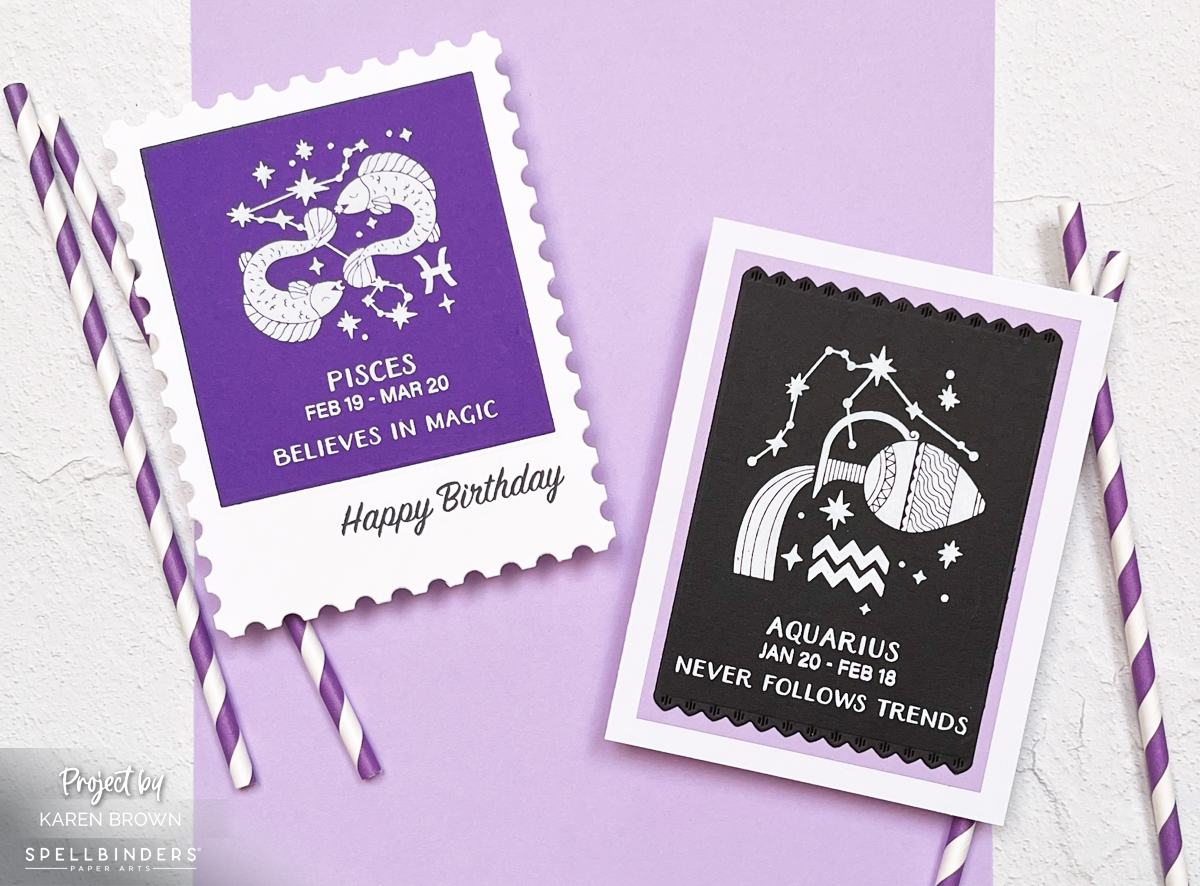
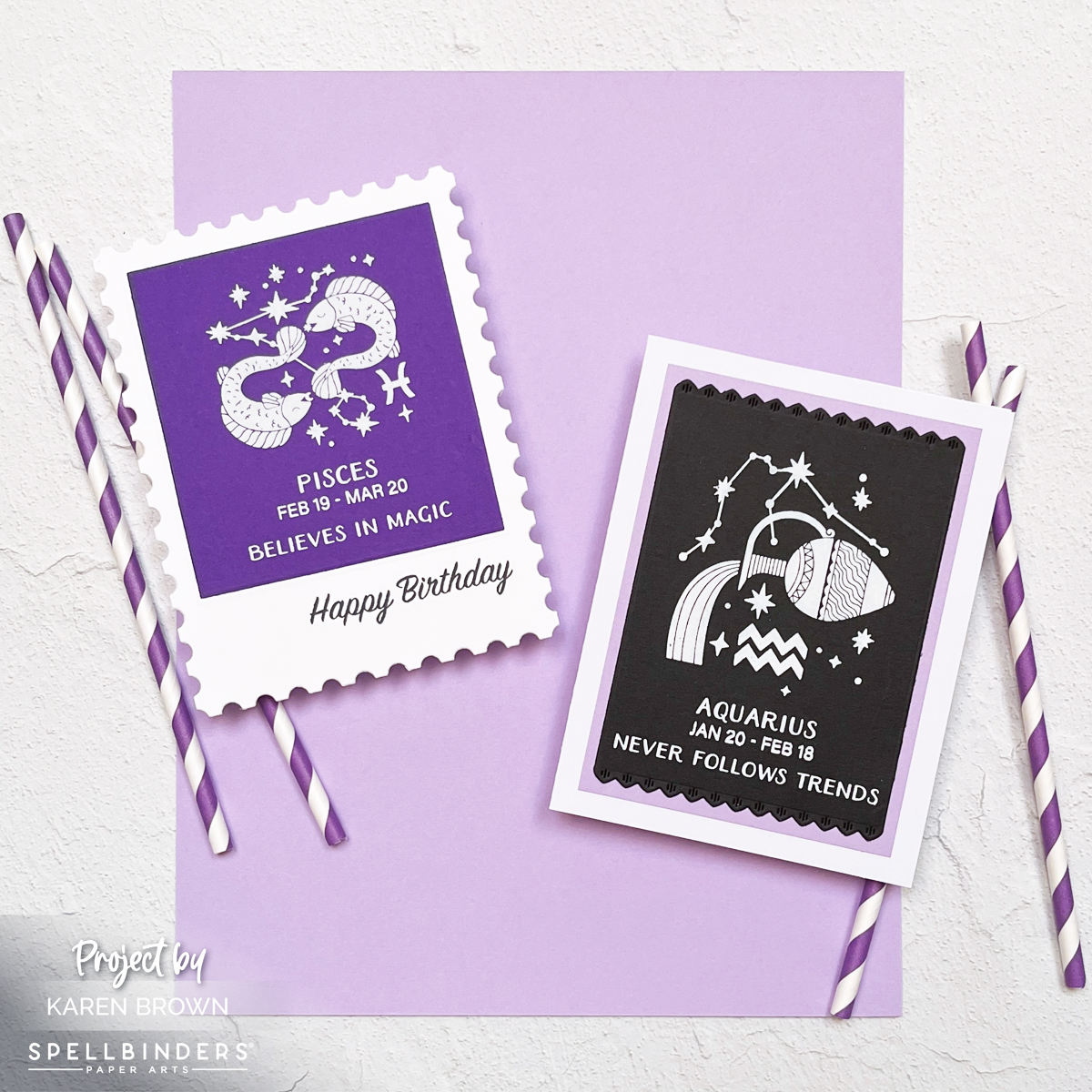
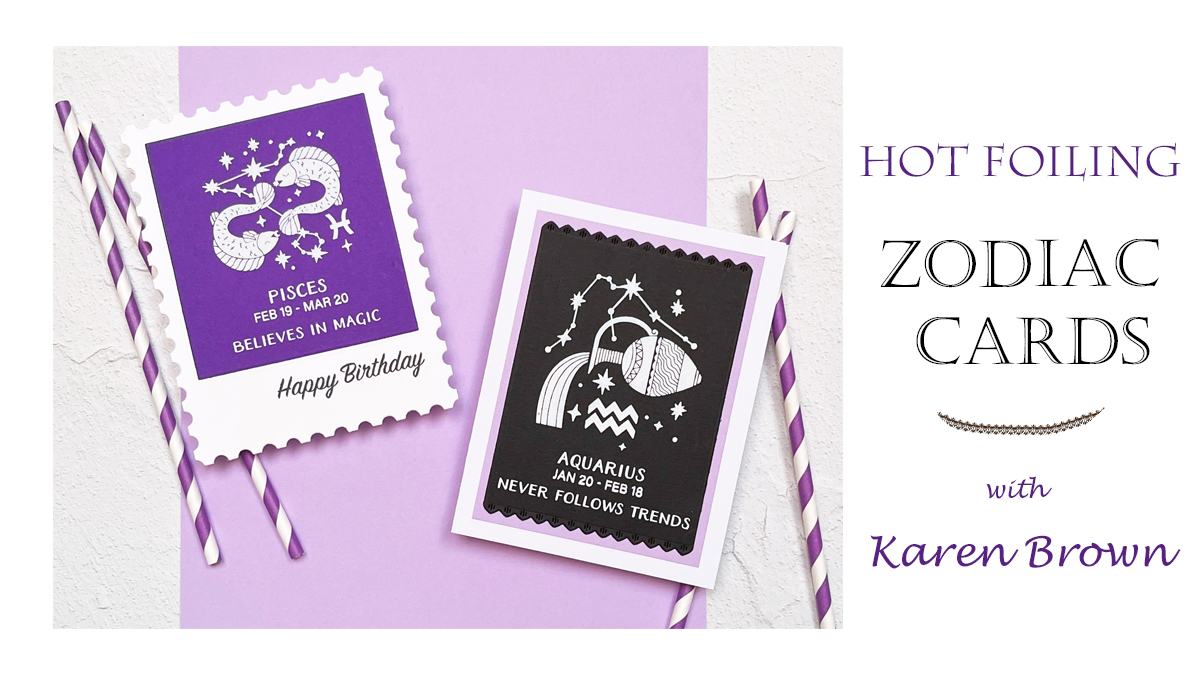
Pisces and Aquarius zodiac hot foil cards shown side by side, featuring bold graphic designs and personalized color palettes.

Some card ideas grab your attention… and others stick with you. With my birthday coming up this month (hello, Pisces ♓), I found myself completely drawn to Spellbinders’ Block Print Zodiac Seriesa coordinated collection of 12 BetterPress and Glimmer Hot Foil kits, one for each zodiac sign. These kits create bold, graphic, and deeply personalized cards that feel anything but generic, and they’re fast enough to make even when time (or motivation!) is limited.

To kick things off, I’m sharing my Pisces and Aquarius Zodiac cards, along with a quick 2-minute hot foiling video that shows exactly how I foiled my Pisces panel using the Glimmer Hot Foil System. If you’ve ever wanted a refresher on hot foiling—or you’re considering adding a Glimmer system to your craft room—this post is for you.

Watch the Hot Foiling Process (2 Minutes Flat!)

Or Watch on YouTube HERE.

I created a short, two-minute video that focuses only on the hot foiling process for my Pisces card. This isn’t a full card tutorial—sometimes you just want to see how the Glimmer system works, how the foil transfers, and that satisfying reveal moment.

In the video, you’ll see:

  • How I foil the Pisces plates using white foil
  • The reveal of the finished foiled panel
  • A peek at the completed card design

These Zodiac cards are very fast to assemble once the foiling is done, which makes them perfect for batching or last-minute cardmaking.

Why Zodiac Cards Are Such a Brilliant Cardmaking Idea

Handmade cards created with Spellbinders Block Print Zodiac BetterPress + Foil plates that are excellent masculine cards.

There are 12 Zodiac kits, each designed around a specific sign, and every kit includes:

  • A zodiac graphic plate (Pisces features two fish)
  • A two-line plate with the zodiac name and date range
  • A tagline plate (Pisces: Believes in Magic)
  • A placement guide so lining everything up is foolproof

If you owned all 12 kits, you could easily create a year’s worth of birthday cards—perfect for anyone and everyone. These cards are especially wonderful for masculine birthdays, which we all know can be a challenge. They’re bold, graphic, and customizable without being overly fussy.

Because the plates don’t say Happy Birthday, they’re also perfect for:

  • Birthday thank you notes
  • Just-because cards
  • Personalized notes acknowledging someone’s personality or “cosmic identity”

Nothing generic here.

Pisces Card: Birthstone Color + Polaroid Style Design

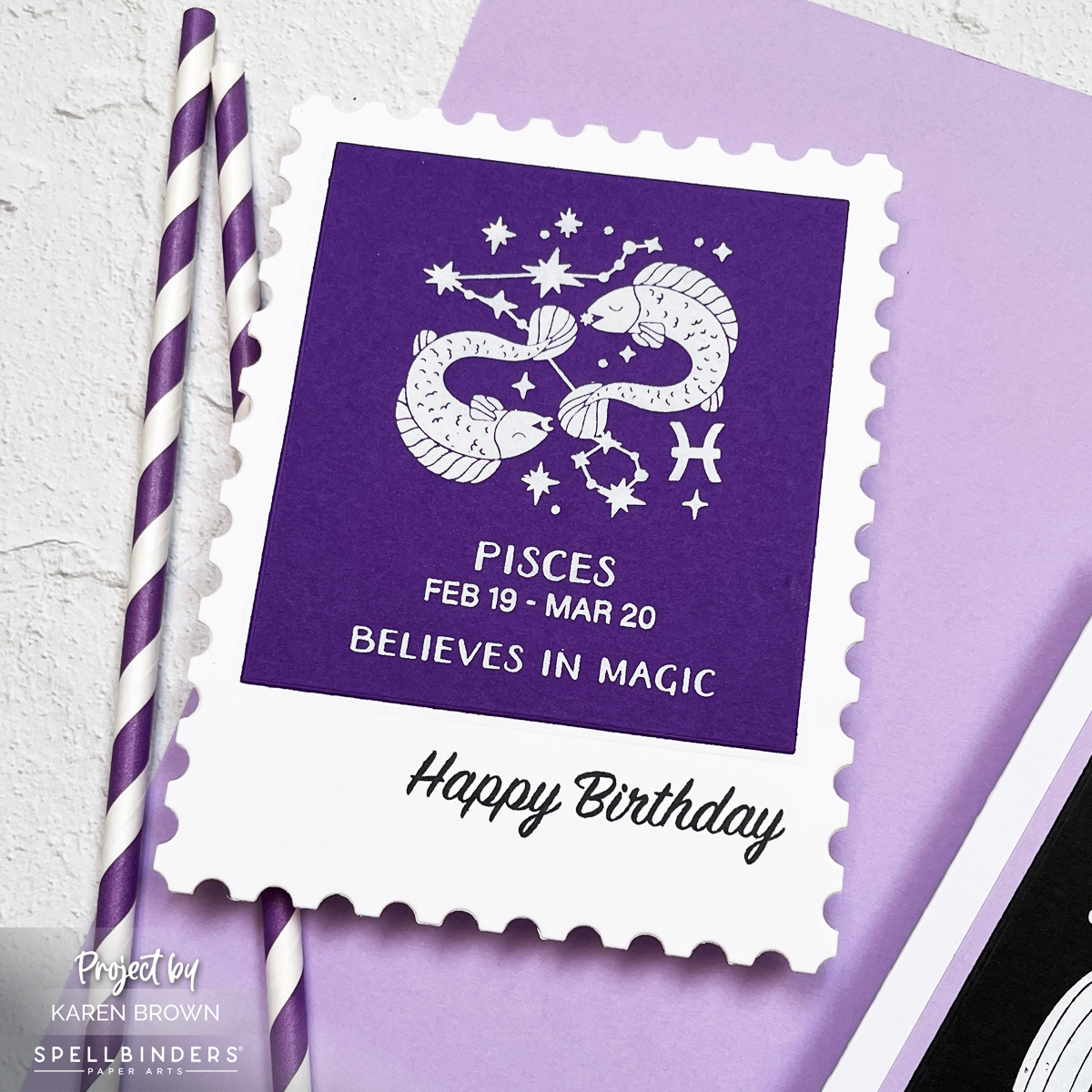
Handmade Pisces zodiac birthday card hot foiled in white on purple cardstock with a postage stamp edge frame and polaroid-style design.

For my Pisces card, I chose purple cardstock, inspired by my February birthstone, amethyst. I hot foiled the design in crisp white foil, which creates such a striking contrast against the rich purple background.

To finish the card:

  • I die cut the foiled panel using a postage stamp / polaroid-style frame from the January 2026 Spellbinders Large Die of the Month
  • The purple foiled panel becomes the “photo” portion of the polaroid
  • The white frame adds softness and a classic touch
  • I stamped a small scripty happy birthday sentiment along the bottom of the frame

The result feels clean, modern, and personal all at once.

Pisces is often described as creative, artistic, and imaginative—which made me smile. I frequently dream about cards or wake up with ideas I can’t wait to try, so this kit felt especially fitting.

Aquarius Card: Night Sky Drama with White Foil

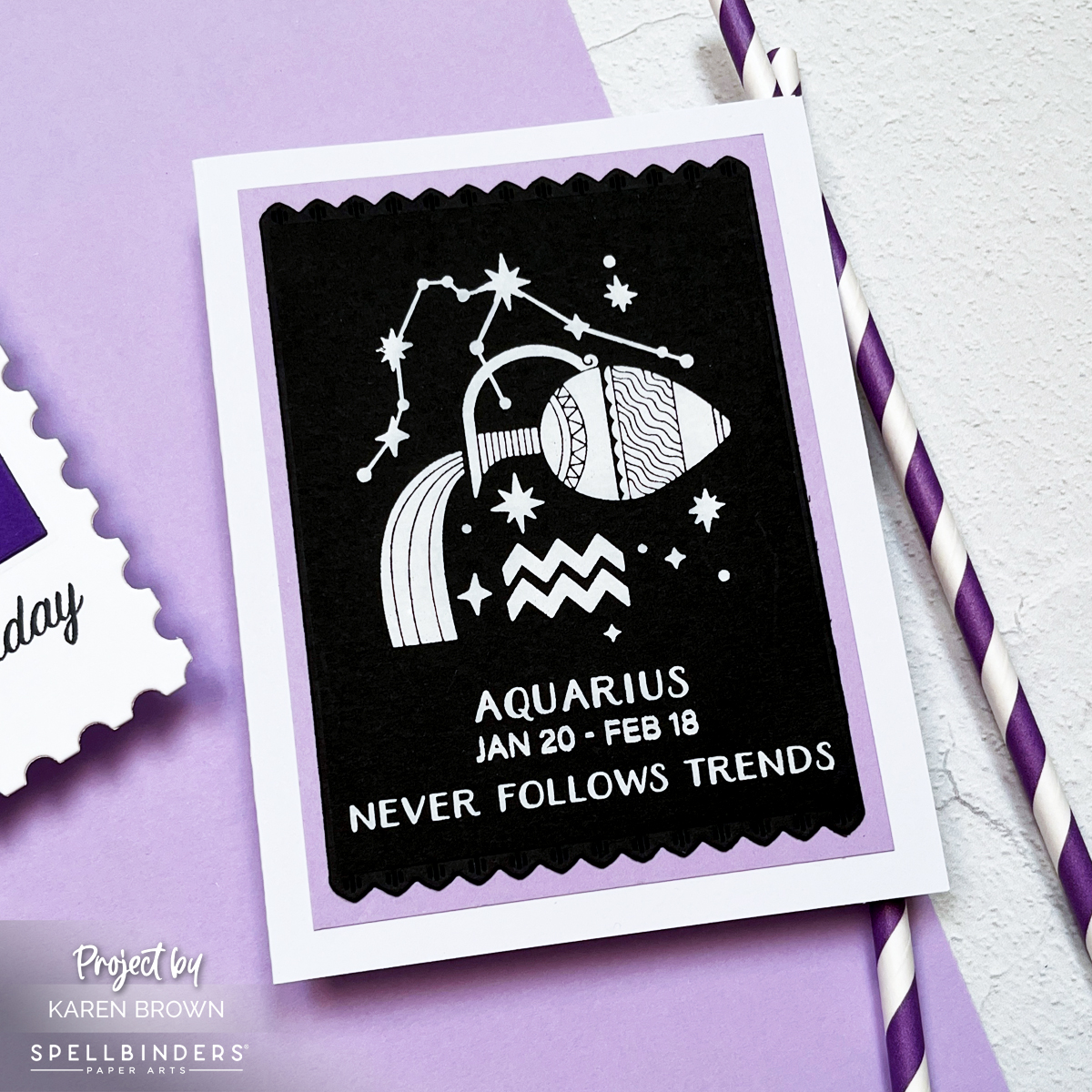
Aquarius zodiac card hot foiled in white on black cardstock, framed with a rectangular die cut for a night sky inspired look.  Masculine Birthday card.

For my Aquarius card, I leaned fully into the zodiac theme and created a night-sky inspired design. I hot foiled the plates in white foil on Pitch Black cardstock, which feels dramatic, graphic, and timeless.

The foiled panel was framed using dies from an older Spellbinders Die of the Month kit, keeping the focus on the bold foiling and strong contrast. This card is simple, striking, and would be perfect for:

  • A masculine birthday
  • A modern astrology lover
  • Anyone who appreciates clean design

Why I Love These Zodiac Kits (And Think You Will Too)

What really stands out to me is how customized and thoughtful these cards feel. You can:

  • Use a recipient’s favorite color
  • Choose cardstock based on birthstones
  • Keep designs bold and graphic or soften them with frames and layers
  • Mass produce cards efficiently without sacrificing style

They’re quick, versatile, and incredibly satisfying to make.

Supplies Used:


More Hot Foiling Inspiration

If you enjoy hot foiling techniques, here are a few related projects you might like:

  • Fast & Easy Glimmer Background Card – In my Christmas Elf card, I used white foil on pale blue cardstock to create a snowy, wintery background. This post includes a full video tutorial.
  • One Plate, Two Techniques: BetterPress vs Glimmer – One of my most popular posts from 2025, where I used the Scattered Shells plate to show how dramatically different results can be depending on the technique.

Both are great examples of how much versatility you can get from hot foil plates.


Final Thoughts

If you love scene-building, you’ll definitely want to check out my Sneaker Bouquet scene card tutorial.

These Spellbinders Block Print Zodiac kits make it incredibly easy to create cards that feel meaningful, personal, and polished—without a lot of time or effort. Whether you’re making a birthday card, a thank you note, or stocking up on cards for the year, zodiac cards are a smart, evergreen addition to any cardmaker’s repertoire.

And if you’ve been curious about hot foiling, don’t forget to watch the 2-minute Pisces foiling video—sometimes all it takes is a quick refresher to spark new ideas.

cardmaking · Die cutting · papercrafting

Card for Kids | Spellbinders February 2026 Large Die of the Month

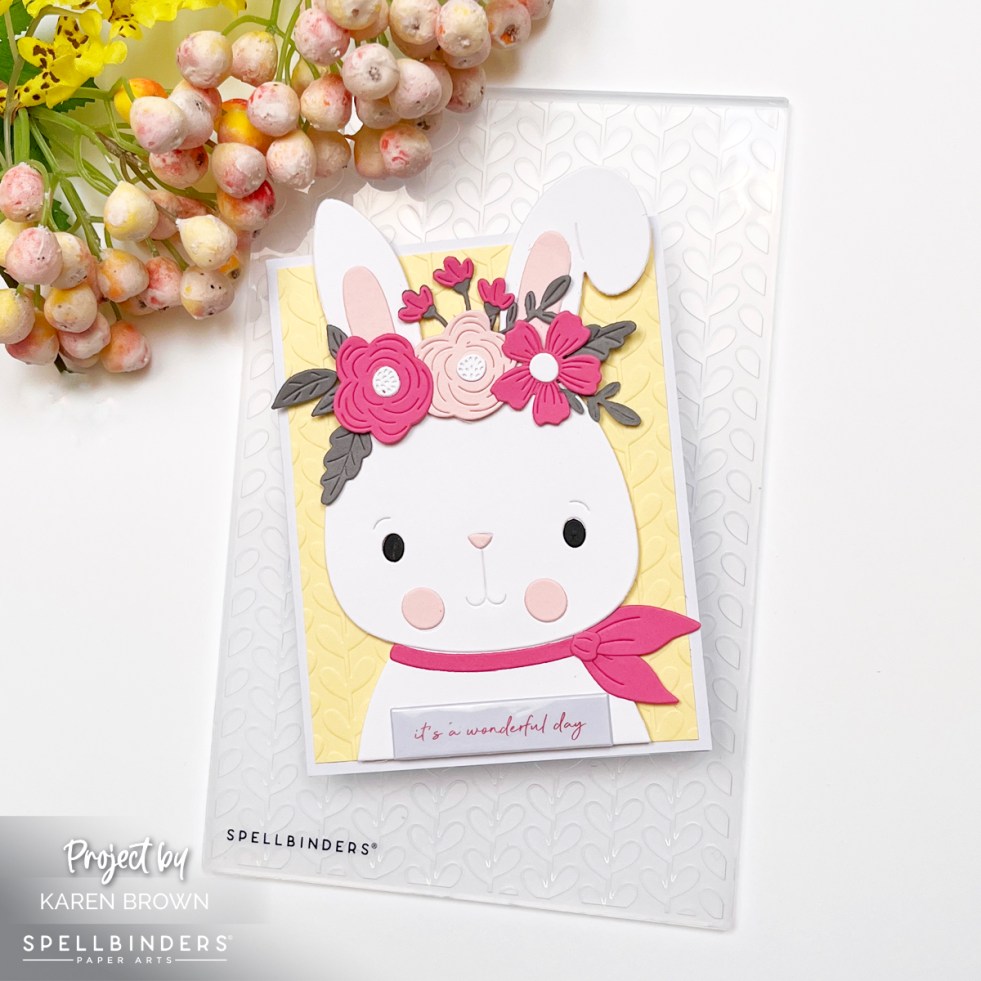
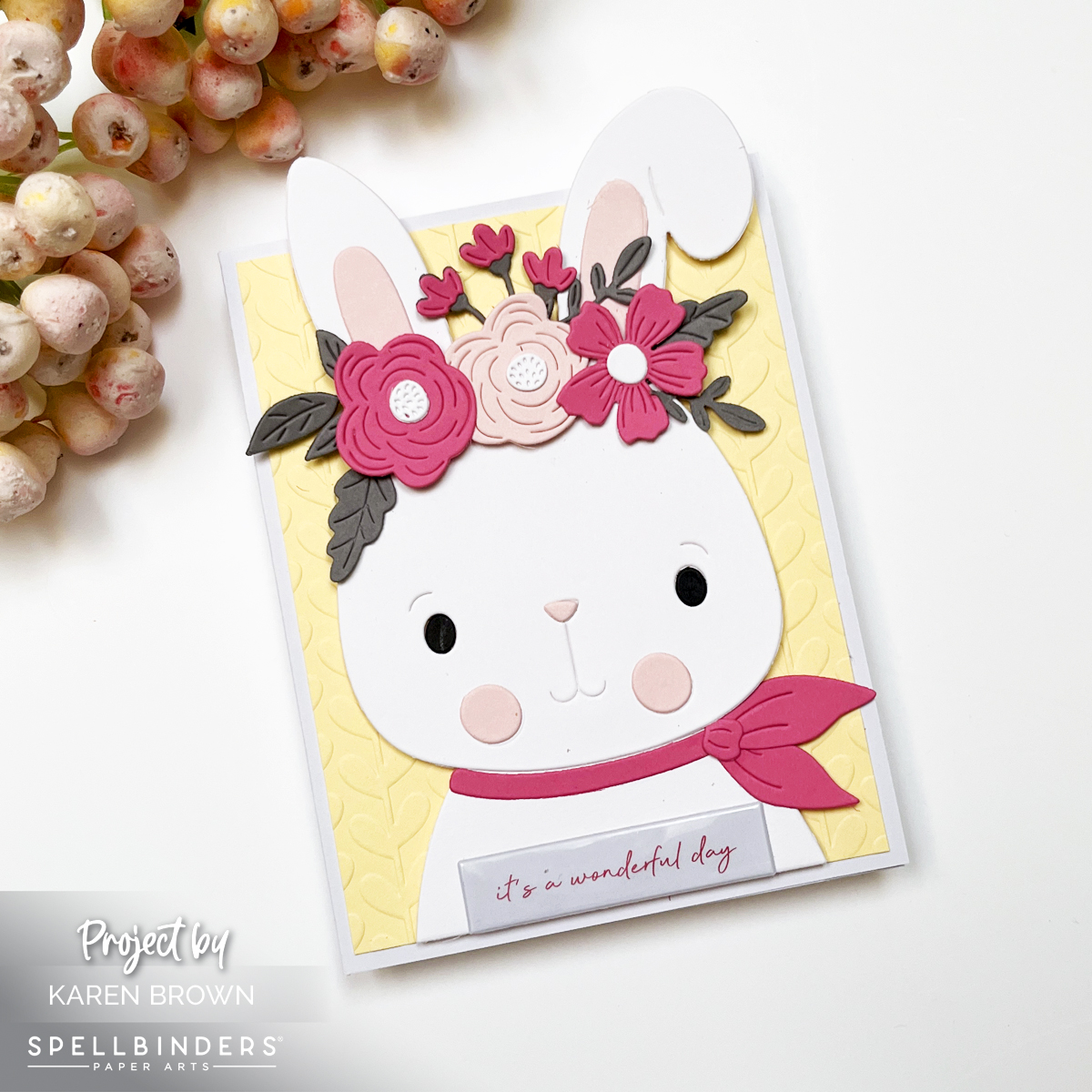
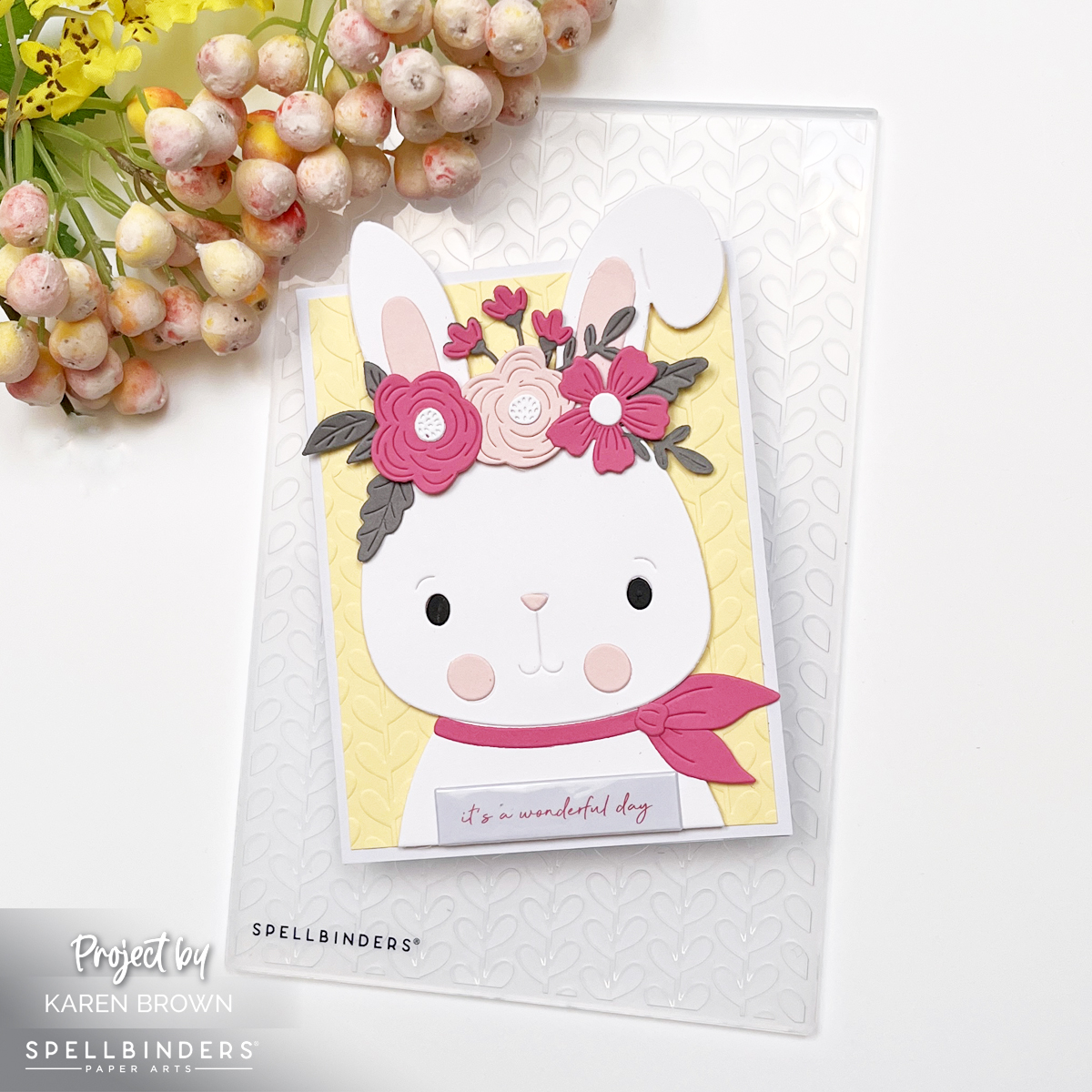
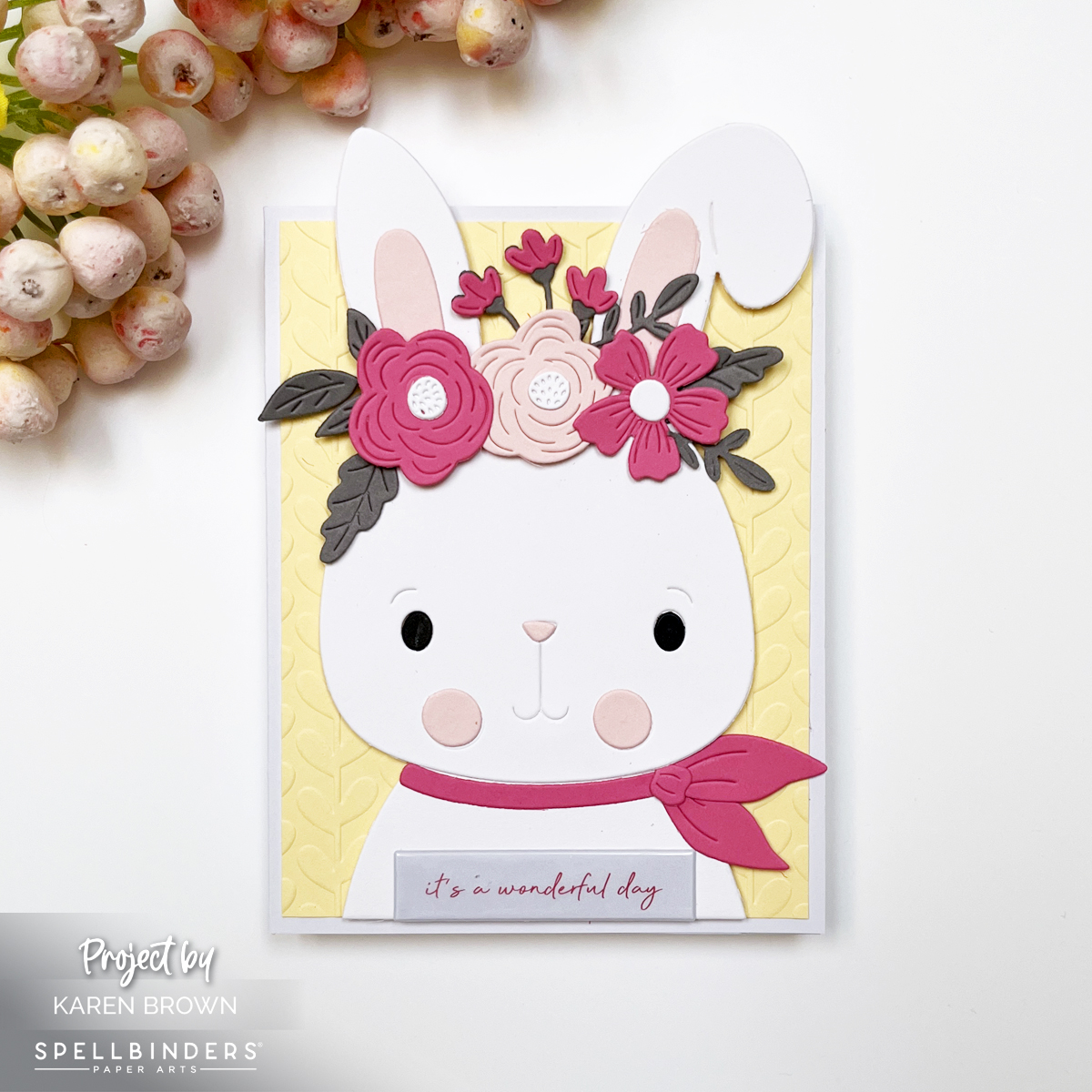
Spring bunny card for kids made with the Spellbinders February 2026 Large Die of the Month featuring a bunny with a flower crown, pink kerchief, and a yellow embossed background.

Cards for Kids

If you’re looking for a quick, high-impact spring card, you’re going to love the Spellbinders February 2026 Large Die of the Month, Spring Specs, paired with the Embossing Folder of the Month, Spring Stripes.

This die/folder combo made it incredibly easy to create an adorable bunny card that feels fresh, modern, and perfect for springtime sending. And, cards for kids are such fun to create!

👉 I’ll link all the helpful supplies below so you can easily recreate this project—or put your own spin on it.

You might also be interested in the 14 tools that I use most often in my craftroom and my best timesaving tip for cardmaking.

Yellow card panel embossed with the Spellbinders Spring Stripes Embossing Folder February 2026 Club Kit adding subtle texture to a spring card.

👉 I created this card for a little girl, but you could easily customize the card for a boy as well by changing the color palette.

Although this is a large die (perfect for oversized cards), I chose to use it on an A2 card base and let the tops of the bunny’s ears peek above the card front. It’s such a simple design choice, but it adds instant charm and visual interest—plus, who doesn’t love a bunny that refuses to stay inside the lines?

For the background, I used a buttery yellow cardstock and embossed it with the Spring Stripes Embossing Folder of the Month. The subtle striped texture adds just the right amount of detail without competing with the bunny focal point. It’s one of those embossing folders you’ll reach for again and again.

To finish the card, I added an easy sentiment using a Bayfair Puffy Sticker that reads “it’s a wonderful day.” Quick, cute, and perfectly on theme.

This card came together fast, looks polished, and would be easy to mass-produce—always a win in my craft room.

Would you like to see my Sneaker Bouquet scene card?

Close-up of bunny die cut from Spellbinders Large Die of the Month Club Kit Spring Specs showing layered flowers, gray leaves, and peeking bunny ears.

Helpful Links:


Subscription Tip: Don’t Miss the New All-Clubs Crate

If you love Spellbinders clubs, the NEW All-Clubs Crate Subscription is absolutely worth checking out. Members receive:

  • ALL the Club Kits for $130.00
  • 15% off select Spellbinders products every day
  • 1 FREE shipping coupon every month
  • Glimmer & BetterPress combined into one Press & Foil Plate (plus a roll of foil or equivalent)
  • An exclusive Crate-only die or Press & Foil Plate (only available during the monthly club window)
  • 10 sheets of 8.5 x 11 ColorWheel Cardstock that coordinates perfectly with the kits

January’s kit sold out very quickly, so if this bunny has your heart hopping, don’t wait!