Die cutting · papercrafting

How to Create a Dimensional Die-Cut Tote Bag (That Doubles as a Gift Card Holder)

A fun, stand-up papercraft project perfect for summer, gifting, and display

Tote bag holding a gift card, styled as a decorative papercraft gift
DIY die-cut gift card holders are so much fun to give…and receive.

I was in the mood to create something a little different… something dimensional, display-worthy, and fun.

And then it hit me—what about a stand-up tote bag that could double as a gift card holder?

This die-cut tote is not exactly a traditional card… but it could easily become one. Instead, I designed mine as a summery beach tote, filled with bright, happy colors and just the right amount of personality.

It’s the kind of project that looks adorable sitting on a table, shelf, or countertop—and even better when it’s holding a little surprise inside.


What You’ll Learn in This Post

  • How to create a die-cut stand-up tote bag
  • Easy ways to customize your design for any occasion
  • Why dimensional papercrafts make such memorable gifts
  • Creative ideas for using this tote as a gift card holder
  • How to turn this design into a traditional card if desired


Product Spotlight: A Simple Die Set with Endless Possibilities

The Hero Arts Tote Bag die set (Tote-Ally Awesome Bundle) is wonderfully simple:

  • A large tote shape
  • Long, strappy handles
  • Two accent strips for added detail

To personalize my tote, I used the Tiny Treasures Stamp & Cut set, filled with adorable charms and sentiments. It also pairs well with sentiments from the Keep Calm Stamp Set, which work beautifully with this design.

What I love most is how versatile this tote is. With just a few small changes, you can create completely different looks—making this a die set you’ll reach for again and again.

If you enjoy working with versatile tools like this, you might also like my roundup of the 14 Best Cardmaking Products and Supplies for 2026, where I share the tools I truly use the most.


Why Dimensional Designs Are So Loved

There’s something special about a project that stands up on its own.

Dimensional designs feel:

  • Interactive
  • Giftable
  • Display-worthy
  • A little unexpected

This tote has that “keepsake” quality—the kind of project recipients don’t toss aside. They display it.

If you enjoy dimensional projects, you might also love my post 1 Die Set, 2 Moods: Coffee Shop Chalkboards & a Lemonade Easel Card, where I explore another fun stand-up design.

Die-cut dimensional tote bag in blue and pink with a coffee charm, standing upright on a white surface
Stand-up dimmensional die-cuts are keepsakes recipients love to receive.

📌 Pin This for Later


Ways to Customize Your Tote

This is where the fun really begins.

  • Add charms to match the recipient’s personality (coffee, hearts, cherries, lemons, bows… there are so many options!)
  • Choose colors based on the occasion:
    • Red & green for Christmas
    • School colors for graduation
    • Soft pastels for spring
  • Try masculine styles (camo paper would be amazing!)
  • Emboss the tote for added texture and dimension
  • Keep it simple with one charm—or layer multiple for a playful look

Today, I added a coffee cup charm, but there are endless ways to make this tote your own.


A Creative Gift Card Holder Idea

Finished tote displayed on a table as a decorative papercraft piece
Die cut standup beach bag tote is a unique and highly personalizable papercrafting project.

One of my favorite uses for this tote?

Slip a gift card inside.

It instantly becomes:

  • Thoughtful
  • Unique
  • Memorable

I’ll be sharing a few photos of this option, along with how it looks styled on a shelf—because this little tote truly deserves to be displayed.


How to Create Your Stand-Up Tote

I started by choosing a bright, beachy color palette:

  • Sky blue tote
  • Pink handles
  • Striped pink and lime green accent base

I die cut two of each piece to build dimension.

Craft desk showing tote die cuts, cardstock, and tools mid-project
Using scored strips of cardstock is a great way to create standup die-cut keepsakes.

To create the stand-up base:

  1. Cut a 1” strip of cardstock
  2. Score ¼” in from each side
  3. This leaves a ½” center base
  4. Trim into:
    • One 2¼” strip for the bottom
    • Two additional strips for the sides

This simple structure allows the tote to stand beautifully on its own.


Adding the Charm

To personalize my tote:

  • I stamped and heat embossed a coffee cup
  • Die cut the image
  • Attached it to the handle as a charm

You can:

  • Add one charm for a clean look
  • Or layer several for a more playful design

Both styles work beautifully.


🧰 Supplies I Used

These are the exact tools I used to create this technique-focused card.

If you’d like to recreate this card, here are the supplies I used:

If you’re building your craft stash, I also keep a curated list of my go-to cardmaking supplies pinned here:
👉 My Go-To Cardmaking Supplies

And if you love discovering new kits, don’t miss my guide to the Best Subscription Cardmaking Kits for 2026—it’s a great way to keep your creativity flowing.


Final Thoughts

This tote checks all the boxes:

  • Easy to die cut and assemble
  • Highly customizable
  • Display-worthy
  • Perfect for gifting

📌 Pin This for Later

And it’s just plain fun.

💙

🏆 Ranked among the Top Cardmaking Blogs by Feedspot


cardmaking · Mixed Media

Mixed Media Layering Made Simple: The 4 Layers I Use on Almost Every Project

A beginner-friendly guide to building beautiful, cohesive mixed media cards—without the overwhelm

Mixed media card featuring layered ink blended background with stenciling, stamping, splatters, and a vintage suitcase focal point in aqua, yellow, and brown tones.

Have you ever looked at a mixed media project and thought:

“That’s beautiful… but where do I even start?”

I’ve been there.

When I first started exploring mixed media, everything felt overwhelming. There were so many techniques, products, and styles—but very few beginner-friendly guides that actually simplified the process.

So after years of experimenting (and yes… making a glorious mess or two), I created something I wish I had from the beginning:

Karen’s Mixed Media Recipe

A simple, repeatable framework that works on almost every project.

And today I am sharing it with you.


✂️ In This Post, You’ll Learn:

• My simple 3-step mixed media framework
• How to create a quick, cohesive background
• The 4 “must-have” layers I use on almost every project
• Why limiting your color palette makes everything look better


🧁 Karen’s Mixed Media Recipe (Quick Recap)

This is the exact process I follow again and again:

Step 1: Create an interesting background
Step 2: Add 4+ layers
Step 3: Add a strong focal point

That’s it. No overwhelm. No guessing.

📌 Save this for later so you can come back when you’re ready to create.


And today? We’re diving into the part where the magic really happens…

👉 Layering

How to create vintage look mixed media cards that are simpe and beginner friendly.

If you missed earlier posts in this series:

Mixed Media Made Simple: My 3-Step Recipe for Fun & Easy Tags
Ink Smooshing 101 — My Favorite Mixed Media Background Starter

And if you try this recipe, I would LOVE to see it—tag your project with
👉 #karensmixedmediarecipe

Browse my Favorite and Most Used Cardmaking Supplies.


🎨 Step 1: Create a Background

For today’s project, I created a soft ink-blended background on watercolor paper.

I chose colors that sit near each other on the color wheel:

• Aqua
• Yellow

When these blend, they create a soft, beautiful green—no harsh transitions, no muddiness.

Beginner Tip:
Avoid opposite colors (like purple + yellow or red + green) unless you want brown.

I used reactive inks, which means they respond to water—this becomes important in our 4th layering step (hello, splatters!).

I also created a second panel in yellow for my focal point.

2 color ink blend background for mixed media card before adding layers.
Soft ink-blended panels before layering—this is our clean starting point before the “grunge magic” begins.

✨ Step 2: The Fab 4 Layers (My Go-To Every Time)

If mixed media had a “starter pack,” this would be it.

These are the four layers I use on almost every project—they are reliable, forgiving, and incredibly effective.

I call them…

💛 The Fab 4


1. Stenciling (Adds Pattern)

This is where your background starts to come alive.

I used a diamond stencil to add soft pattern using the same aqua tones.

✔ No perfect placement
✔ No covering the whole background
✔ Just touches of pattern

Think: “strategic randomness”

I’ve listed my favorite mixed media stencils in My Go-To Cardmaking Supplies page.

Stenciling, Sparkle Weave, added to a mixed media background.
The Sparkle Weave stencil works beautifully on mixed media cards.

2. Stamping (Adds Personality & Vintage Charm)

Now we add character.

I used imperfect, sketch-style stamps—dots, lines, circles—for that slightly vintage feel.

Beginner Trick:
Try second-generation stamping (stamp once on scrap, then on your panel) for softer impressions.

I introduced a third color here:

• A neutral brown

This grounds the entire design and keeps things from feeling too “floaty.”

Stamping layers on a mixed media card background.
After stamping layers—notice how the background is starting to feel more textured and dimensional.

3. Distress the Edges (Adds Depth)

Time to gently “grunge it up.”

I blended brown and a touch of blue around the edges.

This simple step:

• frames your design
• adds age and depth
• makes everything feel more finished

distressing the edges of a background with Root Beer brown ink and a blending brush.
Edges distressed for depth and contrast really start to pull the background together.

4. Splatters (Adds Movement & Magic)

This is where everything comes together.

First: water splatters (reactive inks = magic ✨)
Then: light splatters of all three colors

Turn your panel as you go—this keeps things natural and balanced.

Adding water splatters and ink splatters to a mixed media card background.
Finished background after The Fab 4—layers, texture, and movement working together.

🎯 When to Stop?

After the Fab 4, pause and look.

Ask yourself:

👉 Do I love it?
👉 Does it feel balanced?

If yes—STOP. 🎉
If not—add one more layer and reassess.

Remember: we’re going for “imperfect by design.”


🧳 Step 3: Add a Focal Point

I chose a vintage-style die cut suitcase (because… how cute is that?!).

To keep the look cohesive, I created custom panels instead of using cardstock:

• Yellow panel for the suitcase body
• Brown “leather” panel using direct-to-paper + water

This gives it that worn, travel-ready feel.

Die cutting a focal point for a layered mixed media background.
Finished layered background using four mixed media techniques

✨ Pro Tip: Instant Layering Shortcut

Even experienced mixed media artists use this:

👉 Pre-printed ephemera

I tucked in:

tickets
a sentiment (such an easy option)
small embellishments

These add detail without extra effort.

I placed the suitcase slightly off-center—like it’s ready to hop on a train and go on an adventure.

📌 Save this for later on Pinterest.


🎨 Let’s Talk Color (The Secret Sauce)

I kept everything to just three colors:

• Aqua (calm)
• Yellow (energy)
• Brown (grounding)

Using the same colors in:

✔ background
✔ layers
✔ focal point

…creates instant cohesion.

More colors ≠ better
Fewer colors = harmony


✨ Why These Layers Work

  • Easy to learn and effective everytime
  • Build depth without clutter
  • All 4 layers work well together
  • Add a polished, finished look

🧰 Supplies Used From My Toolbox

You might also be interested in my 14 Best Cardmaking Supplies for 2026 post.

Focal Point:
Retro Suitcase Die from the We Have Baggage Collection

Inks:
Reactive Inks (aqua, yellow, brown tones)

Tools & Layers:
Blending Brushes
Background Stamps: Background Builder and Vintage Maps and Ledgers
Stencils – Sparkle Weave
Ephemera – chipboard, tickets/sentiments

Basics:
Watercolor paper (140 lb.)
Die cutting machine
Adhesives


💭 Final Thoughts

If you’re new to mixed media, start here.

The Fab 4 layers will take you from:

👉 “flat and plain”
to
👉 “textured and full of life”

…without overwhelm.

Layering isn’t about doing more—it’s about doing the right things in the right order.

And now you have that order. 💛

📌 Save this for later so you can come back when you’re ready to try this technique


📌 If you try this, tag your project with #karensmixedmediarecipe
I would truly love to see what you create.


✨ Coming Next…

In the next series post, we’ll build on The Fab 4 and add 2–3 more advanced layers (think texture, shine, and dimension 👀).

cardmaking · Cardmaking Kit · Supplies

Best Cardmaking Kit Subscriptions (2026 Guide) | My Favorite Craft Kits

Which monthly cardmaking kits are worth subscribing to — and which ones I personally use in my craft room.

Die cut farmers market tote card using Spellbinders Large Die of the Month kit for April 2026.

Do you ever wonder which cardmaking subscription kits are actually worth it?

If you enjoy creating high-impact handmade cards, monthly kits can become your best crafty friend.

I’ve been subscribing to cardmaking kits for over 10 years, and after trying many different options, I keep coming back to the same trusted favorites.

These kits provide:

• excellent value
• beautifully curated designs
• coordinated supplies
• inspiration delivered to your craft room every month

If you’re building your craft stash, you may also enjoy my guide to the 14 Best Cardmaking Products and Supplies, where I share the tools I reach for again and again. This post was just updated last week to include the latest recommendations.

Today I’m sharing the subscription kits I personally recommend most.


In This Post

• My Favorite Cardmaking Subscription Kits
• Why Monthly Craft Kits Are Worth It
• Today’s Card: Farmers Market Tote
• Best Kits for Building Your Craft Supplies


My Favorite Cardmaking Subscription Kits

These are the kits I recommend most often.

Spellbinders Large Die of the Month
Hero Arts My Monthly Hero
Spellbinders Small Die of the Month
Spellbinders Stitching Club of the Month
Spellbinders Embossing Folder of the Month
Spellbinders All Crate Club


Product Spotlight

If I had to choose one cardmaking subscription kit, this would be it:

The Spellbinders Large Die of the Month.

Over the past year, many of my favorite cards came from this kit, including:

Sneaker Bouquet
Card for Kids
Hummingbird Polaroid
Christmas Scene Card

Spellbinders dies are known for their excellent quality and creative designs, and the kit ships every month with a new themed die set.

Member benefits include:

• exclusive products
• bonus savings
• early product access
• special promotions


Why Cardmaking Subscription Kits Are Worth It

Monthly craft kits have several advantages:

• curated supplies that work together
• great value compared to buying items separately
• inspiration delivered every month
• ideal for beginners and experienced cardmakers
• kits often sell out quickly

Subscribing guarantees you’ll receive the kit before it disappears.


Today’s Card: Farmers Market Tote

Spellbinders Large Die of the Month for April 2026 Farmer's Market Tote card.

For today’s card, I created a charming die-cut design using the Farmers Market theme from the Large Die of the Month.

The focal point is a shopping tote filled with fresh produce, milk bottles, tulips, and a long baguette.

To add texture, I embossed the tote using the Market Weave Embossing Folder from the Embossing Folder of the Month kit.

Tip: I keep a large envelope filled with paper scraps, which are perfect when die cutting small elements like fruits, flowers, and accessories.


Runner-Up Favorite Kit

Two die cut get well cards featuring bowls of alphabet soup and glimmer foil backgrounds.

My very first subscription kit was Hero Arts My Monthly Hero, and it remains one of my favorites.

The kit is now available in two versions:

My Monthly Super Hero
My Monthly Hero (smaller version)

Hero Arts kits are known for their creative themes and versatile stamps and this month is all about florals and gardening.

One recent favorite is the Big Squishy Hugs kit, which I’ve been using for many of my get-well cards.


Best Value Subscription

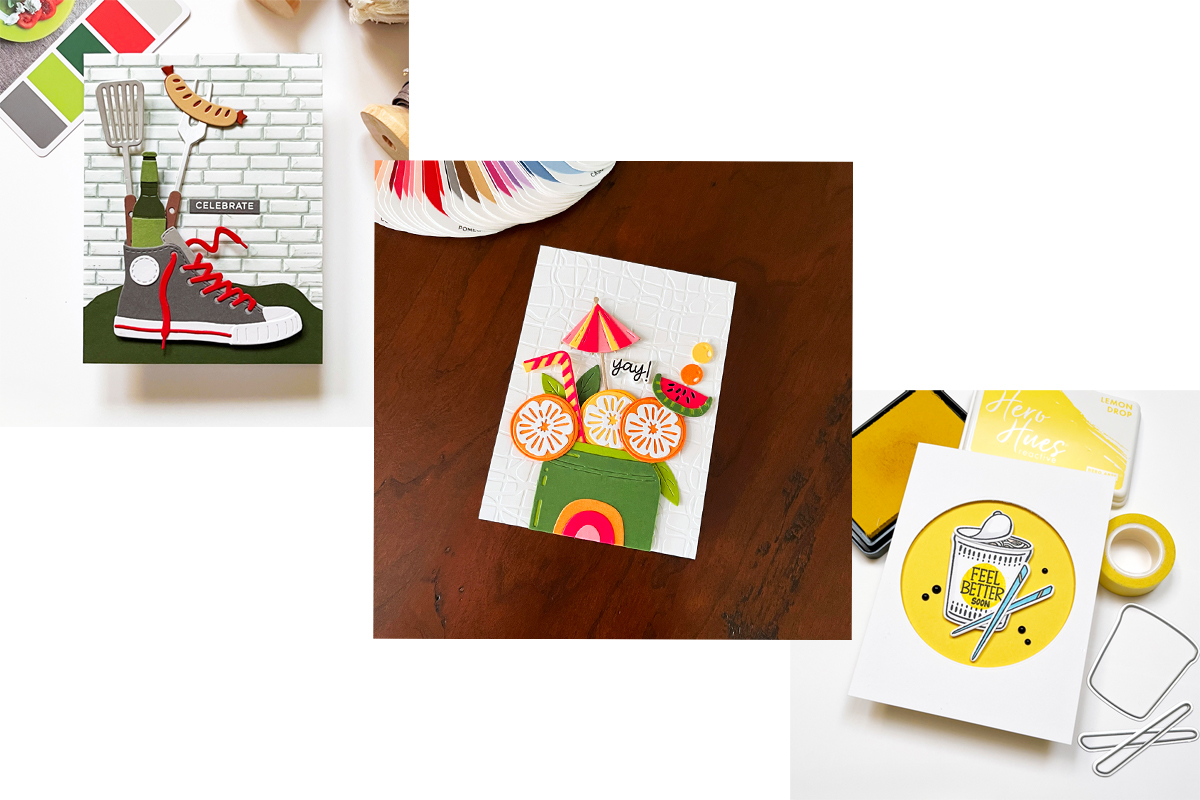
Die Cut Sneaker Bouquet Card perfect for men and foodie food lovers.  BBQ picnic theme with high top sneaker.

The Spellbinders All Crate Club offers the biggest value.

Subscribers receive seven coordinated monthly kits, including:

• small die kit
• large die kit
• stitching kit
• stamp and die set
• embossing folder
• 3D embossing folder
• BetterPress + foil plate with stencils

Value: about $315 worth of products for roughly $130.

Members also receive:

• 15% discount on Spellbinders products
• monthly free shipping coupon
• exclusive bonus items


More Great Subscription Kits

Small Die of the Month

Die cut winter scene card of two children building a snowman.

Small Die of the Month: High-quality themed dies perfect for quick cards.

Recent favorites:

Better Together Valentine
Let’s Do Brunch
Winter Scene (above)


Stitching Die of the Month

Adorable chihuahua dog card.

These stitching kits combine papercrafting with embroidery stitching.

The stitching holes are die-cut, making the process very beginner friendly.

Some of my favorites include:

Sunflower home decor art
Chihuahua purse dog (above)
Coffee theme Valentine


Embossing Folder of the Month

📌 Save this post for later on Pinterest.

Farmer's market die-cut theme card with tote filled with jugs of milk, baguettes, and veggies.

Embossing folders add depth, texture, and interest to card designs.

I often coordinate the Embossing Club with the Large Die of the Month kit. The embossing club is one of the most affordable subscription options.


Build Your Cardmaking Toolbox

Here are some of the supplies I use most when working with these kits.

Kits

Spellbinders Large Die of the Month
Hero Arts My Monthly Super Hero
Hero Arts My Monthly Hero
Spellbinders Small Die of the Month
Spellbinders Stitching Club
Spellbinders Embossing Folder Club
Spellbinders All Crates Club

Tools

Platinum 6 Die Cutting Machine
Jewel Picker

Supplies

ColorWheel Cardstock
Best Ever Craft Tape
Bearly Glue

📌 Save this post for later so you can come back when you’re ready to try a new kit.

What is your favorite subscription card kit?

Die cutting · Mixed Media

3 Easy Mixed Media Cards for Beginners | Line of Being Die

Part of My Continuing Series: My 3-Step Mixed Media Recipe

3 modern abstract faces on a handmade card with a watercolor background.

Sometimes a die set arrives and your brain immediately starts firing off ideas.

That was me with Spellbinders Line of Being die set from Jaycee’s All My Senses Collection.

It’s minimalist. Abstract. Unexpected. Just a few delicate lines forming eyes, a nose, lips… and that tiny heart on the cheek.

It felt modern and artistic — and I knew it deserved something special.

So instead of making one card, I made three.

Three different artistic mixed media takes on the same striking focal point.

And interestingly? Each one feels completely different.


✂️ In This Post, You’ll Learn:

• How to add a simple but dramatic focal point
• Learn to create easy custom watercolor backgrounds
• How to add a few light layers that add interest
• Using gel press prints for your background


3 Mixed Media cards created with die cut "Line of Being" die cut from Spellbinders.

A Little Mixed Media Context

If you’ve been following along in my new series:

Today’s cards are a little different.

They’re what I’d call Mixed Media Lite.

Understated.
Modern.
Intentional.
Artsy without being busy.

Use #karensmixedmediarecipe so we can follow along with each other’s projects.


Card One: The “Green Picasso” Card

Green Picasso handmade mixed media "Line of Being" card with watercolor background and 5 additional layers.

This card started with a hand-painted watercolor background.

I taped my watercolor paper to a hardboard using painter’s tape and lightly dampened the area where I wanted color.

Using various shades of green, I let the paint move organically — blobs, peninsulas, soft edges. No strict shape.

I used the die plate as a guide to estimate the size of my watercolor “face” (approximately 3 ¼” x 4 ½”).

Once dry, it felt very Picasso-meets-Buddha to me.

There’s quite a bit of white space around the painted area, which keeps the composition modern and breathable.

While brainstorming, I created 3 watercolor backgrounds. I went with the right two and filed the left panel in my premade backgrounds bin.

3 watercolor backgrounds + a bold black die cut creates 3 artsy modern handmade cards
Watercolor backgrounds work so well with mixed media cardmaking.

Subtle Layers (5 Total)

Even though this card feels simple, I added five quiet layers — because as you know, my recipe suggests 4+ layers.

  1. Light Script Stenciling
    Using Fog Reactive Ink, I stenciled two small areas of script. The pattern flows from watercolor into white space, about 1” sections.
  2. Tiny Rub-On Transfers
    Small Asian characters placed strategically. Just enough to intrigue.
  3. Second Generation Stamping
    Miss Detective small eyes, lips, fingerprints, and a heart stamped lightly in black reactive ink. Soft texture — not bold imagery.
  4. Partial Background Stamping
    I inked only portions of a bubble background stamp with Fog ink, bending the stamp to touch the paper selectively. Some impressions land on watercolor, some on white space.
  5. Splatters
    Blue-green and gold splatters to finish.

The Line of Being focal point — die cut from black cardstock — creates dramatic contrast against the organic green.

The sentiment? A small artistic rub-on that says “smile.”

Mounted onto a black A2 base using rounded rectangle infinity dies.

Bold. Modern. Graphic.

Mixed media card with green watercolor face background and black abstract face die cut with a second version in the background with my watercolor paint palette.
Bold but simple black die cuts make such interesting focal points for your mixed media cards.

Card Two: Pink & Green Modern Minimal

This card takes a lighter approach.

I painted:

  • A kidney-shaped pink wash on the right
  • A smaller irregular green circle blending slightly into the pink on the left

Lots of white space.
Lots of breathing room.

Watercolor backgrounds + splatters + black die cuts creates a bold modern mixed media look that works so well for  cardmaking projects.
Colorful splatters elevate almost every mixed media project.

Then I added:

No heavy layering.
No traditional mixed media build-up.

Just artistic restraint.

And I love how eye-catching it feels despite its simplicity.

This card is proof that there’s no strict rule for how many layers a mixed media project must have.

Sometimes less truly is more.

Pink and green modern watercolor card with minimalist black face die cut

Card Three: Gel Press Version

I thought I was finished at two cards.

But overnight I had that creative whisper:

“What about a gel press background?”

So I shopped my stash of gel press prints (this is why I keep them!) and chose one with beautiful movement and color variation.

I:

The premade sentiment sticker finished it effortlessly.

Same focal point.
Completely different mood.

Gel press background card with metallic splatters and abstract line face

Why I Love Making Variations

Creating the same card multiple ways is incredibly instructive.

You learn:

  • How background weight changes a design
  • How much layering is “enough”
  • How focal points behave against organic vs graphic surfaces
  • What feels like you

It’s creative experimentation without pressure.

If you’re new to mixed media, I highly recommend starting with something approachable like my Easy & Addictive | Beginner Mixed Media Tag Tutorial and VIDEO.

For those building their stash, I also shared my 14 Best Cardmaking Products and Supplies for 2026, which might be helpful.

Build Your Cardmaking Toolkit:

If you are looking to equip your crafting space for new projects, these are the products I used today:

Diecutting:

Stamps:

Inks:

Which One Is Your Favorite?

The layered Green Picasso?
The modern Pink & Green?
Or the bold Gel Press version?

I’d truly love to know.


cardmaking · Tutorial

1 Die Set, 2 Moods: Coffee Shop Chalkboards & a Lemonade Easel Card

Create Dimensional Keepsake Cards That Will Wow Your Recipient

4 versions of chalkboard easel die-cut cards from Spellbinders Pink Lemonade Stand Collection

Some die sets are fun. Others quietly become craft room staples—the kind you reach for again and again because they just work.

The new Spellbinders Pink Lemonade Stand Collection falls firmly into that second category.

With its stand-up easel chalkboard design, customizable accessories, and endless styling options, this set can go modern or playful, graphic or cozy, bold or soft. Its both eye-catching and surprisingly easy to create—even if you’ve never made a dimensional card before.

Today, I’m sharing how to turn this versatile die set into a dimensional chalkboard easel card that’s both eye-catching and surprisingly easy to create.


In This Post, You’ll Learn:

• How to create a dimensional chalkboard-style easel card
• Tips for building a stable stand-up design
• Ways to customize your card for different occasions
• How To Get Professional Heat Embossing Every Time


I’ve created two dimensional easel card designs using the same kit:
• a bright, cheerful stand-up strawberry-lemonade easel card that practically begs to be displayed

• a trio of bold, graphic coffee shop thank-you cards featuring dramatic black cardstock and heat embossing

Along the way, I’m also sharing a reliable heat embossing tutorial, tips for building sturdy easel cards, and ideas to help you get the most mileage possible out of this die set.

Angled side view of pink lemonade stand easel card standing upright for display

Product Spotlight: Pink Lemonade Stand Die Set

The chalkboard easel card featured today is built with the delightful Pink Lemonade Stand Die Set from Spellbinders.

What makes this set so versatile is the dimensional stand design and the mix-and-match accessories that allow you to style it for everything from summer lemonade stands to cozy coffee shop scenes.

Why I love it:

• Creates dimensional easel cards that display beautifully
• Includes fun accessory pieces for customizing your stand
• Works with many different themes and occasions

See the die set here.


Lemonade Stand Easel Card (Bright, Happy, Display-Worthy)

For my first card, I used the Lemonade Stand die set traditionally—and it’s a show-stopper.

Design Details

  • Black chalkboard center
  • Tan “wood” frame top and bottom
  • Die-cut pitcher of pink lemonade, glasses, lemons, and a strawberry
  • Included hello sentiment
  • Pink and yellow banner across the top

Color palette: pink, yellow, and pale blue—bright, happy, and eye-catching without being busy.

Lemonade stand easel card with pink lemonade pitcher, lemons, banner, and black chalkboard background.  Spellbinders S6-269
Dimensional stand-up easel cards beg to be displayed.

I cut many of my elements from lightly inked scraps, which keeps everything from looking flat. I also added a touch of ink blending to the lemons for dimension.

If lemons are your thing too, you might enjoy this favorite from last year → Lovely Lemons: Die Cutting, Ink Blending & a Touch of Gold.

I am sharing a diecutting process photo and I talk more about why I love my Platinum 6 in my must-have cardmaking list.

process photo of die-cutting
Die cutting lemonade embellishments creates fun interest on chalkboard easel display cards.

Up-Right Easel Assembly Tip

  • Die cut a second chalkboard backer from tan cardstock
  • Score just below the top wood header on the front and back panel
  • Glue only the top headers together to create a sturdy stand

These display-worthy cards are the kind recipients keep out long after the occasion.

Trio of Coffee Shop Thank-You Cards (Black Cardstock = Instant Drama)

For my trio of cards, I leaned fully into a coffee shop chalkboard vibe—modern, graphic, and cozy all at once.

coffee themed handmade easel cards.

Design Details

I trimmed the coffee cup image slightly, which instantly made the design feel more like a real café chalkboard. The glossy white embossing against deep black cardstock is one of those combinations that never fails.

If you love coffee-themed cards too, you might enjoy my bold espresso-inspired project here → What’s Brewing? A Bold & Graphic Coffee Card.

Individual coffee shop chalkboard easel card in turquoise, black, and white.  Spellbinders Pink Lemonade Stand die kits:  S6-269 & S4-1532

Color Breakdown (why it works)

Each card is mostly black (about 70%), with:

  • one strong accent color (~15%)
  • crisp white embossing
  • one tiny pop of contrast (flower center or heart)

That balance is what keeps these dramatic but still cheerful.

Which color combo is your favorite—pink, turquoise, or yellow?

Heat Embossing on Black Cardstock

Because these cards rely on bold embossing, I wanted to include a go-to heat embossing method you can reference again and again.

Individual coffee shop chalkboard easel card in hot pink, black, and white.  Coffee theme "thanks a latte".

How I Get Clean, Professional Heat Embossing Every Time

  • Prep stamps with a stamp conditioning eraser (today I used the Hero Arts Coffee or Tea stamp set)
  • Prep cardstock with an anti-static powder tool
  • Use a 1″ flat brush to apply powder horizontally, then vertically
  • Stamp with Unicorn White Pigment Ink
  • Use white embossing powder (double white = best results)
  • Preheat heat tool for at least 1 minute
  • Use the easel die as a viewfinder to place images
  • Stamp twice with a stamp positioner using light, even pressure
  • Pour embossing powder generously, tilt panel in all directions, tap gently
  • Heat emboss while constantly moving the heat tool
  • Let cool, then polish lightly with a microfiber cloth

💡 Tip I’ve used for years: catch excess embossing powder in a coffee filter—easy pour-back, no mess.

I’m sharing:

  • a candid workspace photo showing all three layouts “percolating” overnight
Process photo showing chalkboard card layouts, dies, cardstock, and die cutting machine
Heat embossing white pigment ink and embossing powder on black cardstock creates that bold chalkboard look I love for coffee themed cards.
  • a mid-assembly shot with one chalkboard drying under an acrylic block
Heat embossing a coffee cup stamp with white embossing powder on black cardstock for chalkboard style thank you card.
Bright pops of color contrast nicely with blackcardstock.

If you are looking for easy relaxed cardmaking, you might be interested in some other products I used from The Pink Lemonade Collection in this Using Pre-Printed Supplies blog post.

If you love scene-building, you’ll definitely want to check out my Sneaker Bouquet scene card tutorial.

Craft Supplies Featured on This Card:

Die Cutting:

Stamps and Cardstock:

Ink:

cardmaking · Die cutting

The One Cardmaking Step That Saves Me the Most Time

Two beautiful handmade floral cards with partial in lay die-cutting, perfect for Sympathy or Mother's Day.

One of the biggest time-savers in my craft room is keeping premade sentiment strips ready to go. I love being able to audition sentiments while I’m designing a card—sliding options around, trying different tones, and choosing the one that feels just right.

Today I’m sharing my favorite sentiment stamps for cardmakers, how I batch-make sentiment strips, and how I used them to create thoughtful sympathy cards using a partial inlay die-cutting technique.


In This Post, You’ll Learn:

• The one step that saves me the most time when crafting
• How to streamline your cardmaking process
• Why batching can improve your creativity
• Simple ways to work smarter (not harder)


Best Sentiment Stamps for Cardmakers (and Why I Premake Them)

Two serene floral die cuts cards using Hero Arts Daisy Cover Die and the inlay die cutting technique.

Having sentiment strips prepared in advance:

  • Speeds up cardmaking
  • Reduces decision fatigue
  • Helps you visualize the finished card sooner
  • Makes it easier to create sympathy and encouragement cards thoughtfully

For this batch, I created two classic, versatile options:

  • White heat embossing on gray cardstock
  • White heat embossing on black cardstock

These neutral combinations work beautifully across many card styles and occasions. These sentiment strips would also be beautiful stamped on white cardstock.


My Go-To Sentiment Stamp Sets

Finished white heat embossed sentiment strips on black and gray cardstock, die cut and ready to use for handmade cards and tags.

I used the Hero Arts Everyday Sentiment Strips 2 along with the Sentiment Strips Cutting Die.

What I love about these sets:

  • One large stamp with 44 sentiments
  • One large coordinating die—no guessing, no trimming
  • Available in Everyday 1, Everyday 2, and Christmas
  • Covers birthdays, sympathy, hello, get well, encouragement, and more

Because I stamped two panels, I now have 88 sentiment strips ready to go—such a huge time saver!

Two modern and elegant floral die cut cards with loads of lovely texture.

Sentiment Strip Prep Tips & How to Make Them

A few small steps made a big difference:

  • I gently conditioned the large stamp with a stamp conditioning eraser
    → This helped achieve crisp impressions with the smaller text
  • Prepped my cardstock with an anti-static powder
  • Stamped with Unicorn White Pigment Ink
  • Heat embossed with White Embossing Powder

The results were clean, bright, and incredibly readable.

Process photo of heat embossed sentiment strip panel in white embossing powder on gray cardstock with coordinating sentiment strip die taped in place, ready for die cutting.

I also have a process photo showing the heat-embossed panel with the coordinating die taped in place, ready to run through my Platinum 6 die-cutting machine—my favorite way to batch die cut sentiments quickly and accurately.


Using Sentiment Strips on Sympathy Cards

Clean and modern sympathy card featuring a partial inlay daisy cover die design in soft pink, white, and gray with a white heat embossed sentiment strip.

To put these sentiments to use, I created two sympathy cards using the Daisy Cover Die and a partial inlay die-cutting technique.

This technique is a bit like puzzling for cardmakers—methodical, satisfying, and surprisingly relaxing.

Because the cover die is large and detailed, I chose to emphasize just one row of daisies, allowing the rest of the panel’s texture to shine while keeping the design calm and respectful.

Partial Inlay Die Cutting: Step-by-Step

Handmade sympathy card using partial inlay die cutting with a single row of gray daisies and a pre-made sentiment strip for a thoughtful, understated finish.
  1. Die cut a white cardstock panel with the daisy cover die
  2. Punch out the white flowers and glue the panel to a white card base
  3. Die cut one strip of daisies from gray cardstock
  4. Flip the gray panel over and leave the die cuts in place so you know where each piece belongs
  5. Working one flower at a time:
    • Add glue to a few negative spaces
    • Punch, place, and smooth with a bone folder
    • Tip: A jewel picker is especially helpful for small centers
  6. Die cut the coordinating flower centers and repeat the process
  7. Weight with an acrylic block until fully dry
  8. Finish with one of your premade heat-embossed sentiment strips

That final sentiment strip adds a thoughtful, understated finishing touch—perfect for sympathy cards.


Two gorgeous cards using floral cover plate die + partial inlay diecutting technique.

Why This Design Works for Sympathy Cards

  • Clean and modern design
  • Subtle dimension without bulk
  • Soft color palette that conveys comfort and care

Color Choices:

  • Soft pink – tenderness, warmth, compassion
  • White – peace, sincerity, purity
  • Gray – quiet, sympathetic tone

Why I’ll Always Keep Sentiment Strips on Hand

Having premade sentiments allows me to focus on design and emotion, not last-minute stamping. Whether I’m making a sympathy card, a quick hello, or a batch of thank you cards, they’re always ready when I need them.

👉 You might also be interested in my popular blog post: 14 Best Cardmaking Supplies and Products for 2026.

Mixed Media · Tutorial · Video

How to Create Easy Mixed Media Tags for Beginners (Step-by-Step Tutorial + Video)

Easy & Addictive Mixed Media Tag Graphic with photo of two mixed media tags.

If you’ve ever wanted to try mixed media but weren’t sure where to start, this is the perfect beginner-friendly project.

In this tutorial, I’ll show you how to create easy mixed media tags using simple supplies and a few layering techniques that are both fun and surprisingly addictive.

These tags are a great way to experiment with color, texture, and stamping—without feeling overwhelmed.


Video

👉 Or watch on YouTube HERE.

This post coordinates with my YouTube video where I walk through every step in real time. If you like seeing the process in action, be sure to watch the video alongside this tutorial.


✂️ In This Post, You’ll Learn:

• How to create easy mixed media tags step-by-step
• A simple ink smoosh background technique
• My “viewfinder” trick for better composition
• How to add subtle grunge and texture
• Easy focal point ideas that always work

📌 Save this for later so you can come back when you’re ready to create.


When creating mixed media projects, I use my 3 Step Mixed Media Recipe.

👉 You can find the tools I use most often on my Favorite Cardmaking Supplies page

Exact supplies used in this post are at the bottom of this post.


Why This Is a Great Beginner Mixed Media Project

  • No pressure to be perfect
  • Great way to practice layering
  • Uses simple, repeatable techniques
  • Each tag turns out unique

Mixed Media Tags for Absolute Beginners: 11 Easy Steps

Closeup of two completed vintage look mixed media tags
Using die-cut initials or hearts creates strong focal interest on mixed media projects.

📌 Pin this for later


Step 1: Create a Simple Ink Smoosh Background

Add three shades of water-based reactive ink to your craft mat, spritz generously with water, and press the watercolor paper into the ink. Let sit in the puddle with an acrylic block on top for 1 – 5 minutes. The more water you use, the softer the panel. I used Key Lime Fizz, Pool Party and Blue Hawaii on my tags.

If you are interested in learning how to create an easywatercolor background, I have step-by-step directions in my tutorial how to make mixed media tags in 9 easy steps.


Step 2: Dry Your Panel

Let the panel air dry or speed things up with a heat tool. If it warps, flatten it under a book once dry.

Process photo of my two ink smoosh watercolor background panels.
Ink Smoosh background panels are the easiest way to start a beginner mixed media project.

Step 3: ViewFinder Trick

I like to use my tag die as a viewfinder to decide which part of my panel I want to feature.


Step 4: Die Cutting

Once I’m happy, I tape the tag die in place and run it through my Platinum 6 die cutting machine. It is one of the tools I rely on regularly—several of them are included in my list of the best cardmaking supplies for 2026.


Step 5: Stenciling

Now its time to start layering on top of our background. I add stenciling to about two thirds of each tag using the same reactive ink colors that I used in Step 1. You can use just about any stencil you have. I chose two very different designs and I love how they both turned out!

Close-up of my aqua blue mixed media tag with personalized die cut initials (KB) and Hero Arts rub-on Hero Transfers.
Stenciling is one of the cornerstone layers for mixed media projects.

Step 6: Second-Generation Stamping

This is one of my favorite mixed media techniques.

Ink your stamp, stamp once on scrap paper, then immediately stamp onto your background.

The lighter impression adds depth and texture while keeping things loose and organic.

Use the same colors you used on your background in Step 1. This keeps everything cohesive and soft and adds subtle interest without overpowering the background.

Mixed media art tag created by layering 6 additional techniques on top of my ink smoosh watercolor background.
Rub on transfers are one of the easiest layers to add to your mixed media tags.

Step 7: Add Rub-On Transfers for Easy Texture

Hero Transfers are one of the easiest ways to add detail and interest—no drying time required. Today, I used the Grids and Icons Transfers.

Cut a small section, place it on your tag, and rub it on using a bone folder or craft stick. I like angling my transfers slightly for a more vintage, organic look.

Step 8: Add Some Grunge and Ink Blend the Edges

Ink blending around the edges of the tags adds instant definition and helps ground all those layers.

This is where everything starts to come together. I like using a darker neutral ink like Root Beer to “grunge up” the edges just a bit.

Colorful ledger style mixed media tag with die cut floral sunbursts and a cheerful orange heart.
Ink blending around the edges of a mixed media tag add the perfect amount of vintage grunge to your projects.

Step 9: Add Splatters

Using a fan brush, splatter water (then blot with a cloth) and them the same inks used above. This step instantly adds movement and that “mixed media magic” feel.

Process photo showing water splatters and ink splatters on my in-process mixed media art tag.
Splatters are the perfect finishing touch for mixed media projects.

Step 10: Add Focal Points

Now it’s time to bring in focal elements.

I used small die-cut images, lightly distressed the edges, and glued them directly to the tags. Keep the focal points simple—they should complement the background, not compete with it.

A good rule of thumb: if your background is busy, keep your focal point clean and contained.

Best mixed media art tag illustrating how to create one in 11 easy steps.

Step 11: Finish with Twine or Ribbon

Thread twine or ribbon through the top of each tag to finish them off.

This final step adds texture, softness, and makes the tags feel complete. You can also tuck tags into cards, journals, or gift packaging.

You might also enjoy another recent Mixed Media Tag Tutorial I posted last month. Or if you’d like to try a mixed media card instead, here is how I create one step-by-step, with loads of illustrative photos.


Mixed Media Toolbox

These are the supplies that I personally use:

Stamps and Rub-on Transfers:

Dies:

Inks and Stencils:

Other Supplies:

Thanks for stopping by! Which tag is your favorite: Initials or Heart?

cardmaking · Die cutting · Stamping

Tips and Tricks for Making Two Playful Die Cut Card Designs | Packed with Love

Hello friends! Karen Brown here today sharing two cheerful cards created with products from the Hero Arts Packed with Love Collection. I love when a release offers versatility, and this collection made it easy to explore different looks while keeping the designs clean, playful, and approachable.

Key Products Used:

Both cards highlight simple layouts, bold color choices, and easy-to-repeat techniques—perfect whether you’re making one special card or crafting a small batch. One card leans bright and aquatic with colorful die cut fish, while the other explores a graphic, modern style with bold shapes and happy color transitions. Together, they show just how flexible this collection can be.

Let’s take a closer look at each card!

🐟 Card Details: A Happy School of Fish

Colorful die cut fish card featuring nine fish in assorted cardstock colors swimming across a Cosmic Sky background with a simple “greetings” sentiment.

For my card, I used DF274: Big Mouth Sardine Tin Dies, but instead of building the tin, I focused solely on the fish dies. I die cut nine fish in assorted sizes and colors, then arranged them swimming horizontally across the card for a playful, modern look.

The background is Cosmic Sky ColorWheel Cardstock, trimmed with my favorite Rounded Rectangle Infinity Dies and mounted onto a crisp white A2 card base. A small, simple sentiment that reads “greetings” keeps the design clean and versatile—perfect for hello cards, encouragement, or just-because mail.

This card feels colorful, cheerful, and a little bit whimsical…like a happy school of fish swimming together. 🐠🐠🐠

🎨 ColorWheel Cardstock Colors Used

  • White
  • Fog
  • Sicily
  • Coral
  • Seaside
  • Saffron
  • Cosmic Sky (background)

To give each fish more presence and durability, I die cut every fish twice and glued the layers together. This subtle dimension makes a big difference, especially on clean and graphic designs.

If you enjoyed this, you might be interested in learning to make mixed media tags.

✂️ Die Cutting Tip

I used my Spellbinders Scout desktop cutter to cut all of the fish. When I’m working with lots of small or medium-sized dies, the Scout is my go-to—it’s fast, efficient, and perfect for batch die cutting. You might also be interested in the 14 tools that I use most often in my craftroom.

🧠 Layout Tip: Arranging Die Cuts with Ease

If you’ve ever struggled with spacing repeated die cuts, here’s the method I used—and it works every time:

  1. Start at the top of the panel (I placed the gray fish first).
  2. Move to the bottom with the smallest fish (aqua and saffron).
  3. Fill in the middle next.
  4. Work up and down from the center, adjusting spacing as you go.

This approach helps keep everything visually balanced and evenly spaced without overthinking it. I’ve included a process photo (above) of the die-cut fish and dies on my craft mat.

🧷 Assembly

I used a combination of craft foam and foam squares to attach the fish and background, adding just enough dimension to create interest while keeping the card mail-friendly.

Rainbow Watercolor Wide Stripes

I stamped the Wide Stripe Background Stamp onto watercolor paper using Unicorn White Pigment Ink, then heat embossed it with white embossing powder. I knew I wanted to watercolor in between the embossed stripes, so I taped my panel to a hardboard to help minimize warping—always a helpful step when working with lots of water.

Working in rainbow order, I watercolored each stripe band by band. The raised white heat embossing created beautiful texture and helped keep each color neatly contained. I have a process photo showing this panel alongside my watercolor palette, and at this point… that was as far as the original plan went!

Sometimes the best ideas happen mid-project. I started thinking about repeating geometric shapes and how fun it would be to combine that idea with the striped watercolor background I had already created.

Using my Nesting Hearts Infinity Dies and Nesting Circle Infinity Dies, I die cut three 1-inch hearts and three 1-inch circles—perfect timing since we’re getting close to Valentine’s Day. Each die cut features the white heat embossed stripe running through the center, with one rainbow color above and the next color below.

I worked across the panel so that the bottom color of one shape becomes the top color of the next:

  • Pink over orange
  • Orange over yellow
  • Yellow over green …and so on.

I alternated the shapes—heart, circle, heart—creating a playful rhythm across the design.

To ground all that color, I mounted the six die cuts (two rows of three) onto a 4″ x 3″ gray mat die cut with the Nesting Postage Stamp Infinity Dies. Yes—this card uses three different Infinity Die sets, and they all worked together beautifully. The card base is a crisp white A2, keeping the focus on the cheerful pops of color.


👉 Best Die Cutting Staple: Infinity Dies

Finishing Touches & Sentiment Tips

My sentiment is small and simple: “With Love”, white heat embossed on black cardstock. This card could easily work as a Valentine, a friendship card, or a just-because note.

TIP: I love keeping pre-made heat embossed sentiment strips on hand. Using large sentiment strip stamps that coordinate with the matching Sentiment Strip die makes it easy to stamp and die cut everything at once.

For this card, I used a leftover Christmas Sentiment Strip, but I also reach for Everyday Sentiment Strips constantly—definitely worth checking out if you haven’t already. The photo above shows how many sentiments you can make at one time.

Why I Love This Collection

These two cards show how products from one collection can go in completely different directions:

  • One soft, artistic, watercolor-focused design
  • One clean, graphic, and modern card with bold shapes

This is a great reminder to let yourself play and see where your ideas lead.

BetterPress · cardmaking · Die cutting

Handmade Winnie the Pooh Cards with Spellbinders Classic Pooh Baby Collection

3 Winnie the Pooh theme handmade cards for baby showers and birthdays.

There’s just something timeless about Winnie the Pooh. The gentle illustrations, the sweet stories, and the nostalgia make Pooh-themed projects extra special—and the newly released Spellbinders Classic Pooh Baby Collection captures that magic beautifully.

For today’s post, I created three handmade cards using this collection. Two are perfect for spring baby girl showers, and the third is a rustic birthday card with a mixed media twist. Even though the themes are different—Baby, Maps, and Pooh—they all celebrate the charm of the Hundred Acre Wood.

Card One: A Sweet Baby Shower Card from the Hundred Acre Wood

Handmade baby shower card featuring the Hundred Acre Wood BetterPress map from the Classic Pooh Birthday Collection, softly watercolored and accented with a die-cut high chair and pink  card base.

This first card absolutely stole my heart. I started with the Hundred Acre Wood BetterPress Plate, which features a detailed map of Pooh Corner—home to Pooh, Piglet, Tigger, Kanga, and friends.

I pressed the plate using my BetterPress LetterPress System and black ink onto a Bisque BetterPress A2 panel, then added soft color using Zig Watercolor Markers and a damp brush. This simple watercolor technique adds just enough storybook charm without overwhelming the delicate map details.

To give the card a baby theme, I added a die-cut high chair from the Baby Accessories Die Kit, layering it on a soft vellum die cut. The sentiment, “How do you spell LOVE?”, comes from the new Sweet Sentiments BetterPress Sentiment Set and feels just right for a baby shower.

I finished the card by mounting everything onto a pink watercolor card base, creating a soft, dreamy look that’s perfect for welcoming a baby girl.

Side-by-side photo of two handmade baby shower cards using the Classic Pooh Birthday Collection Baby Accessories dies, one featuring a BetterPress map and high chair, the other a pink stroller design.

Card Two: A Traditional Pooh Baby Shower Card with a Stroller

Pink baby shower card with a die-cut stroller, postage-style background created with the Spellbinders January 2026 Large Die of the Month, and vintage-inspired embellishments.

For my second baby card, I leaned into a more classic baby shower style, again using the Classic Pooh Baby Accessories Die Kit This one features a pink die-cut stroller (pram) accented with sweet sticker embellishments from Simple Stories Vintage Flower Shoppe.

The background is one of my favorite elements—it was created using this month’s Spellbinders Large Die of the Month Kit. The postage/polaroid-style frame makes such a versatile card base and is a true cardmaking staple. If you don’t already subscribe to this kit, it’s a fantastic one to try—I’ll link to my Hummingbird Delight post where I used the full kit.

This card feels timeless, gentle, and perfect for a traditional baby shower. I also have a photo showing both baby cards together (above), highlighting how different they can feel while still using the same Pooh collection.

Same Map, Two Completely Different Looks

Side-by-side comparison of two BP343 Hundred Acre Wood BetterPress map cards—one soft and pink for a baby shower, the other rustic and masculine with mixed media details.

One of my favorite things about this project is seeing how versatile the Hundred Acre Wood BetterPress Plate really is. In one card, it’s soft, pink, and perfect for a baby shower. In another, it’s rustic, layered, and mixed media inspired.

Card Three: A Rustic Pooh Birthday Card with Mixed Media

Handmade Winnie the Pooh 100 Acre Wood birthday card with an aged mixed media map background created using ink smooshing, brown splatters, and a navy “Let’s Celebrate” sentiment.

My third card takes the Hundred Acre Wood BetterPress Plate in a completely different direction. This one has a more rustic, slightly masculine vibe, making it ideal for birthdays beyond baby cards. This is one of my favorite crafting machines and here are my 9 tips, tricks and insights to the BetterPress process.

I created the background using an ink-smooshing technique with three shades of brown ink. After spritzing with water, I dipped a Bisque BetterPress panel into the ink and let it soak for about a minute (see two photos below) . Once dry (or heat set), I flattened the panel under a weight. I then used my BetterPress LetterPress System to press the map into my smooshed background.

Cardmaking process photo showing ink smooshing and the completed rustic background.

To add even more depth, I:

  • Ink blended darker browns around the edges
  • Added splatters using brown acrylic ink and a fan brush

My preference is to use color-coded blending brushes for ink blending. I find my brushes last longer since I only use one ink colorfamily on each brush.

BP343 Spellbinders The Hundred Acre Wood BetterPress rustic map birthday card

The result is a beautifully aged, mixed media map background. I mounted the panel onto a navy card base and added a bold navy “Let’s Celebrate” sentiment using the Hero Arts Hooray Birthday Cover Plate.

This card is heading to a friend who loves Winnie the Pooh, but it would also work wonderfully as a masculine birthday card.

I’ve included a photo (above) showing both map cards side by side, and I love how different they feel—even though they started with the exact same plate.

Key Products Used:

You might also be interested in the 14 tools that I use most often in my craftroom.

Why I Love Creating with Classic Pooh

👉 My past Winnie the Pooh Die Cut Card and BetterPress Winnie the Pooh Card have always been reader favorites, and it’s easy to see why. Pooh designs feel personal, nostalgic, and meaningful—whether you’re creating for a baby, a birthday, or someone who simply loves these classic characters.

👉 I’ll be linking to my Pooh & Piglet die-cut card from last year, which is still one of my most-loved projects. If you missed it, be sure to check it out for even more Pooh inspiration.

Best Of · Die cutting

Best of 2025: The Spellbinders Projects You Loved Most This Year

Square graphic showing the four best Spellbinders projects from 2025: a winter sled scene card made with the October Large Die of the Month, personalized Queen and King of Hearts cards, a Winnie the Pooh and Piglet die-cut scene card, and a lemon-themed felt gnome named Fergus.

As the year wraps up, I did something both fun and fascinating — I dove into my 2025 blog posts and Instagram stats to see which projects truly stole your hearts. Likes, saves, comments… I crunched the numbers, and four projects clearly rose to the top.

And wow — the #1 project didn’t just win… it more than doubled the engagement of my #2 card!
Not surprisingly, it also happens to be one of my personal favorites.

Below are my four most popular Spellbinders projects of 2025. I’ve linked each one back to its original blog post so you can find all the details, tips, and full supply lists in one place.


🏆 #1 — October Large Die of the Month: A Heartfelt Holiday Scene

Cute die cut winter scene of a child pulling a sled loaded with gifts through the snow - Christmas Card.

This card was the runaway favorite of 2025 — with more than twice the likes and saves of any other project I shared this year.

👉 Full details and supplies linked in the original post.

Created with the October Large Die of the Month Kit (still available!), this charming scene features a child pulling a sled piled high with gifts through softly falling snow. I made this card especially for my daughter and son-in-law, who are expecting their very first child, and they’ll receive it on Christmas Day. I’ve had the Large Die of the Month Subscription. for several years, and each month it is still a favorite.

I think the combination of storytelling, nostalgia, and cozy winter magic really resonated — it certainly did with me.


🥈 #2 — Jack of All Trades: Queen & King of Hearts

Two die cut playing card theme cards that are customized and personalized to look like my daughter and son-in-law.

Coming in at #2 is a deeply personal project using the Jack of All Trades Collection. I created and customized the Queen of Hearts to resemble my daughter and the King of Hearts for my son-in-law.

👉 See the full customization process in the original blog post.

These regal die-cut cards are such a joy to personalize, and judging by your response, you loved seeing how adaptable this collection can be for meaningful, one-of-a-kind cards.

Key Products Used:


🥉 #3 — A Sweet Stroll with Winnie the Pooh & Piglet

Very cute Winnie the Pooh (and Piglet too!) die cut birthday card.

This card may not have topped the charts numerically, but it earned the most heartfelt comments of any project I shared in 2025.

👉 Find all the details and dies used in the original post.

The scene shows Winnie the Pooh and Piglet walking together, balloon in hand — simple, sweet, and full of emotion. Sometimes a card doesn’t need to be complicated to be powerful, and your responses confirmed that completely.

Key Products Used:


✨ #4 — Fergus the Felt Gnome (Lemon Edition!)

Photo of the front and back of my Fergus the Felt Gnome customized character.

Rounding out the list is Fergus the Felt Gnome, my most popular blog post of the year! Designed by the incredibly talented Sandi MacIver, Fergus is a customizable 3D felt character — and I couldn’t resist turning mine into a cheerful lemon gnome.

👉 Full tutorial and lessons learned are linked in the original post.

Using Citrus Spritz Lemon Dies from the La Dolce Vita Collection, I customized his hat and coat to prove a favorite tip of mine:

👉 You don’t need “felt-specific” dies to personalize felt projects.

Key Tip I learned the hard way: use Merino Wool Felt for best results — it makes all the difference.

Key Products Used:


Why I Love Looking Back

Seeing which projects connected most reminds me why I love sharing cardmaking and creative ideas — it’s about storytelling, emotion, and making something meaningful with our hands.

If you missed any of these projects the first time around, I hope you’ll click through and revisit them. And if you’ve already seen them — thank you for being part of my creative journey in 2025.