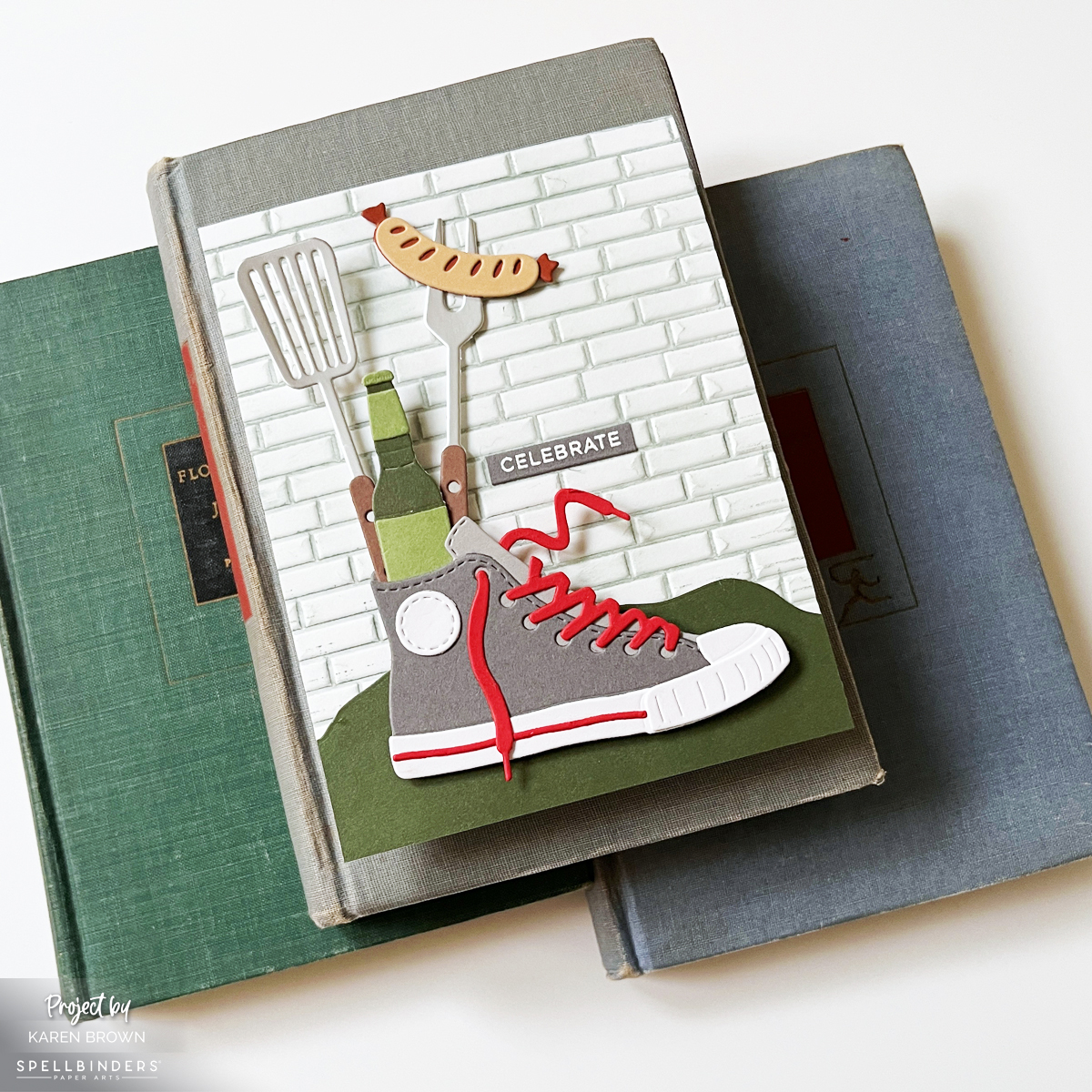
Die cut scene cards are one of the most eye-catching styles in cardmaking, and with a few simple design principles, they’re surprisingly easy to create. Today I’m sharing tips for building a cohesive, masculine die cut scene card using the Spellbinders March 2026 Large Die of the Month: Classic Kicks.
This is part of my ongoing series where I test and create with monthly cardmaking kits.
This kit made me smile instantly—a gray high-top sneaker stuffed with backyard cookout favorites like a spatula, grilling fork, hot dog, and bottled drink. It feels nostalgic, playful, and perfect for celebrating the men in our lives.
Ideal for birthdays, celebrations, and “just because”
This particular scene instantly evokes backyard cookouts, summer evenings, and casual gatherings—paper crafting at its best.
Die cutting is especially great for other masculine designs, like this Speedometer card I shared.
Choosing a Limited Color Palette
Because this kit has a bold, graphic style, I kept my color palette intentionally tight:
Gray
Green
A pop of bright red
I was inspired by Color Cubes Palette #23, and as a general rule, I try to stick to 2–5 colors per card. This keeps the design cohesive and prevents a busy look—especially important for scene cards with lots of elements.
For this card, I used a 3D brick embossing folder, pressing Fog Ink directly onto the folder before running it through my Platinum 6. After embossing, I lightly ink blended more Fog inkover the panel to add subtle distressing and depth.
Before committing, I auditioned several premade backgrounds from my stash (you can see this in a process photo below). I love making two backgrounds at once—one for the project and one for later.
If you’d like an idea for an additional background to add to your stash, this video demonstrates a versatile but easy glimmer hot foil background. I store my extra background panels in rainbow order, which saves so much time and makes design decisions easier.
2. Foreground: Grounding the Scene
Foreground elements help anchor your focal point so it doesn’t feel like it’s floating.
I tested several green die-cut options and ultimately chose a simple grassy horizon cut from dark green cardstock. This small step made a huge difference visually. You could easily cut a foreground freehand if you don’t have a die.
I adhered the foreground directly to the embossed background.
3. Focal Point: The Star of the Card
The die-cut sneaker bouquet is the star here. I even used silver cardstock for the grilling utensils, which adds a realistic metallic look.
I attached the sneaker with foam squares to give it dimension and help it stand out from the scene.
These little details are my favorite part of scene card building. I always arrange everything loosely before gluing—it’s like solving a fun paper puzzle.
These sentiment strips are a huge time saver, which I demonstrate in this recent post.
Design Tip: Use the Rule of Thirds
To guide placement, I followed the rule of thirds, positioning the taller elements (spatula, fork, bottle) along the left vertical third of the card—about 1 1/3” from the edge of an A2 card. This adds balance and visual interest without overthinking the layout.
Part of My Kit Subscription Series
I love testing and creating with monthly cardmaking kits. You can explore more here:
Scene cards may look complex, but when you break them into backgrounds, foregrounds, focal points, and details, they become incredibly approachable—and so fun to create.
When I first started cardmaking, I bought many tools that I didn’t really need.
Today I’m sharing 14 of my most-used, most-loved cardmaking supplies for 2026. These aren’t just trendy products — they’re the tools I reach for again and again. I use them over and over in my craftroom and they are the products that I recommend to new cardmakers.
If you’re stocking your craft room, refining your supplies, or just love seeing what other cardmakers actually use, this list is for you.
📌 Save this for later on Pinterest
Karen’s Full List of Recommended Products for 2026
1. Best Die Cutting Machine: Spellbinders Platinum 6
My favorite die-cutting machine…and I’ve tried lots!
If you enjoy die cutting, a reliable machine is essential. I love the smooth cutting pressure and wide platform on the Platinum 6.
I use my Platinum 6 die cutting machine almost every single day. I’ve tried other machines over the years, but this one is reliable, smooth, and powerful. The others? They’re collecting dust.
Beginner Tip: Start with simpler less intricate shapes as you learn how layering works.
✨ I also have a Scoutportable die-cutter that I love to use with smaller dies or when I am taking my projects on the go.
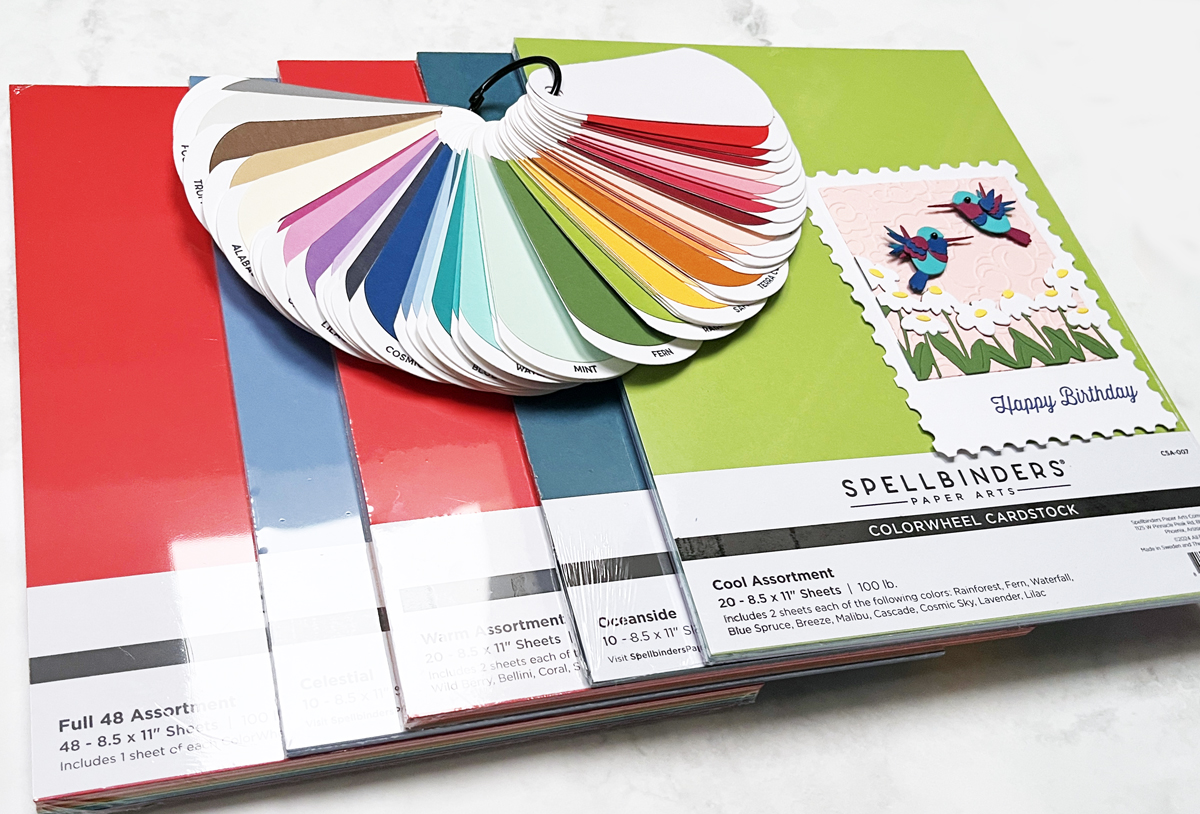
2. Best Cardstock: Spellbinders ColorWheel Cardstock
Colorful Cardstock is so important in cardmaking
With 48 gorgeous colors, ColorWheel cardstock makes color selection easy and stress-free. I use it almost exclusively and love that the result is beautiful cohesive designs.
Beginner Tip: Order the 48 Color Pack and see which colors call to you the most.
I recently placed a big order and am sharing a photo of my shipment, including:
3. Best Die-Cutting Staple: Hero Arts Infinity Dies
Infinity Dies are the most versatile products in cardmaking
Nesting infinity diesare true craft room staples, and I use mine constantly. They are versatile time-savers that elevate your cardmaking and are perfect for matting, layering, spotlighting and framing.
I’ll be linking to 8 of my most-used sets in this post with my most used at the top. I’ll also link to a card using each die.
4. Favorite Card Kit Subscription: Spellbinders Large Die of the Month
Subscription card kits fuel creativity
If I had to choose one subscription kit to keep, this would be it. The Spellbinders Large Die of the Month never disappoints, and January’s kit — Hummingbird Delight — truly lived up to its name.
Subscription Kits provide:
• excellent value • beautifully curated designs • coordinated supplies • inspiration delivered to your craft room every month
The Large Die of the Month Kit has the designs and versatile themes that I enjoy the most…the ones I use over and over. To illustrate for 2026:
The February Kit is perfect for kids, Easter and the young at heart.
The March Kit is great for masculine cards, but can also morph into a fun floral sneaker bouquet.
✨ Runner-Up Favorite Subscription: The very first kit I ever ordered — Hero Arts My Monthly Hero, now available in two versions for 2026:
Tip: Subscription kits are great for both beginners and experienced cardmakers.
5. Best Blending Brushes: Waffle Flower
Color coded blending brushes are an important staple in my craftroom
One of the biggest problems with ink blending is cross-color contamination.
I love that Waffle Flower blending brushes have color-coded handles, so I instantly know which brush goes with which ink family. This simple visual cue keeps me from accidentally putting my yellow brush into my blue ink, which could potentially ruin a project. It also keeps my colors bright….not muddy.
Small detail, huge time saver.
6. Best Inks: Hero Arts Reactive & Core Inks
Bright inks make such an impact in cardmaking
I have a large tub of Hero Arts inks — and honestly, I rarely reach for anything else. The colors are vibrant, blend beautifully, and are incredibly reliable. I love all the inks, but I find myself reaching for the Reactive Inks most often.
Color swatching is a great planning tool in cardmaking
I use my swatching dies on nearly every project. Being able to flip through physical cardstock swatches saves time and helps me confidently choose colors that work together.
You’ll see these swatches featured throughout this post.
8. Best Inspiration Tool: Color Cubes
Color planning is always my starting point, and Color Cubes are essential to my process. I own two volumes (1&2), a birthday gift from several years ago, and they’re well loved.
Color Cubes are such an important inspiration tool in my craftroom
I like to start with the Color Catalogue where I can search by Color, Key Word or Collection and then I grab a few cards for inspiration.
Paired with my cardstock swatches, they make choosing beautiful color palettes effortless.
Enamel dots are hands down my favorite finishing touch. I use Spellbinders and Hero Arts enamel dotsthe most — clean, modern, and endlessly versatile. They add texture, shine and color to your projects while at the same time elevating your card.
TIP: I can’t tell you how many times I’ve covered a small mistake with an enamel dot! They can truly save a project.
10. Best Way to Add Texture: Embossing Folders
Embossing Folders add such impact to cardmaking….and they are so cost effective.
Embossing folders are one of the easiest ways to add interest to a card. I subscribe to the Spellbinders Embossing Folder of the Month, and my collection has grown quickly.
Embossing folders are a cost effective way to elevate most projects. They add texture, mood and dimension in one quick step.
If you are building up your crafting Toolkit, this is one of the best additions you can invest in.
I used January’s folder, Cloud Nine, on my Hummingbird card. It’s a stylized sky with clouds — perfect for so many scene cards.
11. Best Desk Organizer: Hero Tools Handy Holder
I love a well designed crafty organizer.
This Handy Holder organizer keeps my scissors, tweezers, bone folder, palette knife, and brushes within arm’s reach. I love it so much… I own two!
They sit front and center on my desk and keep my most used (and often times oddly shaped) essentials close and organized.
I use this simple well-designed organizer everyday! Consider treating yourself.
12. Best Work Surface Organizer: Craft Stax
Storage organizers are so helpful in my cardmaking.
One tool I reach for constantly while creating is Craft Stax. There are several sizes and they’re perfect for organizing, protecting, and corralling all of my crafting components as I work.
The photo above (with my Fergus Felt components) is the Stash Stax. I also love this size for storing cardstock.
I use Craft Stax to hold die-cut pieces, partially assembled cards, sentiments, and embellishments so nothing gets lost or damaged mid-project. They’re especially helpful when I’m working on detailed die-cut cards or stepping away and coming back later — everything stays exactly where I left it.
Craft Stax are so helpful mid-process in cardmaking
Craft Stax also make it easy to stack multiple projects on my desk without creating chaos (always a win!). Simple, smart, and incredibly useful — this is one of those tools you don’t realize you need until you have it… and then you can’t imagine crafting without it.
13. Best Die Organizer: Hero Arts Magnetic Sheets & Envelopes
I found magnetic sheets are the best way to organize dies
These are absolute must-haves for staying organized:
Sticky Grip Mats are perfect for stenciling and stamping. And they work great in your Misti and Mini Misti Stamp Positioners…no need for magnets anymore!
Spellbinders Platinum 6 die cutting machine. A true workhorse in my craftroom. I believe die-cutting is my favorite technique so I use my Platinum 6 most days.
These 14 products form the backbone of my cardmaking in 2026. They help me craft more efficiently, choose colors with confidence, and enjoy the creative process even more.
📌 Save this for later so you can come back when you’re ready to add to your Toolbox.
If you’re building or refreshing your craft room this year, I hope this list gives you a helpful starting point — and maybe a little inspiration too. 💛
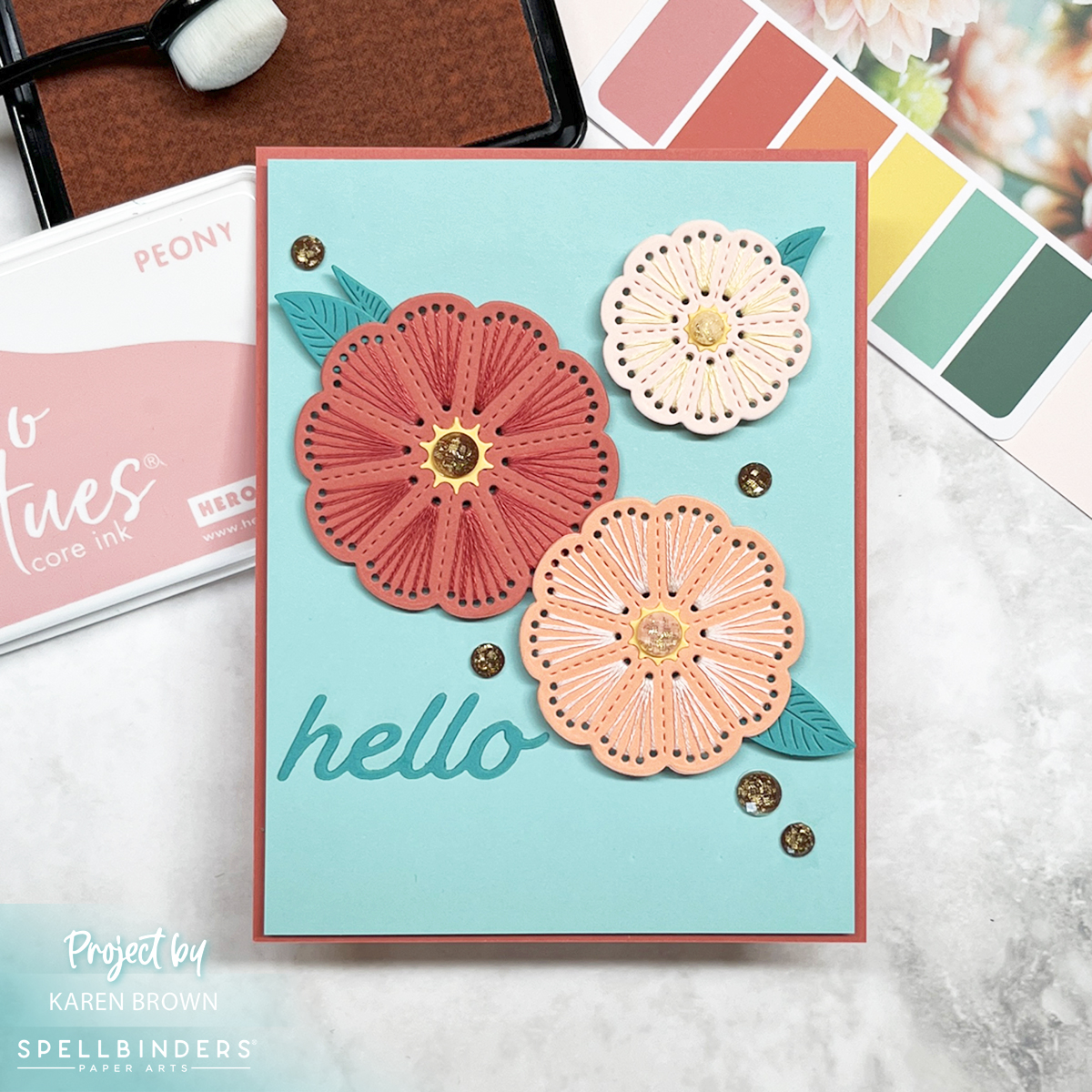
This month’s Spellbinders Stitching Die of the Month is a true floral beauty! The set includes three sizes of blooms, and I couldn’t wait to dive in with floss, cardstock, and gems to create a stitched garden full of detail and color.
You might also enjoy my blog post for the September Small and Large Die of the Month Kit.
🌼 My Stitching Process
To give my flowers a sturdy stitching base, I die cut each bloom twice and glued the layers together before stitching. This little extra step makes the stitching so much easier and helps the finished blooms hold their shape beautifully.
I used two threads of floss throughout, which was just the right weight for crisp yet delicate details.
🎨 Stitching Recipe & Color Palette
For this project, I worked from the Color Cubes Palette #391 (Color Cubes Bundle) and pulled together a warm, happy scheme:
The combo of pinks, corals, and yellows pops beautifully against the fresh aqua-blue background!
✨ Finishing Touches
I added a touch of sparkle with Woodland Tales gems, which highlight the flower centers perfectly.
For the foliage, I decided to switch things up! Instead of using the leaves included in the set, I reached for the pretty die cut leaves from Citrus Spritz (Here is a LINK to a post using the Citrus Spritz Die Set).
💡 Extra Tips for Stitched Dies
Don’t be afraid to mix and match leaves, blooms, and embellishments from other kits for added variety.
Layering blooms in groups of three always creates a pleasing, balanced look.
Keep a small piece of tape handy to hold your floss tails on the back of stitched elements until you’re ready to glue them down.
This month’s kit is such a joy—relaxing to stitch, yet bold and beautiful when assembled. I can see these blooms being used for birthdays, thank you cards or just becuase.
Along the way, I’ll walk you through 4 tried-and-true tips that will make your holiday cardmaking easier, more enjoyable, and more beautiful.
Tip 1: Use Quality Cardstock
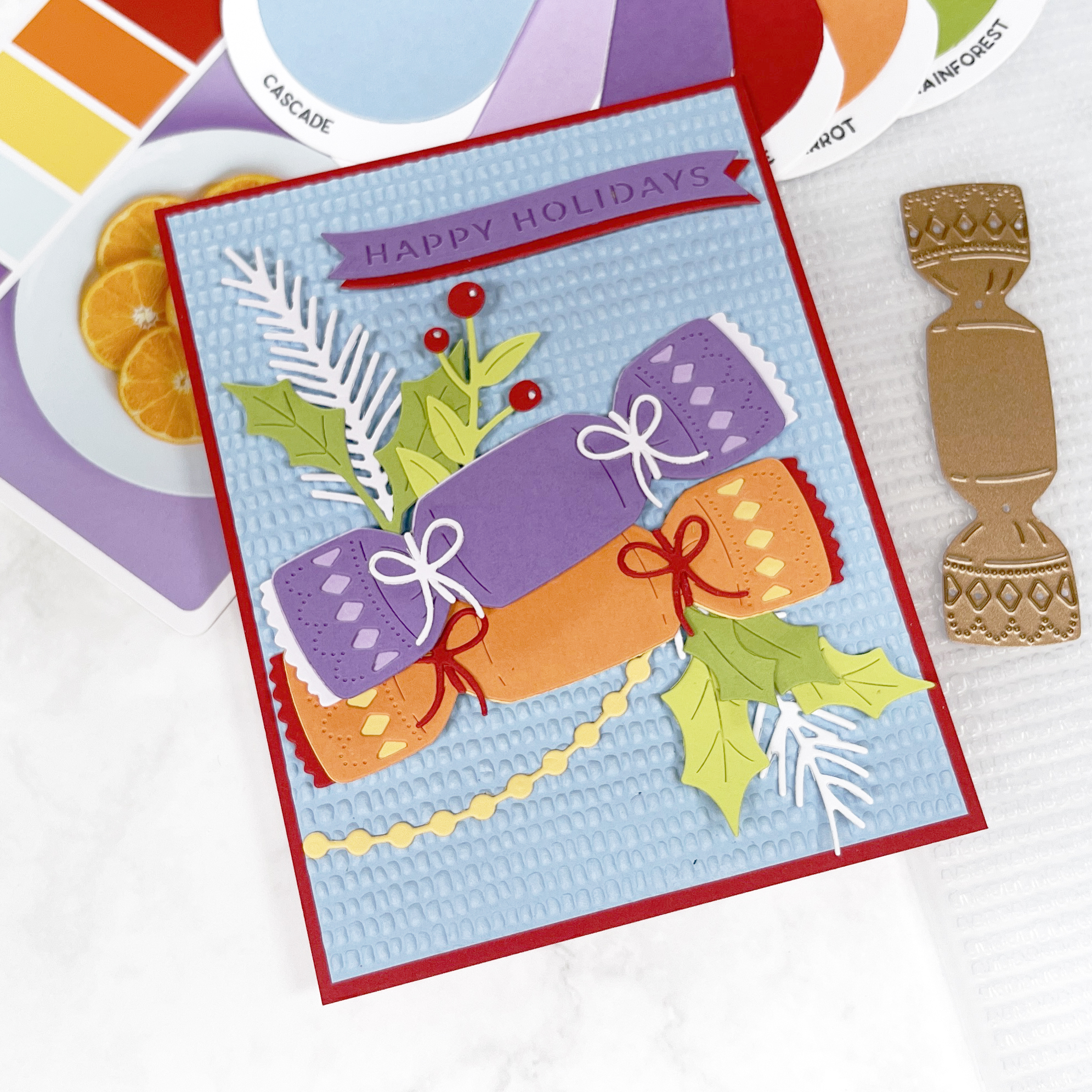
The foundation of any good die cut is quality cardstock. Thin or flimsy paper isn’t substantial enough for die cutting. For this project, I used Spellbinders’ Color Wheel Cardstock—which is heavyweight, smooth, and cuts like butter.
Together these created a vibrant, cheerful, and slightly unexpected holiday palette.
Tip 2: Swatch Your Cardstock
Having your cardstock organized and swatched makes choosing colors so much faster. I’ll link HERE to a post where I go into detail on how I keep my swatches handy and easy to use.
For this project, I flipped through my swatches until I landed on the perfect non-traditional holiday mix. Seeing them side by side helped me visualize how the colors would work layered on the Christmas cracker.
When in doubt, let a color system do the heavy lifting! For this card, I turned to Color Cubes Volume 2, specifically palette card #252, which inspired the purple, red, orange, yellow, blue color mix. I also own Volume 1. You can find the Color Cubes BundleHERE.
I’ll also link to a previous blog post that features Spellbinders’ Color Deck System, another fabulous way to spark ideas when you feel stuck or want to try something different.
Click HEREif you’d like to see another Christmas Card using the same #252 Color Cubes palette card.
Tip 4: Add Texture and Dimension
Flat die cuts are nice, but texture and lift make a card pop. For this background, I embossed a panel with the new Dimpled 3D Embossing Folder—a subtle yet impactful pattern that catches the light beautifully.
I also used foam squares behind some of the cracker die cuts to add depth and shadow. Craft foam also works great, especially on larger die cuts. The best glue for smaller die cuts is Bearly Glue. I love the fine nozzle! Simple details like these can make your handmade card feel polished and professional.
Spellbinders More Fresh Picked Collection offers an exquisite opportunity to create a contemporary cardmaking masterpiece. The entire Fresh Picked series offers modern, contemporary, stylized florals that really ignite my creativity and I couldn’t wait to get started die-cutting.
Fresh Picked Vase Bouquet
My Process:
Today, I selected the Fresh Picked Vase Bouquet for my birthday card. I knew I wanted Waterfall leaves and greenery on my card so I did a quick search through my color cubes and decided on color combination #060, and I have to say I love this color palette!
I die cut all my elements using Spellbinders Happy Day Cardstock Assortment. I die cut the vase twice for a bit of dimension.
With its sleek lines and intricate designs, the Spellbinders Fresh Picked Vase Bouquet die set allows for the creation of stunning floral arrangements that exude modern elegance.
Tutorial + 18 Tips and Tricks for Making Wax Seals:
With a Sharpie marker, I put a dot on my seal so it was easy to keep track of where the top of the design is.
I read that it helps reduce soot if you trim your tea candle wick, so I did this.
I put 4 beads in the warming spoon and it took 2 minutes to melt.
I poured the wax and found it is easy to make a circle pattern, but I do like seals that aren’t perfectly round.
Don’t press the seal into the wax, just gently position and allow gravity to work.
After experimenting, I found that if I wanted a thicker, more button like seal you should pour the wax and then wait 15-30 seconds before gently dropping the seal into the wax. The card with the pink seal was done this way.
If you like a thinner seal with a higher rim then place the seal immediately after pouring.
I found if I used just my thumb and pinky or middle finger that I was better able to center the seal more precisely.
I left the seal in the wax anywhere from 15 to 90 seconds. The time didn’t seem to matter and no wax was ever left on the seal itself.
I also found it helps to move your pours around on the silicone mat so you don’t get warm spots on your work surface.
I also let my seal cool in between pours.
If you don’t like a seal, you can remelt it.
You can mix colors for a lovely marbled look. I really love the blue and green combination that I made which is shown in the upper left of the first photo. I also love blue and gold together and you can see two with that combination in the upper right corner on the blue card.
You can add flakes, glitter or pearls to the melted wax.
I used a paper towel to clean the spoon when changing wax colors.
I used a Decocolor marker on some of my seals (see the card with the green seal). I have Gold but wish I had bought silver too. Just lightly go over the raised ridges.
I experimented using Posca Pens too. They work, but I did like the result of the Decocolor markers better. The navy wax seal was highlighted with a silver Posca.
I thought it would be fun to combine these products together for a birthday blog post.
Using Sarah Renae Clark’s Color Cubes and Catalogue
I love color so Sarah Renae Clark’s bundle has been so fun to explore! I started by looking for color inspiration in the Color Catalogue and then I pulled out several Color Cube Cards that I found inspiring. I like to start with the Color Catalogue where I can search by Color, Key Word or Collection. I wanted a bright springy card so I began by searching for combinations with hot pink/magenta. For my first card, I settled on combination #35. My second card uses #218.
Once I had my colors selected, I matched them up with hues in my new Papertrey Cardstock. I love that there are 36 colors in each package!
Spellbinders Flowers | Be Bold Blooms Die-Cutting Tutorial
I wanted to experiment with backgrounds too. For Card 1, I “debossed” my background panel with an older Embossing Folder of the Month called Intertwined Lattice. For Card 2, I die cut a frame with an old favorite Spellbinders Essential Rectangles.
I played around with layouts and once I had the die-cuts they way I wanted I carefully applied Press-N-Seal wrap over the top, flipped it over and applied Instant Dimension Foam Tape to the bottom of each piece. All I had to do was flip it back over, place, add a bit of pressure and then gently peel back the Press-N-Seal. So much faster than laying out, disassembling, adding foam tape and then reassembling piece by piece.
I added my sentiments (hello is from a past club kit) and was done.
I needed a Sympathy Card so did another quick card with white, gold and pink die cuts.
For my birthday, I received received Altenew’s Trailblazing Fresh Dye Ink Mini Ink Cubes so of course I elected to use the periwinkle hues on this project. I also received Sarah Renae Clark’s Color Cubes (Volumes 1 and 2) and I wanted to use her cards for my color inspiration. I sorted through all the gorgeous color combinations and settled on #206, which you can see in the top left corner of the photographs.
Creating with Altenew’s Stunning Sakura Stamp Bundle
Quick and Easy Coloring with Stencils:
I started by stamping my Stunning Sakura florals with black pigment ink and then set them aside to dry.
For Card 1, I used the new Vertical Greetings Sentiment Die and for Card 2 I stamped a sentiment that is included with the stamp set.
I trimmed down my background panels and adhered to an A2 card base with Instant Dimension Foam Tape. I then added my florals with more Foam Tape. I wanted to change the orientation up, so Card 1 has the stem at the bottom and Card 2 has the stem coming in from the side like a tree branch. I really like both orientations. 🙂
I really appreciate that you stopped by and are participating in this Blog Hop. Your next stop is Ishani and her projects are always such a treat! You can see the all the hop stops by clicking the button below:
$200 in total prizes! To celebrate this release, Altenew is giving away a $50 gift certificate to 2 lucky winners and a $20 gift certificate to 5 winners! Please leave a comment on the Altenew Card Blog and/or each designer’s blog post on the blog hop list below by 03/20/2023 for a chance to win. Altenew will draw 7 random winners from the comments left on each stop of this blog hop and announce the winners on the Altenew Winners Page on 03/21/2023.
Giving Back Info
We have handpicked a few Altenew products that are perfect for your Mother’s Day and Father’s Day cards (and other year-round crafting projects! Check out the collection HERE. We’ll donate $1 with every order of the products included in this collection from 2/28/2023 until 5/14/2023 to the Food Bank of Central New York to support seniors in need.